What to Do When Golden Diamond Philodendron Leaves Turn Yellow? Growing Methods, Precautions and Answers About Flowering
Many people grow a Golden Diamond Philodendron at home or in the office to purify the air. It is not only extremely vigorous but also stays deep green all year round, making it one of the finest indoor foliage pot plants. So what are the growing methods and precautions for Golden Diamond Philodendron? What to do when its leaves turn yellow? Does it flower?
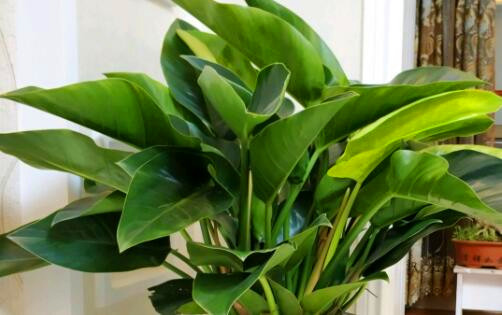
I. Basic information about Golden Diamond Philodendron
Golden Diamond Philodendron is a perennial evergreen herbaceous plant of the genus Philodendron in the family Araceae. It is fairly shade-tolerant and is also called Golden Diamond Philodendron, Philodendron, Spring Taro, Spring Feather, and Split-leaf Philodendron. Its leaves spread out in all directions from the top of the stem; the leaves are broad heart-shaped, deeply pinnately lobed along the whole leaf, deep green, smooth and glossy, and the leaf stalks are firm and slender, reaching 80-100 cm.
II. Growing methods and precautions for Golden Diamond Philodendron
To make Golden Diamond Philodendron grow vigorously, you need to understand its ecological habits, and during cultivation pay attention to factors such as soil, water, light, fertilizer and temperature. Therefore we should note the following growing methods and precautions:
1. Soil: Golden Diamond Philodendron is not very demanding about soil. Generally a loose, fertile, airy, well-drained slightly acidic soil is used. For pot cultivation, you can mix leaf mold (or peat soil), garden soil and river sand in equal parts.
2. Temperature: Golden Diamond Philodendron likes a warm, humid, semi-shaded environment and is not cold-tolerant; the suitable growing temperature is around 20-25°C, and the humidity is between 50-70%, not lower than 50%; in summer do not leave it in direct sun for long periods, and when the temperature is too high you can wipe the leaves with a damp cloth to cool them down; indoors, avoid air conditioning and cold drafts; in winter the temperature is best above 8°C, and it can withstand a low of 5°C, and indoors avoid being hit by heating drafts.
3. Light: Golden Diamond Philodendron likes a semi-shaded environment and must not be exposed to strong direct light, otherwise the leaves are prone to dry tips, scorched leaf margins, and whitened, lusterless leaf color; it does not tolerate long-term shade, otherwise the leaf color becomes lighter, the leaf stalks lengthen, and the leaves droop, reducing its ornamental value.
4. Watering: Golden Diamond Philodendron likes a humid environment. Watering is best done when the soil surface is dry. In summer, when the climate is dry, it must not lack water, but it should not be overwatered either; you can water once a day and remember to spray water on the leaves; in winter you can water once every one to two weeks, normally maintaining normal humidity, and the watering time should be adjusted flexibly.
5. Fertilizing: The growing season of Golden Diamond Philodendron is generally from May to September. During this period it needs sufficient fertilizer, preferably mainly nitrogen fertilizer. At the same time, note that you must not fertilize too much at once; fertilizing about once every 10 days is enough, and it is best to apply light fertilizer frequently; after autumn begins, the amount of fertilizer should be controlled, and when the temperature drops below 20°C, fertilizing should stop.
6. Pruning: When Golden Diamond Philodendron shows yellow, withered or scorched leaves, pay attention: check whether it is caused by disease, etc. If not, promptly prune the old leaves to reduce the loss of nutrients from the plant.
7. Pests and diseases: Common diseases of Golden Diamond Philodendron include leaf spot and anthracnose, generally controlled with wettable powders such as carbendazim, thiophanate-methyl and zineb, with fairly obvious results; the main pests include red spider mites and scale insects, which can be controlled by spraying.
8. Repotting: Golden Diamond Philodendron needs repotting every spring; generally pot cultivation requires repotting every 3-4 years.
9. Note ventilation: Golden Diamond Philodendron should also normally be grown in a ventilated environment, otherwise symptoms such as yellowing and withering leaves may occur.
III. Is Golden Diamond Philodendron toxic?
The sap of Golden Diamond Philodendron is toxic. Accidental contact with or ingestion of its sap can cause skin itching and throat discomfort. Therefore, when trimming leaves or repotting, it is best to wear gloves to avoid discomfort to the hands.
IV. Does Golden Diamond Philodendron flower?
Golden Diamond Philodendron belongs to the family Araceae and can flower, but the conditions for flowering are relatively demanding; under ordinary cultivation, especially in pots, it is very difficult to make it flower. The inner wall of the Golden Diamond Philodendron flower is light red, with a pointed conical creamy-yellow pistil in the center, and the flower shape is somewhat like a calla lily. The flowering period is very short, just one day.
V. What to do when Golden Diamond Philodendron leaves turn yellow?
The reason Golden Diamond Philodendron leaves turn yellow is caused by many factors; specifically there are the following reasons:
1. Improper watering: Golden Diamond Philodendron likes a humid environment, but both overwatering and underwatering can cause its leaves to turn yellow. With overwatering, the young leaves are dull yellow and lusterless; with underwatering, the leaf tips and margins wither, and the old leaves turn yellow and fall off from top to bottom.
Solution: Watering is best done when the soil surface is dry. In summer, when the climate is dry, it must not lack water, but it should not be overwatered either; you can water once a day and remember to spray water on the leaves; in winter you can water once every one to two weeks, normally maintaining normal humidity, and watering should be adjusted flexibly.
2. Improper light: Strong direct light scorches the leaves and makes them yellow; if placed in a shady spot for a long time without light, the plant turns yellow because its growth slows down.
Solution: Place it in a semi-shaded environment, in a ventilated spot with scattered light.
3. Improper temperature and humidity: If the temperature for Golden Diamond Philodendron is too high or too low, or the humidity is insufficient, yellow leaves will result.
Solution: The suitable growing temperature for Golden Diamond Philodendron is around 20-25°C, and the humidity is between 50-70%; below 50%, Golden Diamond Philodendron is prone to yellow leaves and dry edges.
Besides the above points, also check whether the yellowing of Golden Diamond Philodendron leaves is caused by improper fertilizing or pests and diseases, and deal with it promptly according to the actual situation.