What to do when spider plant leaves turn yellow, and can it be kept in the bedroom?
As an “air guardian”, the spider plant is a green plant that appears in many people's homes. Spider plant can also be called wart-removing herb, folding crane orchid, orchid grass, airplane plant, spider grass, etc. The spider plant is not native to China; it was first introduced to the rest of the world from Africa. So what to do when spider plant leaves turn yellow? What values does it have? Can it be kept in the bedroom?
I. What to do when spider plant leaves turn yellow?
1. When spider plant leaves turn yellow, we should look at it dialectically; this is divided into many causes. It may be too much or too little watering, both of which will make the leaves turn yellow. For the yellowing problem caused by watering, we can re-establish a watering plan.
In the high-temperature weather of summer, it is generally watered twice a week, and each time it must cover the roots of the spider plant; do not sprinkle water casually and cause an uneven situation. In winter, when the temperature is lower, it is generally chosen to water once a week, and the watering time is best concentrated at night or in the morning; watering when the sun is too strong or too hot will cause evaporation.
2. Spider plant leaves turning yellow may be because the light is too plentiful. Placing the spider plant in a position with plenty of sunlight will cause the leaves to be scorched by the sun and turn yellow.
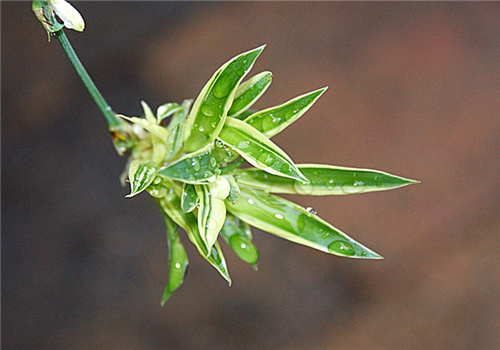
In this situation, the spider plant needs to be moved back indoors to avoid direct sunlight; it cannot be directly exposed to the sun. As long as the home has good ventilation and sufficient sunlight, it is fine.
3. Spider plant leaves turning yellow may also be caused by a lack of nutrients.
Besides watering, fertilizing and soil selection are also key for spider plants. Most green plants have to go through the key stage of repotting; regular repotting and soil changing can let the plant roots absorb sufficient nutrients. After the spider plant has been cultivated for a period of time, the original soil nutrients will be absorbed by the roots and stems, and nutrient-free loam will naturally make the leaves turn yellow. Everyone can choose to go to a flower market to buy some organic fertilizer to apply, or directly change the soil and transplant it into a new pot.
II. The value of the spider plant
The spider plant mainly has medicinal value, ornamental value and air-purifying value.
1. Medicinal value of the spider plant
The whole plant and roots of the spider plant can be used as herbal medicine, and can treat toothache or detoxify.
The spider plant is recorded in historical books and pharmacopoeias; after being mashed, it can be combined with other medicines and applied to a wound, helping the wound scab over and heal quickly.
2. Ornamental value of the spider plant
The spider plant looks very much like a flower basket, with each branch curving and hanging downward, and in the high-temperature season it also has small white flowers blooming. Placed at home, it can beautify the environment.
3. The air-purifying value of the spider plant
The spider plant also has the effect of purifying air; the title “air guardian” is not unearned.
III. Can the spider plant be placed in the bedroom?
Now many friends believe in feng shui, and have uncertain attitudes toward many green plants, unable to be sure whether placing them in the bedroom will bring bad effects.
The spider plant can be placed in the bedroom.
The whole spider plant is non-toxic, and placing it in the bedroom will not bring harm to the human body; it will also absorb harmful substances in the air and give the bedroom a fresh environment. For men who smoke and women who like green accents, the spider plant is the best choice.
Note: Keeping the spider plant in the bedroom all year round may cause the leaves to turn yellow, because the bedroom space is small and the ventilation effect is not as suitable as the living room or outdoors. Everyone can choose to occasionally move it out to absorb dew.