When to Plant Annual Vining Herbaceous Zucchini, with Pollution-Free Winter-Spring Crop Cultivation Techniques
Zucchini contains relatively high amounts of vitamin C, glucose and other nutrients, and has the effects of relieving restlessness and quenching thirst, moistening the lungs and stopping cough, clearing heat and promoting diuresis, and reducing swelling and dispersing nodules. The zucchini fruit is used as a vegetable and is cultivated throughout China. So, when is the annual vining herbaceous plant zucchini generally planted? And how are the returns? Which pollution-free cultivation techniques need to be mastered?
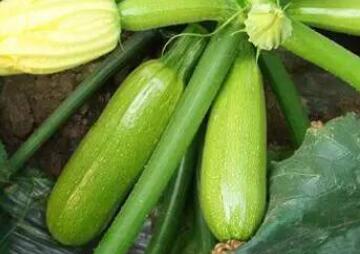
I. When is zucchini generally planted?
For greenhouse autumn-winter crop zucchini, sowing is generally carried out in mid-December for seedling raising, with planting in mid-January of the following year; ordinary planting is in March each year. Among cucurbit vegetables, zucchini is the type that is relatively cold-tolerant but not heat-tolerant. The most suitable temperature during the growing period is 20-25 degrees C.
II. Pollution-free cultivation techniques for zucchini
Growing zucchini in sheds and greenhouses mainly includes autumn-delayed, winter-spring, and early-spring crops. Because winter-spring crop zucchini can catch the market during New Year's Day and the Spring Festival, its economic returns are also relatively high. For winter-spring cultivation of zucchini, sowing and seedling raising usually take place in mid-December, with planting in mid-January of the following year; harvesting begins around early February and ends in mid-to-late May. This crop of zucchini is the earliest cucurbit vegetable to reach the market in early spring, mainly supplying the early-spring off-season market. It not only fills the market gap, but vegetable growers can also obtain relatively high economic income from it.
1. What are the environmental characteristics of winter-spring crop cultivation of zucchini in a solar greenhouse?
The zucchini seedling-raising period coincides with winter, when temperatures are low and light is insufficient, so different methods are needed to raise the temperature and supplement light. The planting period is the time of the year with the weakest light; light intensity decreases. After planting, the outside temperature gradually rises, so measures should gradually shift from heat preservation and light supplementation to cooling and day-and-night ventilation, until natural conditions are reached.
2. What is the main focus of pollution-free production of winter-spring crop zucchini in a solar greenhouse?
(1) Under low-temperature and weak-light conditions, cultivate age-appropriate strong seedlings.
(2) Ventilation and air release.
(3) Frequently adjust the plants so that they grow in one direction, allowing the leaves to be reasonably distributed and to receive light evenly.
(4) In the middle and later stages of growth, promptly remove the lower old leaves and diseased leaves to improve ventilation and light penetration.
3. How is it best to raise seedlings for winter-spring crop zucchini in a solar greenhouse?
The seedling-raising period coincides with the period when the outside climate gradually turns cold to cold; varieties with cold resistance, disease resistance, and high and stable yield should be selected.
Specific cultivation techniques:
(1) When selecting seeds, choose seeds that are basically uniform in size, even in color, plump, with high seed purity, high germination rate, and free from pests and diseases.
(2) The seedling bed should be somewhat higher. Choose the section of the greenhouse with the best light conditions. The bed surface should be level. Nutrient pots or soil blocks can be used for seedling raising. If conditions permit, in order to ensure a relatively high temperature in the seedbed during seedling raising, it is best to use an electrically heated hotbed for seedling raising.
(3) Water the bed thoroughly. Sufficient moisture after sowing is beneficial for seedling emergence.
(4) After sowing, the temperature should be high to help the seedlings emerge quickly. A layer of plastic film can be laid over the seedbed to preserve heat and moisture; after most seedlings have emerged, remove the plastic film.
(5) After the seedlings have emerged completely, pay attention to strengthening ventilation and lowering the temperature in the greenhouse to avoid excessively high temperatures in the seedling bed, which can cause damping-off and seedling blight. (6) Watering should be done in the morning on sunny days to avoid the phenomenon of root rot caused by low temperatures.
(7) For seedling raising in nutrient pots, to prevent the seedlings from shading each other, the pots should be rearranged to increase the space between nutrient pots, and at the same time the small seedlings should be moved to positions with better temperature and light conditions so that all seedlings grow uniformly.
(8) Hang reflective film to increase temperature and preserve moisture.
(9) Cover the seedbed with a small arch shed to prevent damage from cold waves.
(10) Harden the seedlings 5-7 days before planting: 20-23 during the day, 12 at night, and 8 for a short time, to improve the adaptability of the seedlings and ensure they have sufficient ability to resist the external environment.