Detailed Guide to Making and Caring for Kokedama Bonsai
Kokedama is both a plant and a planting method. It originated in the Edo period of Japan and is one of the forms of Japanese bonsai, with a very long history. The distinguishing feature of kokedama bonsai is that no hard materials are used when shaping it; instead, the plant's roots alone are wrapped in soil to form a round ball, which is then covered on the outside with moss. What follows is an introduction to the making methods and care techniques for kokedama bonsai.
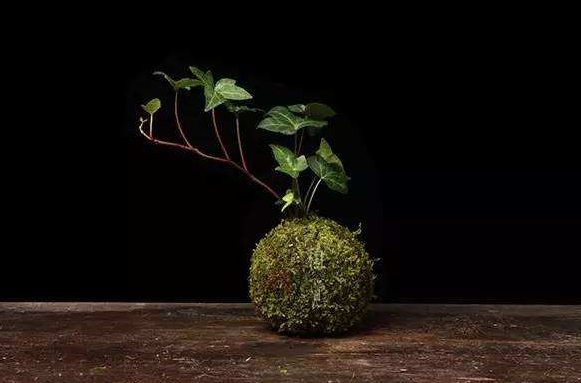
I. Making Steps
1. First you need to prepare the materials; just choose according to your own preferences. If following general materials, you will need moss, soil and thick string. This is very much a matter of creativity, since only then can it have a different style. Everyone uses different tools, so the making steps may also differ; as long as the goal is achieved, that is enough.
2. First take the bonsai you want to make into a kokedama, preferably a small potted plant, and clean the soil off its roots. During this process, be careful not to damage its roots, then wash the soil off the roots of this relatively small tropical flowering plant.
3. Mix coal and special bonsai soil in a 7 to 3 ratio, wrap it around its roots, and then knead it into a ball shape. Wrap a layer of moss around it, then secure it with relatively thick string; other methods of securing it are also fine. Then place it into a pretty pot, and the whole process is complete!
II. Care Techniques
1. Soaking it in water once can keep it moist for about ten days. In summer and autumn, when the indoors is relatively dry, you can mist it twice a day. When it rains, you can place it in the rain; this way it can grow faster, because rain contains many nutrients it needs.
2. The environment it is suited to is much like that of people: it needs a certain level of humidity, it needs ventilation, it needs to breathe, and it also needs sufficient light. It is not suited to growing in dark areas; it needs a certain amount of diffused light or a semi-shaded environment. During care, give it a certain amount of light, and preferably not too strong; it should not be direct light.
3. Mist it several more times each day, and do not water it with too much at once; just keep it moist. Its most suitable growing temperature is 25 degrees Celsius, so in winter it should be placed indoors.
4. It differs greatly from other plants. First, its roots can only anchor it; the absorption of water and nutrients mainly depends on the leaves. Then, if the humidity is insufficient, it will go dormant and its leaves will turn grayish-green. This does not mean it has died; at this time it is instead very robust, unafraid of severe cold or intense heat, and as soon as it touches water it can return to a verdant state.