How to grow lilies, and are they toxic when placed indoors?
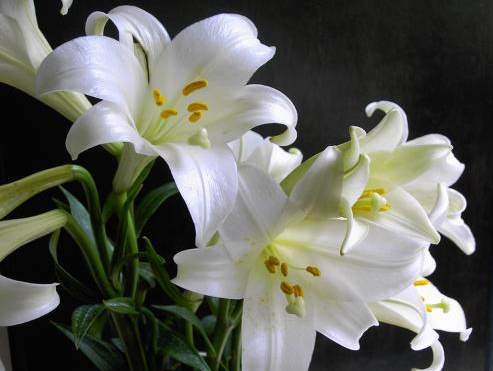
The lily flower meaning refers to the lily's connotations of a hundred years of harmony, a happy family, and great love, carrying a meaning of deep blessings. Lilies are deeply loved by people for their quiet and restrained character. So how do you grow lilies? Are they toxic when placed indoors?
I. Growing Environment
1. Soil
Lilies have a fairly developed root system. To avoid affecting the roots' absorption of nutrients, choose a pot that is as large as possible and not too shallow. You can directly buy nutrient soil available on the market, or mix garden soil, sandy soil, and leaf mold in equal proportions, then add base fertilizer to make nutrient soil. Repot once every year and just replenish fertilizer. The soil should be on the acidic side, and calcareous soil must especially be avoided.
2. Water
Humidity is best kept at around 80%, and it should not fluctuate too much. Do not water too much; just keep the potting soil moist. There is more rain in summer, so be careful not to let water accumulate and avoid root rot.
3. Temperature
It can grow normally at normal room temperature, with the temperature controlled between 16 and 23 degrees. In winter, when the temperature is too low, it should be moved indoors for care and must not go below 5 degrees. In summer, the highest temperature must not exceed 30 degrees; pay attention to ventilation. Too high or too low a temperature will cause it to stop growing, and growth will only resume above 10 degrees.
4. Light
Lilies like a sunny environment. Being in shade for a long time will lead to poor flower bud differentiation, affect flowering, and slow growth. Provide sufficient light every day. At noon in midsummer, when the sunlight is too intense, shade it to avoid burns caused by sunlight refraction.
5. Fertilizing
Lilies do not need a large amount of fertilizer. Applying a light fertilizer once every two weeks to about 20 days is enough. During the flowering period, nutrient consumption is relatively high, so additional fertilizer is needed to provide enough nutrients for flowering. You can choose a fertilizer containing nitrogen and potassium.
II. Propagation Methods
1. Seed propagation: Collect the seeds and store them well, then sow them the following spring. After sowing, they will sprout in about 20-30 days. During the seedling stage, provide shade for them, and by autumn they can be divided and replanted.
2. Cutting propagation: After digging out the bulb, break off the scales. Once they are dried, insert them into prepared soil, water them a certain amount, and in about 1.5 months they will take root.
III. Common Diseases
1. Leaf spot disease: Brown spots appear on the leaves, and the entire leaf will turn black and die. Once discovered, immediately remove the diseased leaves and spray with mancozeb wettable powder.
2. Bulb rot disease: Brown diseased spots appear on the bulb, and in severe cases it will rot. After the disease occurs, it can be sprayed with mancozeb.
IV. Are Lilies Toxic When Placed Indoors?
1. Lilies are not toxic. However, this does not mean they are suitable for placing indoors.
2. Lilies give off a special substance with an effect similar to a stimulant. Although the amount is relatively small, if it accumulates over a long period and ventilation is poor, it can easily make a person's nerves become excited. This state has pros and cons. If you are in a working state, then this state is naturally more beneficial. However, if you want to rest, or have obvious symptoms of insomnia, then it is not beneficial. Moreover, it can also cause symptoms of “flower drunkenness”, which is bad for human health.
In addition, relatively speaking, its floral fragrance is fairly strong. If placed indoors, over time it is very likely to make people feel uncomfortable. In severe cases, it may even cause nausea, irritability, and similar phenomena.
In addition, its pollen grains are relatively large, and if placed indoors, it is bad for human health. This is especially true for people allergic to pollen.
V. Precautions
1. If you want to grow it indoors, then it must not be placed in the bedroom, as it may cause insomnia and reduce sleep quality. It should also not be placed on the dining table, as it also affects appetite.
2. Remember to ventilate regularly and often air out the floral fragrance.