Watering and Fertilizing Methods and Tips for Clivia
Clivia, also known as sword-leaf lycoris and large-leaf lycoris, is an ornamental flower of the genus Clivia in the Amaryllidaceae family. It prefers rich, well-draining soil and moist soil, and dislikes dry environments. Many people do not know how to water Clivia. Below is an introduction to Clivia cultivation techniques: watering and fertilizing methods for Clivia.
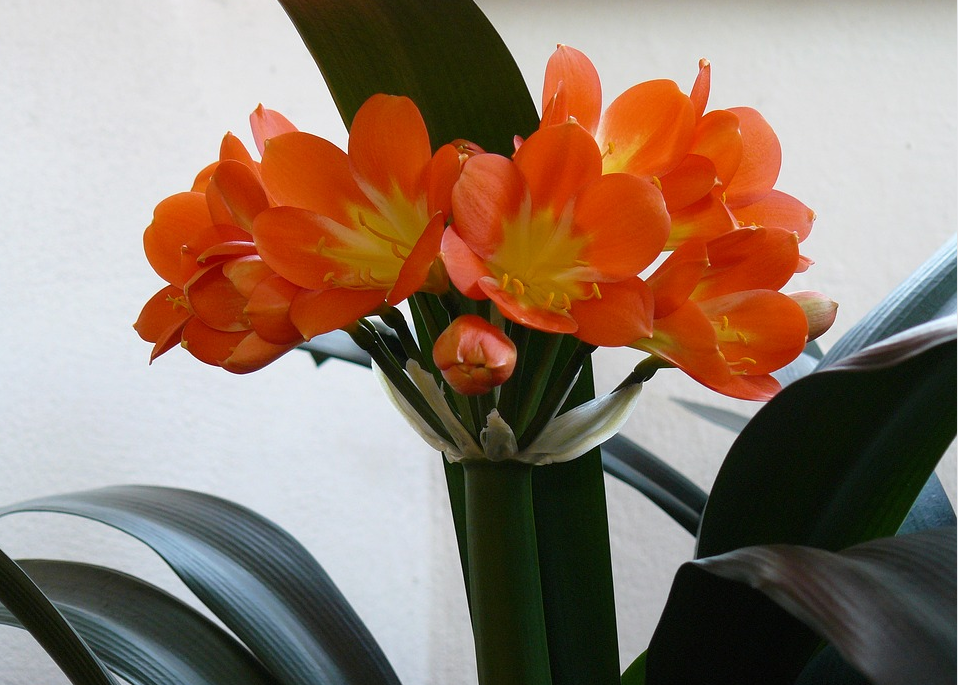
In different environments, the frequency and amount of watering for Clivia vary. Indoor temperature, humidity, pot size, soil breathability and seasonal effects mean the watering interval will not be fixed. We need to consider the interval between waterings as the environment changes.
Clivia likes semi-shaded and humid environments, and its roots are fleshy roots that like breathable soil, so waterlogging in the pot should be avoided. Therefore, watering should not be excessive; the principle is simply to keep the soil moist. You can judge when to water by tapping the pot, weighing it, or measuring moisture.
I. Watering Methods for Clivia
1. Tapping the pot
Tap the pot lightly with your finger at the 1/3 point. A relatively crisp sound indicates there is plenty of water in the soil, so water later. A dull sound indicates the pot is dry and needs watering.
2. Weighing by hand
If you are sensitive to weight, lift the pot before watering to feel its weight, then lift it again after watering to feel the difference. Over time, you will have a rough value in mind. Each time you water, feel the weight of the pot and you will know whether it needs watering.
3. Checking moisture
Checking is the most direct method. Insert your finger 1/3 deep into the soil (roughly the length of your index finger) and feel it. If it is moist, do not water; if it is wet, or even too wet for your finger to go in, it is time to water.
II. Four-Season Fertilizing Methods for Clivia
Different fertilizers should be used in different seasons. Spring and autumn are its vigorous growth periods, and it needs relatively more nutrients, so you can add some fermented base fertilizer when repotting. Summer is very hot, and if the temperature is above 25 degrees, fertilizing must stop. In winter, whether to fertilize depends on the temperature.
1. What fertilizer to use in spring
Spring is its vigorous growth period, and its need for nutrients is relatively large. When repotting, you can mix roasted sunflower seeds and charcoal together and use them as base fertilizer. During the growth period, add a nitrogen-based fertilizer about once every 10 days; it should be sufficiently dilute to help the growth of branches and leaves.
2. What fertilizer to use in summer
Summer weather is extremely hot. If the temperature is above 25°C, Clivia needs to stop being fertilized; if there is too much fertilizer, its fleshy roots will be burned. If it is placed in an area below 25°C, you can add a very dilute liquid fertilizer about once every 15 to 20 days, which can promote its growth and shorten its dormant period.
3. What fertilizer to use in autumn
Autumn is also its vigorous growth period, and it needs relatively more fertilizer. In addition to putting some fermented cake residue in when repotting it, you should also give it fermented fishy water once every 15 days. If it is a relatively small seedling, nitrogen fertilizer should be emphasized in autumn, paired with a moderate amount of phosphorus and potassium, which can make its leaves greener and its growth more robust. For mature plants of this orchid, using phosphorus fertilizer with a little nitrogen fertilizer in autumn can prevent its flower scape from splitting and produce more seeds.
4. What fertilizer to use in winter
In winter, more fertilizer should be added. Some people think that winter is relatively cold, and even if fertilizer is applied, the plant has entered dormancy and cannot absorb it. But this is not actually the case. It needs a temperature of 15 to 25°C, and many regions can reach this condition in winter. This is exactly a good period for it to shoot its scape, and it needs a lot of nutrients.
Of course, if the indoor temperature is lower than 15°C, the frequency of fertilizing can be appropriately reduced, and once it drops below 10°C, fertilizing can be stopped. Only with reasonable fertilizing can its leaves be upright and green, have better gloss, be thicker, and its flowers be larger and more brilliant. It should also be noted that if there is too much fertilizer, the leaves easily turn yellow and the fleshy roots easily rot.