How to grow saffron crocus? Detailed growing methods and precautions
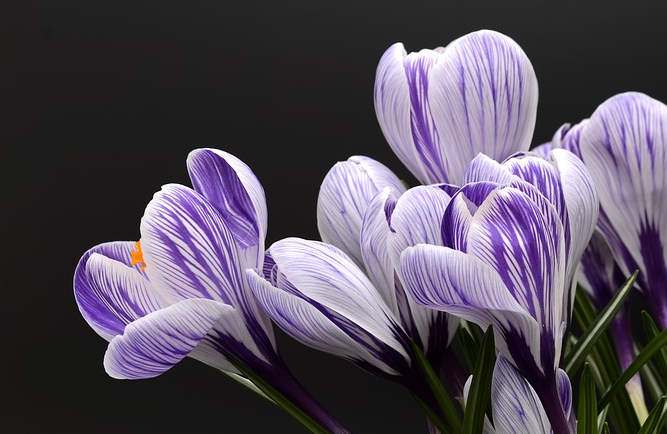
Saffron crocus is a perennial bulbous flower of the genus Crocus in the iris family, and it is also a common spice. The saffron crocus has slender, delicate young foliage, and its flowers are tender and elegant, in a variety of colors, with a distinctive fragrance. It is both a favorite in the herb garden and a famous flower for garden accents or for growing in pots as a desktop display. Below are the growing methods and precautions for saffron crocus.
I. Growing methods for saffron crocus
1. Planting
Prepare the potting soil in advance, choosing fertile, loose soil rich in humus. When selecting bulbs, you must choose robust bulbs that are large and plump, with no mold spots or disease spots.
In autumn, plant the bulbs in flower pots. In principle, one plant per pot, but depending on the size of the plants and the pot, 4-6 plants may be suitably planted per pot. After planting, cover with 5-8 cm of soil.
Within one week after planting, place the pot in a cool, ventilated place; after one week it can be moved to a bright spot for care.
2. Watering
Saffron crocus is usually planted in autumn, and its growing period is winter and spring. The climate is cold and dry, so it needs appropriate watering.
Seedlings emerge about 20 days after planting. Water once before emergence to promote it. Water once before winter with anti-freezing water to increase the soil temperature. Water once in mid-April to reduce the harm of dry hot winds.
When watering, note that when the temperature is relatively low, do not water with icy water; the water temperature should be equivalent to room temperature, so that the potting soil does not freeze and affect plant growth.
3. Fertilizing
Before planting, add sufficient base fertilizer to the potting soil, such as cake fertilizer, barnyard manure, burnt soil, plant ash, chicken and duck manure, etc. Some superphosphate should also be applied.
After planting and rooting, apply a dilute liquid fertilizer with balanced nitrogen and phosphorus every 10 days. When fertilizing, be sure not to apply too concentrated a fertilizer, so as to avoid excessive leaf growth and affect the growth of flower buds.
After saffron crocus blooms in October, apply 1 to 2 more applications of a quick-acting fertilizer balanced in nitrogen, phosphorus, and potassium, to benefit the growth and development of the corms, so that the corms can store enough nutrients to bloom more and bloom well the following year.
4. Bulb storage
From late April to early May, as the aboveground branches and leaves of saffron crocus gradually turn yellow, the bulbs can be dug out of the pot and stored. After digging them out, sort the bulbs; promptly deal with bulbs that are rotten or have disease spots, either by removing them or throwing them away.
Place the saffron crocus bulbs in a gauze bag and store them in a place with little light that is cool and ventilated, keeping the room dry. They can be replanted in autumn.
II. Precautions for growing saffron crocus
1. Variety selection
For saffron crocus in winter and spring, gardeners can choose different varieties as needed when planting. It is recommended to choose spring-blooming varieties; the spring environment is relatively better, and if the bulbs are stored promptly after blooming, the flowering time will be longer.
2. Pot size
For the planting pot, it is best to choose a clay pot with a pot diameter of 15-20 cm, or a plastic pot with good air permeability. Plant 4-6 large bulbs per pot, planting in September-October. A small pot can also be used, a 3-5 cm black plastic pot, with one bulb per pot.