Desert Rose: Benefits, Uses, Growing Methods and Precautions
Desert rose, also known as Tianbao flower, is a succulent plant in the Apocynaceae family that prefers a hot, dry environment with plenty of sunlight. It tolerates intense heat but not cold. It is named desert rose because its place of origin is close to the desert and its flowers are red like roses; its native habitat is Kenya and Tanzania in Africa. When in full bloom it is beautiful and is often grown as a potted ornamental. So what are the benefits and uses of desert rose? How do you grow it? What precautions are there?
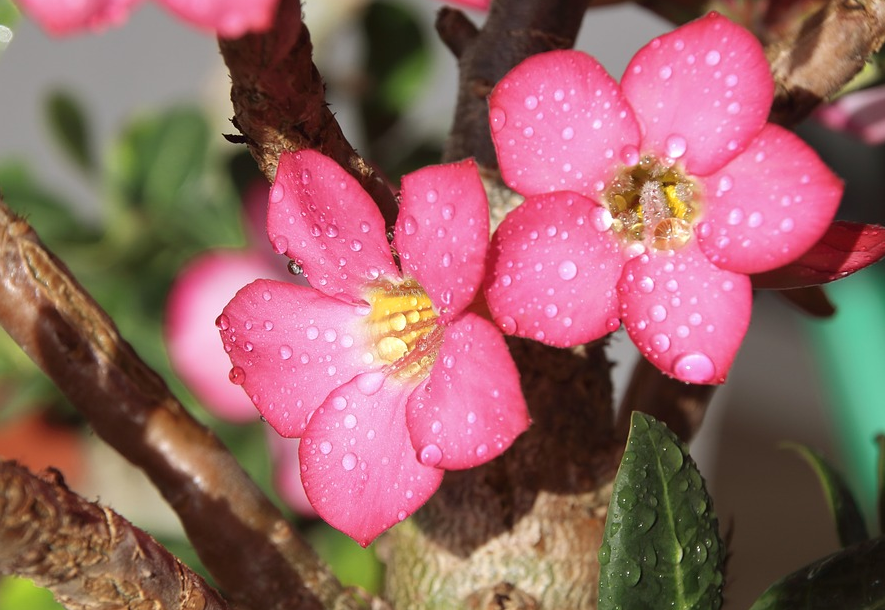
I. Medicinal benefits of desert rose
1. Desert rose can be applied externally and also used internally.
External application: it has the effect of treating heat toxicity caused by high temperatures combined with exposure to the scorching sun (which shows up on the skin), or the bacterial infection that occurs after scratching prickly heat sores until they break;
Internal use: it can be used together with other medicines and has the effect of treating excessive vaginal discharge, mumps, bloody stool, vomiting blood, rectal prolapse, dysentery, nausea, and so on.
2. Desert rose is also a fairly good all-natural sedative. It can improve the problem of poor sleep quality. Especially for people with insomnia, it allows them to sleep soundly and fully.
3. According to research, this plant also has a certain protective effect on the human heart. It can increase blood supply while also improving blood circulation.
Friendly reminder: although desert rose has medicinal benefits, it is likewise a toxic plant, and its sap is especially highly toxic. It must be used under the guidance of a specialist and must not be handled on one's own.
II. Ornamental value of desert rose
Desert rose is an indispensable ornamental plant for gardening enthusiasts and bonsai enthusiasts. Some people even compare it to one of the works of art worth collecting, which shows how high its ornamental value is. It can decorate a classical-style home as well as suit a modern art home, and planted in a courtyard it will also become an eye-catching landscape.
III. Growing methods and precautions for desert rose
1. Soil
To grow desert rose, use a sandy soil with good drainage. You can mix loose sandy soil with leaf mold, and adding a moderate amount of bone meal is also fine.
2. Watering
Desert rose is drought-tolerant, so watering does not need to be too frequent and the amount of water does not need to be too much. Too much water easily causes problems, and if water accumulates the roots will rot and the branches will be affected too. In summer when temperatures are high, water once every 2-3 days; in winter when temperatures are low, water about once every 7 days, but there must be no standing water in the pot.
3. Fertilizing
Fertilize in moderation, once a month is enough. It likes phosphorus and potassium fertilizer, or applying a little base fertilizer is also fine.
4. Light
It likes to grow in an environment with high temperatures and relatively abundant light, so in winter when temperatures are low it should be moved indoors, or some warming measures should be taken.
5. Precautions
Repotting: when growing desert rose, it is best to change the pot once a year. Before repotting, do not water and wait until the soil is slightly dry, then tip it out and trim the root system, and finally put it into a new pot.
Pruning: its branches tend to grow leggy easily. To avoid affecting its appearance, grafting can be used to improve it. After it reaches a certain height, cut it according to a certain shape, then graft the upper part of the branch using the cleft grafting method. After grafting, the flowers will be very compact and very beautiful, with strong ornamental value.