How to care for desert rose in winter? Master these growing tips
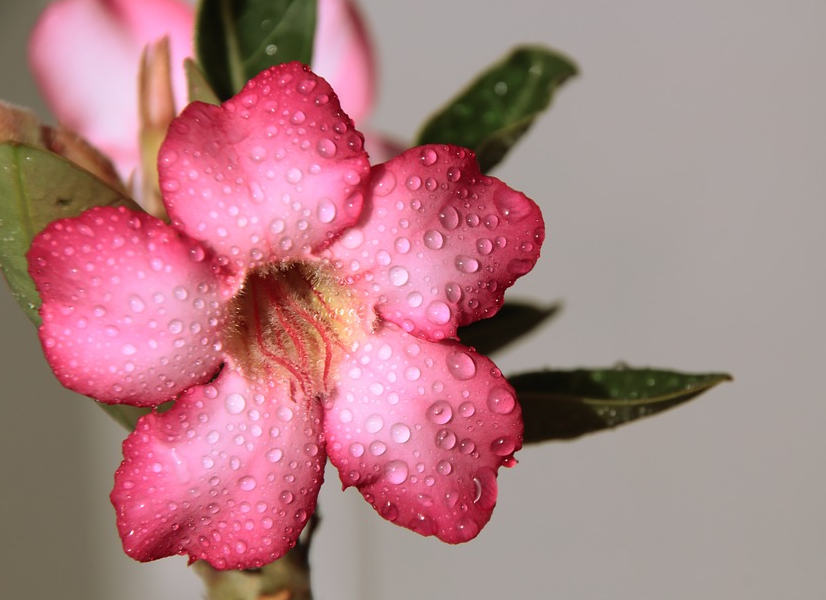
Desert rose (Adenium obesum) - the name makes it sound like a rose growing in the desert, but in fact its appearance has little resemblance to a rose. Nor is it a rose that grows in desert regions. It is actually a succulent plant. It can also be called a succulent shrub or small tree. Its flowers look like little trumpets, red like red roses, and the color is very vivid. It can bloom continuously throughout the year. But desert rose loves light and warmth - so how should this cold-sensitive desert rose get through the winter? Here are desert rose growing tips: how to care for desert rose in winter.
I. Light
The desert rose is native to East Africa to the southern Arabian Peninsula. So it likes to grow in high temperatures, arid climates and environments with plenty of sunlight. Desert rose is afraid of cold, so in winter it is best to put it indoors, behind a window where it can get sunlight, and keep it dry.
II. Watering
Desert rose is very drought-tolerant, so each time you water it you must not water too much. If you water too much, its roots will rot. And winter temperatures are relatively low, so you should control watering even more appropriately - watering once a week is enough. Also be careful to keep the potting soil dry, as this promotes the growth of the desert rose.
III. Soil
Because of its growing conditions, it also has certain requirements for soil quality. Sandy soil has good drainage, so it is the first choice. During its lush growing period, we can add some small gravel or river sand to its substrate, which helps with drainage. A mix of leaf mold and fertile, loose sand is the best.
IV. Fertilizing
When fertilizing desert rose, under normal circumstances, applying phosphorus and potassium fertilizer once a month is enough. But in autumn and winter it enters a dormant period, when its growth is very slow, or it may even stop growing. So in autumn and winter no fertilizing is needed.
V. Pruning
Pruning desert rose is also very important. If you do not pay attention to pruning it normally and let it grow freely, it will easily lose its own ornamental value. The best time to prune is after the flowering period. Be sure to remember that the more branches it has, the more flowers it will produce. If you want it to bloom more, then you need to find ways to keep more side shoots.