How to grow a bonsai banyan tree? Detailed four-season care tips
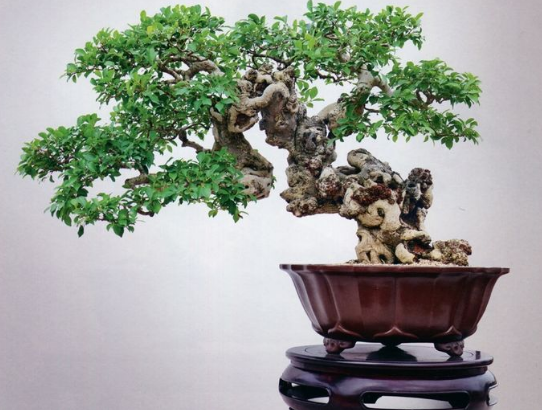
A bonsai banyan tree is a potted banyan grown by carefully cultivating the trunk, roots, stems and leaves of an ornamental banyan through pruning, branch shaping, wiring and bending, and grafting, so that it becomes a unique artistic shape. Many people like to place one in their home or courtyard, so how should you care for it to keep it growing well? The following are four-season care tips for a bonsai banyan tree.
I. Spring care
1. Repotting
In spring, as temperatures rise, air humidity gradually increases, the metabolism of the branches and leaves gradually speeds up, and new leaves begin to sprout. At this time, loosen the soil once or repot. Loosen the soil once a year, choosing a sunny day. Use a bamboo stick or a small trowel, and be careful not to damage the roots.
As for repotting, choose a suitable pot according to the size of the plant to promote better growth.
2. Fertilizing
Spring is the season when the banyan begins to grow rapidly, so timely fertilizing is very necessary. Apply nitrogen-phosphorus-potassium granules into the potting soil, cover with soil, and water the next day. Do not water too much. Avoid nutrients flowing out from the bottom of the pot.
3. Cleaning the leaves
After a winter of indoor care, once spring arrives, rinse the leaves with clean water so they can carry out photosynthesis better.
II. Summer care
1. Watering
Make sure to water once in the morning and once in the evening every day. You can also water on rainy days, but be careful not to let it be exposed to rain. For smaller pots, you can cover the pot surface with a damp cloth to prevent water evaporation, or place a tray without holes under the bottom of the pot so the roots can grow better.
2. Fertilizing
In summer, you must ensure the bonsai banyan has sufficient nutrients. Apply a compound fertilizer once every 10 days. If you are not confident about the amount, it is recommended to choose a liquid fertilizer. After fertilizing, do not place it directly in the sun.
3. Pruning
Summer temperatures are relatively high, and the buds of the banyan have a strong ability to sprout, so pay attention to timely pruning, or wire and shape the branches and leaves.
III. Autumn care
1. Watering
Autumn is windy and dry, and the potting soil easily dries out, so watering is a very important task in autumn. In early autumn, water once in the morning and once in the evening each day; by late autumn, watering once in the evening is enough. Pay attention to the method when watering; you can water in stages, first watering the leaves and branches, then watering the potting soil thoroughly.
2. Pruning
Autumn is relatively cool, and the banyan grows relatively steadily. At this time, you can prune the branches that grew in summer, pinch back the tips and remove buds, to keep the branches and leaves neat.
IV. Winter care
1. Keeping warm
Winter weather is relatively cold, the banyan basically stops growing, and no fertilizing is needed. Promptly move the plant indoors to avoid frost, rain and snow. Keep the indoor temperature above 5°C.
2. Supplementary lighting
For a bonsai banyan kept indoors, place it in a spot indoors with strong light. At night, you can use lights to increase the lighting time, and pay attention to timely ventilation and air exchange.
3. Watering
In winter, you should likewise maintain the banyan's vitality. Often wipe the leaves with a damp cloth to keep them clean. Maintain a good level of soil dryness; water about once every 3 days to keep the soil moist. If leaves turn yellow in winter, after ruling out pests and diseases, it is basically caused by lack of water, and timely watering will solve it.