Narcissus bulbs: choose large or small? Planting methods and the reasons for cutting the bulb explained
Narcissus is a favorite of many people. Unlike other perennial herbaceous flowers, it has the characteristics of beginning growth in autumn, blooming in winter, storing nutrients in spring, and going dormant in summer. So if you want to plant narcissus, is it better to choose large bulbs or small ones? How do you plant them? Why cut the bulb?
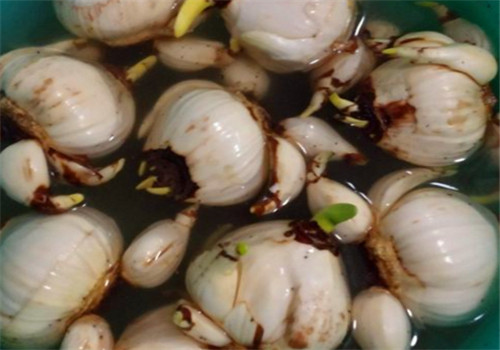
I. Narcissus bulbs: is it better to choose large or small ones?
Judging by size alone, large bulbs are better than small ones, but when selecting narcissus bulbs, you should consider the following aspects comprehensively.
(1) Look at the shape: High-quality narcissus bulbs are generally large, flat in shape and hard in texture, with relatively wide spacing between the longitudinal vein stripes on the surface, a very taut inner membrane, bright skin color, a broad and thick root plate, and symmetrical small bulbs growing beside the main bulb.
(2) Observe the color: Seen from the outside, bulbs that are dark brown, with an intact covering membrane, bright luster, and no traces of rot or pest damage are top grade.
(3) Press: Pressing is the main method for selecting and identifying how many flower scapes a narcissus has. You can pinch the bulb with your thumb and index finger and press slightly. If the outline feels columnar, elastic and fairly firm, it is a flower scape; if it feels soft, has a flat outline and slightly poorer elasticity, it is mostly a leaf bud.
(4) Ask about the "zhuang": Narcissus producing areas generally use bamboo baskets of the same size for packaging, with four packaging specifications of 20, 30, 40 and 50 bulbs per basket, commonly known as 20 zhuang, 30 zhuang, 40 zhuang and 50 zhuang. The fewer the number packed per basket, the larger the individual bulbs. Large bulbs have more flower stalks and they are thicker, and the flower buds contain more flowers.
II. Why cut narcissus bulbs?
1. It allows the flower buds to grow out as early as possible, because cutting the bulb cuts open the outer skin wrapping the flower buds.
2. After cutting the bulb, the flower buds grow more robustly, because after cutting they do not need to use extra nutrients to break through the outer skin.
3. This point is more beneficial to gardening friends who love carving; while cutting the bulb, you can also carve it to create different plant shapes.
4. It can enhance the ornamental value of the plant, especially during the flowering period. Because when cutting the bulb, all the yellowed, dried and shriveled outer skin can be removed, which serves a cleaning function.
Method of cutting the bulb:
1. Make the cut right in the middle of the two lateral buds, with a cutting depth of about 1 cm of the bulb wall thickness. Friends need not worry about cutting the bud in the middle, because the middle bud generally grows right in the center of the whole bulb and is very thin, while the bulb thickness is far greater than 1 cm.
2. After cutting one side, turn to the back, make another cut in the same way, then split it open along the cut line.
III. How do you plant narcissus?
Narcissus likes sunlight and warmth, requires high air humidity, is not very cold-tolerant, and fears heat. During the vegetative growth period it needs moist but not waterlogged sandy soil.
There are two cultivation methods for narcissus: water culture and soil culture.
1. Water culture method for narcissus
(1) First peel off the black old stem slices of the bulb and scrape the old roots of the bulb clean. When scraping the old roots, be careful not to damage the roots of the white stems and leaves, where there are many root buds preparing to grow out.
(2) After cleaning, according to the number and position of the sprouting buds, use a knife to make a vertical cut at about 1/3 on the left and right of the bulb. Do not damage the sprouting buds, otherwise the leaves that grow out will have knife wounds.
(3) After all the handling is done, soak the bulb in clean water, or rinse the wounds under a tap, to wash away the mucus seeping from the wounds. If rinsed clean, the cut wounds will not be so dark in color afterward and will not turn black.
(4) Place the treated narcissus upright in a shallow narcissus pot, adding water until it covers one third of the bulb. Quartz sand, pebbles, etc. can be used in the pot to fix the bulb.
(5) During the day, the narcissus pot should be placed in a place with sufficient sunlight, and moved indoors at night, with the water in the pot poured out, to control leggy leaf growth. Add clean water again the next morning, and be careful not to change the direction of the bulb. Just after potting, narcissus can have its water changed once a day, then once every 2-3 days, and after the flower buds form, once a week. Narcissus grows well at 10-15 degrees, blooms in about 45 days, and the flowering period can last more than a month.
2. Soil culture method for narcissus
(1) In mid-to-late October, use fertile sandy soil to plant large bulbs in a small flower pot with holes, planting half and leaving half exposed. Some fine sand should be placed underneath the bulb in advance to facilitate drainage.
(2) Place the flower pot indoors in a place with sufficient sunlight and suitable temperature. 4 to 12°C is best. Too low a temperature easily causes freezing damage, while too high a temperature plus insufficient light easily causes leggy growth, weak plants and a short flowering time, reducing ornamental value.
(3) During management, if the light and temperature requirements are met, the leaves will be thick and large and the flower stalks robust, thus making the flowers bloom larger and the fragrance last longer. For soil-cultured narcissus, apply liquid fertilizer two to three times before flowering.