How to grow Grifola frondosa? A summary of 6 key points of high-yield cultivation techniques
Grifola frondosa, commonly known as “maitake”, is an edible and medicinal mushroom, often found growing wild around chestnut trees in summer and autumn. So how do you grow Grifola frondosa? What are the environmental requirements for its growth? Below, we introduce the 6 key points of high-yield cultivation techniques for Grifola frondosa.
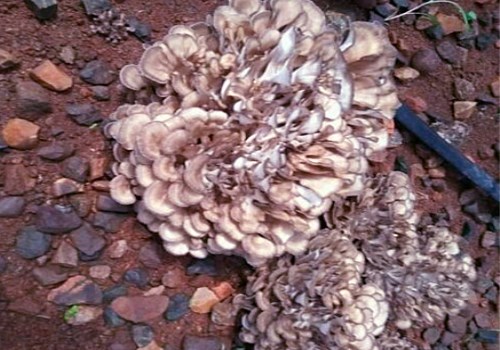
I. What are the environmental requirements for the growth of Grifola frondosa?
1. Nutrition When cultivating Grifola frondosa artificially, its requirements for nutrition (carbon source, nitrogen source, mineral elements and vitamins) are not much different from those of sapwood-rotting fungi such as shiitake and nameko.
2. Temperature The mycelial growth temperature of Grifola frondosa is 5°C-35°C, with the optimum at 25°C-30°C. The primordium formation temperature is 15°C-25°C, with 20°C being optimal. The optimum temperature for fruiting body development is 18°C.
3. Water and humidity On sawdust substrate, the optimum water content is 50%-55%, and during the mycelial growth stage the water content is 60%-65%. Humidity management is basically the same as for other edible mushrooms.
4. Light During production, Grifola frondosa should receive light from the early stage of mycelial culture. The fruiting body formation stage requires only 50 lux of light intensity, while the fruiting body growth stage requires 200 lux-250 lux. If the light is too weak, deformed mushrooms are easily formed.
5. Air Grifola frondosa has a higher oxygen demand than other edible mushrooms. If ventilation is poor, the fruiting bodies will develop poorly.
6. pH Grifola frondosa mycelium can grow at pH 3.4-7.5, with the optimum pH at around 6.5.
II. The 6 key points of high-yield cultivation techniques for Grifola frondosa
1. Cultivation time
Grifola frondosa is a mesophilic fungus. Based on the optimum temperatures for mycelial growth, primordium formation and fruiting body growth, in northern regions bag making, inoculation and culture are generally carried out from January to March, and fruiting management from April to June. For autumn cultivation, bag making is generally scheduled for September, with fruiting in November.
2. Material selection and formulation
Grifola frondosa is a wood-rotting fungus, and generally broadleaf tree sawdust such as beech and oak is used as the substrate. The particle size is 0.5 mm-2 mm. Below 0.5 mm, the particles are too fine and deformed fruiting bodies easily appear; above 2 mm, the particles are too coarse and yields easily decline. Adding a moderate amount (below 30%) of some conifer sawdust gives better results. Short branches also give very good cultivation results after sterilization. In southern regions, sugarcane bagasse, rice straw and other materials can also be used as the main substrate. Nutritional additives are mainly wheat bran and corn flour, with corn flour being better; using 30% wheat bran + 70% corn flour also works very well. The amount of nutritional additives generally accounts for 20%-30% of the total dry material weight; excessive additives easily lead to deformed mushrooms.
Substrate formulas: ① Broadleaf sawdust 73%, wheat bran 10%, corn flour 15%, sugar 0.8%, gypsum 1.1%, superphosphate 0.1%, water content 64%, pH 6.5. ② Broadleaf sawdust 38%, cottonseed hulls 30%, wheat bran 7%, corn flour 15%, sugar 1%, gypsum 1%, water content 64%, pH 6.5. ③ Broadleaf sawdust 30%, cottonseed hulls 30%, wheat bran 7%, corn flour 13%, sugar 1%, gypsum 1%, fine soil 18%, water content 64%, pH 6.5.
3. Mixing, bagging, sterilization, inoculation
① Mixing: Weigh out sufficient raw materials according to the formula. Mix the dry materials evenly first. Dissolve the sugar in water and blend it into the material, mixing well. The water content is right when a firm squeeze of the material in the hand produces 1-2 drops of water between the fingers. Test the pH with an indicator; if too acidic add lime, if too alkaline add superphosphate to adjust the pH to 6.5.
② Bagging: Use 17 cm × 33 cm × 0.004 cm or 15 cm × 30 cm × 0.004 cm polypropylene bags for filling. When filling, the material should be firm at the top and loose at the bottom, firm outside and loose inside; the whole bag must not be too tight. Seal the bag opening with a flared ring or sponge plug, or seal with a stapler.
③ Sterilization: Sterilize immediately after bagging. During sterilization, raise the temperature to 100°C as quickly as possible. For atmospheric pressure sterilization, hold at 100°C for 8 hours-10 hours; for autoclaving, hold at 121°C for 1.5 hours-2 hours. After sterilization is finished, wait until the temperature drops below 40°C before opening the sterilization chamber, then move out the bags and place them in a clean room to cool.
④ Inoculation: When the bag material temperature drops to 25°C, inoculation can be carried out under sterile conditions. For bags with rings, poke a hole in the middle and place the spawn in the hole; for bags without rings, break up the spawn and place it on the surface of the substrate, preferably covering the surface completely with spawn. The amount of spawn needed is 15 g-20 g.
4. Management during the mycelial growth stage
① Temperature: early stage (from inoculation until mycelium has grown through 1/4) 25°C-28°C; middle stage (from 1/4 growth until fully run through) 23°C-25°C; late stage (after the mycelium has fully run through) 22°C.
② Humidity: early stage 60%, middle stage 65%, late stage 70%.
③ Ventilation: no air exchange is needed in the early stage; air exchange is needed in the late stage, and the carbon dioxide concentration should be controlled.
④ Light intensity: dark culture is preferable in the early and middle stages. If light shines on the bags during this period, the bag surface turns light brown, primordium formation is delayed, and primordia may even fail to form. In the early stage the light intensity is 10 lux-50 lux, and in the late stage 50 lux-100 lux.
After inoculation, move the bags to the culture room for dark culture at a room temperature of 28°C. When arranging them, leave 3 cm-4 cm between bags to ensure good ventilation and help dissipate heat. About 15 days after inoculation, mycelial growth speeds up and respiration increases, so the substrate temperature rises by 2°C-3°C; the culture room temperature should be lowered by 3°C, making the room temperature 25°C. After the mycelium has basically run through, lower the room temperature to about 22°C to avoid excessive mycelial growth and lack of vigor later. Keep humidity at 60% in the early stage for a high yield and less contamination; in the late stage keep humidity at 70%, which favors primordium formation. In the late culture stage, give a certain amount of light (about 50 lux), and mycelial strands will form on the surface of the substrate, rising in a steamed-bun shape; the raised part develops wrinkles, gradually changing from grayish white to dark brown, with water droplets condensing. At this point the bags should be moved into the fruiting room. If moved into the fruiting room too early, the primordium surface will rot from bacterial contamination; if the water droplets on the wrinkled part have disappeared before moving into the fruiting room, it is too late and will adversely affect mushroom quality. To promote as uniform primordium formation as possible, carry out temperature fluctuation treatment in the late culture stage, that is, lower the temperature by 2°C-3°C. If the mycelium on the substrate surface forms a membrane rather than rising in a steamed-bun shape, the cause may be excessive light in the early culture stage or the substrate hardening during sterilization.
5. Management during the fruiting stage
After moving to the fruiting room and 2 days-3 days later, once primordia have formed on the bag surface, transfer promptly to fruiting management. First cut off part of the bag opening and make several slits around it (the bottom can be cut in a cross shape), then arrange the bags in pre-dug trenches in the shed. If the bag is opened completely, the surface primordia may differentiate into multiple fruiting bodies, making the fruiting bodies small and lowering quality. Cover the bags with 1 cm-1.5 cm of granular wet soil. The soil used for covering should be low in organic matter, preferably loam, with a water content of 20%-22%, and must be granular; otherwise poor air permeability will affect primordium differentiation and growth. Before use, the covering soil should be sterilized and disinfected with formalin and dichlorvos. Ventilate 3 times a day, but avoid strong wind blowing directly on the mushrooms. Avoid high temperature and high humidity; the temperature should preferably be around 20°C, and air humidity should be controlled at around 85%. Light intensity should be controlled at 200 lux-300 lux. Spray water frequently, finely and evenly to prevent the covering soil and mushroom surface from drying out. After the mushroom flakes have fully differentiated, the light intensity can be increased to 300 lux-500 lux to turn the cap surface grayish black and improve commercial quality. During the primordium differentiation and fruiting body growth stages, the four environmental factors of temperature, humidity, light and air should be strictly controlled; otherwise deformed mushrooms easily appear, causing reduced yields.
6. Harvesting
Harvest when the flakes have fully differentiated, are irregularly semicircular, extend upward and outward in a semi-overlapping manner resembling a flower, and the flake edges no longer have a grayish-white growth ring and are slightly curled inward. Because Grifola frondosa is generally made into dried products, stop watering before harvest, and immediately after harvest cut off the root soil and sediment with a small knife and remove other debris from the mushroom bodies.