How much is a banyan tree per pot? Pruning methods and solutions for yellowing leaves
The banyan tree, also called the small-leaved banyan, evergreen, and banyan aerial root, is the provincial tree of Fujian Province and has also been named the city tree of Fuzhou and Ganzhou. The banyan tree blooms from May to June and is a bonsai with ornamental value. So, how much is a banyan tree usually per pot? How do you prune it? What should you do if the leaves turn yellow?
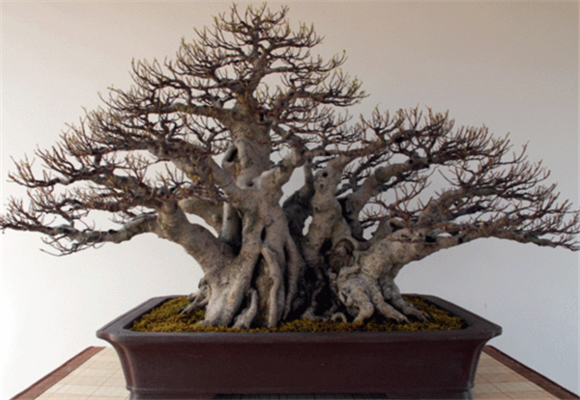
I. How much is a banyan tree per pot?
Banyan bonsai generally come in two types: aerial-root banyan bonsai and ginseng banyan bonsai. They are widely sold in large quantities at flower markets. Their price is determined by the size of the bonsai, the degree of uniqueness, and aesthetic value; better ones cost more, but usually within 1,000 yuan. Ginseng banyan bonsai generally cost about 25-50 yuan per pot, while aerial-root banyan bonsai cost about 100-250 yuan.
II. How do you prune a banyan bonsai?
1. Leaf removal
Leaf removal can promote the tree to sprout new leaves. For some tree species such as elm and Huangjing (Vitex), leaf removal can make originally large leaves become smaller and more delicate. For some colored-leaf tree species, such as maple and pomegranate, leaf removal can make the leaf color more vivid. However, removing leaves eliminates the photosynthesis of those leaves and causes the tree stump to lose a great opportunity to accumulate nutrients; for some weak stumps, it may cause the plant to weaken or even die. Therefore, it is best to carry out leaf removal on vigorously growing stumps.
2. Shortening
The method of cutting off part of a current-year branch is called shortening, which can rapidly increase the branching layers of the branch. Generally speaking, it is the pruning of the top layer of the tree's branches and can make the tree's outline fuller. According to how much is cut off, shortening can be divided into light shortening, moderate shortening, and heavy shortening. Light shortening generally cuts off 1/5 of the branch tip, removing the branch's apical growth advantage, forming more medium and short branches, making the tree shape fuller and thickening the mother branch. Moderate shortening generally refers to cutting off 1/2 to 3/5 of the branch tip, forming more medium and long branches and possibly promoting branch growth. Heavy shortening refers to retaining 1/5 of the branch and can promote the growth of 1-2 vigorous branches below the cut, generally used to cultivate the main trunk branch.
III. What should you do if the banyan tree's leaves turn yellow?
1. Drought yellowing
The yellowing of a banyan bonsai from lack of water is different from the yellowing from too much water. Yellowing from lack of water shows as the leaf tips or edges becoming scorched and dry, with old leaves turning yellow and falling from the bottom up, but new leaves growing relatively normally. Just make sure to water thoroughly and soak the soil when watering.
2. Water yellowing
In a banyan bonsai, the young leaves turn dull yellow and lose their luster, the old leaves show no obvious change, the branches are thin and yellow-green, and the new shoots shrink and stop growing. This indicates overwatering. Take the plant out of the pot, place it in a ventilated and shady spot to let the soil ball dry naturally, then put it back in the pot.
3. Lack of light
If a banyan bonsai's leaves are placed in a shaded environment for a long time, the leaves cannot get enough sunlight and cannot form chlorophyll. The whole plant's leaves turn yellow and then fall off. Supplementing light can prevent this problem.
4. Scorch yellowing
Strong direct sunlight on a banyan bonsai easily causes the leaf tips and leaf edges to scorch, and yellow spots appear on the sun-facing part of the leaves. Moving it to a shady place is enough.
5. Lack of fertilizer
Lack of fertilizer in a banyan bonsai shows as the young leaves becoming lighter in color, yellow or pale green, while the old leaves remain relatively normal or gradually turn from green to yellow. Check the potting soil; if there is dry caking, replace the soil. Usually apply light fertilizer frequently and water with some alum water at the appropriate time.
6. Fertilizer yellowing
Yellowing of banyan bonsai leaves caused by too much fertilizer or too high a concentration shows as dry brown tips on the new leaves; generally the leaf surface is thick and lusterless, and uneven and not spread out, while the old leaves become scorched yellow and fall off. Stop fertilizing immediately; in severe cases, use a large amount of clean water to rinse out part of the fertilizer.