How much does a pot of Aglaia odorata cost, and what should you do if it drops leaves during cultivation?
Aglaia odorata, also known as four-season Aglaia or broken-grain Aglaia, is an evergreen shrub or small tree. Its branches and leaves are dense, and its foliage is verdant and glossy. It blooms multiple times within a year, most profusely in summer and autumn, with a fragrance resembling that of orchids. In southern courtyards, Aglaia odorata is also an excellent landscape tree. So, how much does a pot of Aglaia odorata generally cost on the market? What should you do if it drops leaves during cultivation?
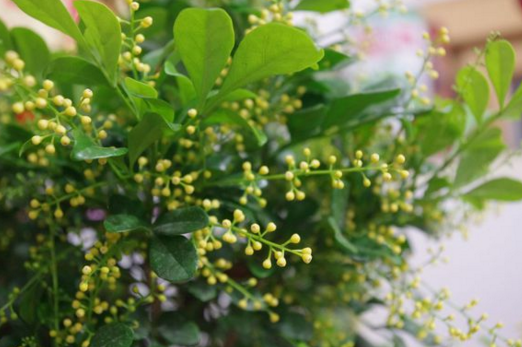
I. How much does a pot of Aglaia odorata cost?
It is understood that Aglaia odorata is very cheap on the market, generally priced between 5-15 yuan per pot. It is native to Southeast Asia and is now widely cultivated in China. Propagation is by cuttings, air layering, or sowing. It likes warmth and ample sunlight. For potting, use loose soil with good drainage and aeration.
II. What should you do if Aglaia odorata drops leaves?
Aglaia odorata likes moisture, and watering should be moderate during the growing period. If watered too much, it easily causes root rot, and the leaves turn yellow, dry up, and fall off; if watered too much during the flowering period, it easily causes flower and bud drop; if watered too little, it causes the leaf edges to dry up and buds to wither. Therefore, when summer temperatures are high, besides watering 1-2 times a day, also frequently spray and wash the branches and leaves with clean water and sprinkle water on the ground where it is placed to increase air humidity. At the same time, fertilizing should also be appropriate. Since Aglaia odorata blooms many times within a year, after each blooming, promptly apply 2-3 rounds of fully decomposed dilute liquid fertilizer, so that it keeps blooming continuously with a rich fragrance. Aglaia odorata likes acidic soil, and for potting, use a growing medium based mainly on leaf mold. During the vigorous growth period, spray 0.2% ferrous sulfate solution once a week, and the leaves will be green and the flowers abundant.
[Methods for handling leaf drop]
First, too much water. Too much water prevents the roots of Aglaia odorata from breathing, and moisture cannot be conducted to the leaf surface, causing suffocation and root rot. When Aglaia odorata has too much water, it shows as the lower leaves curling at first, drying up, turning brown, and dropping, which then causes the upper green leaves to also drop within a short time.
Second, too little water. Long-term water shortage causes the roots of Aglaia odorata to die. At this point, watering it thoroughly will cause a large number of leaves to drop within a short time, leading to the death of the plant. There are also many other causes, such as improper fertilizing, poor ventilation, and leaf drop from freezing.