Why Are the Leaves of the Ping'an Tree Turning Yellow? Detailed Guide to Flowering and Care Methods
The Ping'an tree (Cinnamomum kotoense), an evergreen small tree of the genus Cinnamomum in the Lauraceae family, was originally named Lanyu cinnamon, also known by aliases such as Hongtouyu cinnamon and Hongtoushan cinnamon. It is mostly native to Lanyu Island and is a verdant, auspicious Lanyu cinnamon. The Ping'an tree flowers from June to July, and its fruit ripens from August to September. When growing a Ping'an tree, why do the leaves turn yellow? And how should it be cared for?
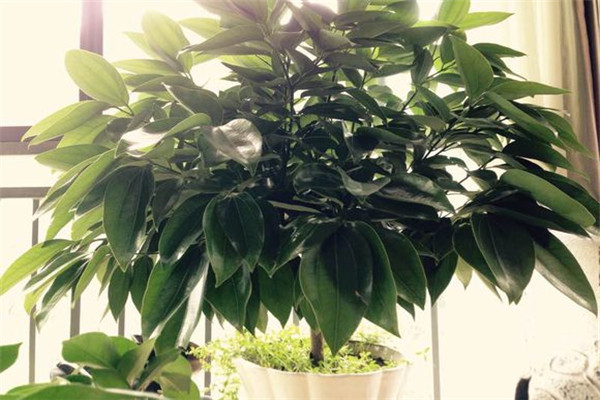
I. Why Do the Leaves of the Ping'an Tree Turn Yellow?
Analysis of the causes of yellowing leaves in the Ping'an tree during cultivation:
1. Water-yellowing, caused by overly frequent watering; its characteristic is that the old leaves show no obvious change while the young leaves turn yellow.
Solution: Immediately reduce watering.
2. Drought-yellowing, caused by lack of water and drought; its characteristic is that the old leaves turn yellow first, from the bottom upward.
Solution: Water promptly; otherwise, prolonged water shortage will cause the whole plant's leaves to turn yellow and may even lead to death.
3. Starvation-yellowing, caused by insufficient fertilizer, low fertilization concentration, and overly long intervals between fertilizing; its characteristic is that the young leaves and tender stems turn yellow first.
Solution: Fertilize promptly. If this phenomenon is noticed and fertilizer is not applied in time, it will cause the whole plant's leaves to turn yellow and may even lead to death. Be sure not to apply a large amount of concentrated fertilizer all at once.
4. Fertilizer-yellowing, caused by overly frequent fertilizing or excessively high concentration; its characteristic is that the young leaves are thick, glossy, and uneven.
Solution: Reduce fertilizing, cultivate (loosen) the soil, and water.
5. Sunburn-yellowing, caused by prolonged exposure to scorching sun, which leads to dry, yellowing leaves.
Solution: Immediately move it to an environment with 40% to 50% shading for care.
6. Iron-deficiency yellowing of leaves, common in woody flowering plants in greenhouses; due to large variations in soil fertility conditions, yellowing leaves often occur. Its characteristic is that young leaves are obviously affected while old leaves are less so, the leaf mesophyll is yellow, the leaf veins are green, and a typical network pattern forms.
Solution: This can be solved by applying a ferrous sulfate aqueous solution. The method is: mix 7 parts cake fertilizer, 5 parts ferrous sulfate, and 200 parts water to make a diluted solution and water with it.
II. How Should the Ping'an Tree Be Cared For?
1. Potting Soil Selection
For the soil, it is best to choose a loose, fertile, well-draining acidic soil rich in organic matter. You can pinch up the soil with your hand; one with more granules and a looser texture is suitable. Some soils contain a lot of fine earth powder, and long-term watering easily causes the soil to compact, so these should not be chosen.
There are no great requirements for the flower pot; just choose one that suits the size of the plant and meets the growth needs of the Ping'an tree. As for the material, do not choose a lightweight plastic pot, as it cracks easily.
2. Sunlight Requirements
All plants need sunlight for photosynthesis to ensure rapid growth. As a light-loving plant, the Ping'an tree develops a metallic sheen on its leaves in a sunny environment. But at the same time, it is very afraid of scorching sun, so in summer provide shade promptly under strong sun, or place it in a spot indoors with poorer light.
Plants of different ages have different light requirements. For those grown 3 to 5 years, provide moderate sunlight and avoid scorching sun. For 6 to 10 years, avoid scorching sun and give more sun exposure. That is to say, the older the Ping'an tree, the more sunlight it needs.
3. Watering Method
Spring and autumn are the growing seasons; keep the potting soil moderately moist, frequently spray water on the leaf surface to ensure sufficient air humidity, and halve the watering amount in winter.
In addition, during watering, a small amount of ferrous sulfate solution can be added to the water, especially in northern regions, to adjust the acidity and alkalinity of the soil.
4. Fertilization Knowledge
The Ping'an tree quite likes fertilizer. Apply a compound fertilizer once a month during the growing season. After the weather turns cool in autumn, apply a supplementary phosphorus-potassium fertilizer to increase the Ping'an tree's cold resistance. Stop fertilizing when the winter temperature is low.
During fertilization, if leaves turn yellow and fall off, it is because improper fertilization has caused root necrosis. Water the plant or take it out of the pot for emergency treatment.
5. Pruning Method
When the branches and leaves of the Ping'an tree are too dense, you can prune the branches in April when the weather is clear. It is recommended to shorten overly long branches and cut off diseased and weak branches to increase the plant's light penetration. When pruning, note that a certain distance should be kept from the cut to the tender bud to avoid the branch withering after pruning.
In addition, when the plant is small, you can pinch off the growing tips to encourage more branches to grow.
6. Loosening the Soil and Repotting
The Ping'an tree is usually grown in a large pot, and the plant is relatively large (except for small bonsai). It is recommended to loosen the soil once a month to keep the potting soil loose. When loosening the soil with a tool, do not break the roots.
Small Ping'an trees should be repotted once a year, and large ones every 2 to 3 years. When repotting, replace 1/3 of the old soil and cut off necrotic roots to ensure the normal growth of the Ping'an tree.