How much does dried daylily cost per jin in 2018-2019? Is fresh daylily poisonous? What is the market prospect for growing it?
Daylily, also known as golden needle vegetable, lemon daylily, or forget-sorrow grass, is a traditional vegetable that people love to eat. It has high nutritional value and is regarded as a “delicacy on the table”. It is cultivated throughout both northern and southern China, harvested twice a year in spring and autumn, and has the edible benefits of clearing heat and promoting urination, and detoxifying and reducing swelling. So how much does dried daylily cost per jin in 2018-2019? Is fresh daylily poisonous? What is the market prospect?
How much does dried daylily cost?
The price of dried daylily is around 20 yuan per kilogram. Dried daylily is not a hard-to-find ingredient, so the price is fairly affordable. Generally speaking, the price of dried daylily is around 20 yuan per kilogram. After soaking, dried daylily expands quite a lot, so one jin of dried daylily can be eaten for several meals.
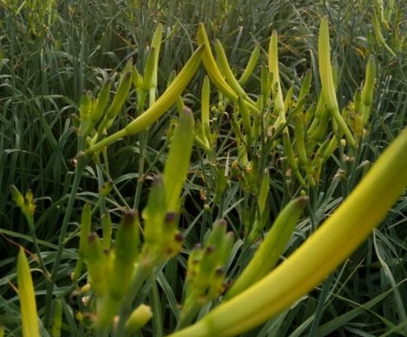
Is fresh daylily poisonous?
Fresh daylily contains a substance called “colchicine”. Although it is not toxic by itself, after being absorbed through the gastrointestinal tract, it is oxidized in the body into “dicolchicine”, which is quite toxic. Therefore, when eating the fresh product, do not eat too much each time. Since the toxic component of fresh daylily can be weakened or eliminated at a high temperature of 60 degrees, when eating it, first blanch the fresh daylily in boiling water, then soak it in clean water for more than 2 hours, take it out, wash it with water, and then stir-fry it. In this way, colchicine can be destroyed, and it is safe to eat fresh daylily. When eating the dried product, consumers had best soak it multiple times in clean water or warm water before eating, so that residual harmful substances such as sulfur dioxide can be removed.
Nutritional value of daylily
1. Brain-boosting effect: Daylily has a good brain-boosting and anti-aging effect because it is rich in lecithin. This substance is a component of many cells in the body, especially brain cells, and plays an important role in enhancing and improving brain function. At the same time, it can remove deposits in the arteries and has special therapeutic effects on symptoms such as poor concentration, memory decline, and cerebral artery blockage, so people call it the “brain-boosting vegetable”.
2. Beautifying the skin: Regularly eating daylily can also moisturize the skin, enhance the skin's toughness and elasticity, make the skin delicate, plump, smooth and soft, reduce wrinkles, and fade pigmentation. Moreover, daylily also has antibacterial and immune functions, has mild to moderate anti-inflammatory and detoxifying effects, and has a certain effect in preventing infection.
3. Lowering blood pressure: Daylily can significantly reduce serum cholesterol levels, which is beneficial to the recovery of patients with high blood pressure, and can be used as a health-care vegetable for patients with high blood pressure.
4. Cancer prevention effect: Daylily also contains active ingredients that can inhibit the growth of cancer cells, and its rich crude fiber can promote defecation, so it can be used as a food for preventing and treating intestinal tumors.
How to choose daylily
Look at the appearance
Those with a bright yellow color (light yellow or golden yellow) tinged with brown, long and thick strips, uniform thickness, fresh texture, and no impurities are superior; those with a deep yellow color and a slight reddish tint, short and thin strips, and not very uniform are of secondary quality; those with a yellow-brown color, short, thin, curled strips, uneven length, and carrying sand and mud are of the poorest quality, and inferior daylily may even have a blackish color and be moldy and deteriorated.
In addition, dried goods fumigated with sulfur have a color different from the normal color. Fumigated daylily is light yellow or white, and the yellow and white colors are unevenly distributed; daylily that has not been fumigated is golden yellow or brownish yellow, with an even color.
Smell the aroma
When smelling the odor of daylily, those with a fresh, pleasant fragrance are high quality; inferior daylily has a moldy smell, sulfur smell, or smoke smell. Those with a moldy smell are deteriorated products, those with a sulfur smell are fumigated products, and the more the sulfur dioxide exceeds the standard, the stronger the sulfur smell; those with a smoke smell have been seriously contaminated by smoke.
Grab a handful
Grab a handful of daylily and squeeze it into a ball. If it feels dry, soft, and elastic to the touch, and after release the daylily quickly spreads out again, this indicates that the vegetable body is dry, has low moisture content, and is of good quality. Inferior daylily feels hard and breaks easily, has poor elasticity, and has high water content. If the daylily does not easily scatter after release, it indicates higher moisture content and it is prone to mold; if it feels sticky when the hand is released, it proves that it has already deteriorated to some degree.
Daylily in Hengxi Village, Yangxin County has become “hot”, enriching the whole village
The villagers of Hengxi Village in Wangying Town, Yangxin County never expected that daylily, as the common saying goes, would suddenly come into view, with plump flower buds all over the mountains and fields, heavily bowing their heads toward the ground.
This village stretches deep in the mountains.
In the past, the people here guarded a few mu of poor farmland and at most managed to fill their stomachs all year round, with not a bit of spare money in their pockets. If they wanted to get rich, it could be described in one sentence: “wait until the daylily gets cold.”
On June 23, on the hillside at the entrance of the village, Wang Yiyuan was weeding the daylily along the furrows. “I am over 60 this year, and like my wife, my health is not very good. Although the children have all grown up, their burdens are heavy, and I do not want to cause them trouble. One thing led to another, and I held the village back and became a poor household.” he said embarrassedly.
There were 35 poor households working in the fields like him, at 100 yuan a day, basically enough to subsidize household expenses. This year, the village planted more than 340 mu of daylily. After deducting fertilizer costs and labor, more than 2,000 yuan of profit could remain per mu.
Village Party secretary Wan Weicong said that an income of more than 2,000 yuan is double the income from traditional agriculture. Although it cannot compare with the high profits of planting Chinese medicinal herbs and the like, it wins by being stable, and market prices do not change much. He planned to expand the daylily planting scale to 2,000 mu. From this item alone, the revenue from daylily would reach 4 million yuan.
“Revenue is converted into shares, of which poor households account for 41%, the collective accounts for 10%, and the 6 major shareholders account for 49%. Collective income will be used for reinvestment. After this undertaking grows and expands, the village collective can take not a single cent and hand it over entirely to the villagers to manage.”