Where is the avocado native to? Detailed explanation of cultivation methods and suitable soil
The fruit is a fruit with very high nutritional value, containing multiple vitamins, rich fats and proteins, and also high levels of sodium, potassium, magnesium, calcium, etc. In addition to being eaten as a fresh fruit, it can also be used in dishes and canned foods. Where is the avocado native to? How is the avocado tree planted? What soil is suitable? How many years until it bears fruit?
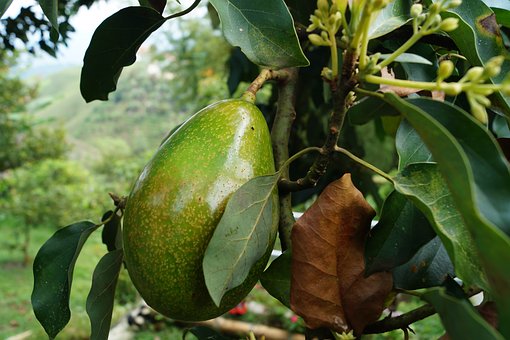
Where is the avocado native to
The avocado is native to Mexico and Central America, and was later widely planted in California, so California became the world's largest avocado production area. It is cultivated in tropical and subtropical regions around the world, but is grown most in the southern United States, Guatemala, Mexico and Cuba, and has formed three major groups: the Mexican race, the Guatemalan race and the West Indian race. In China, there is a small amount of cultivation in Guangdong, Hainan, Fujian, Guangxi, Taiwan, China, Yunnan and Sichuan.
How is the avocado tree planted? What soil is suitable?
Mulching
The avocado is a fruit tree that grows under tropical rainforest conditions and in competition for sunlight. A high-temperature and high-humidity environment makes it grow quickly; if environmental conditions are not available, it grows slowly. Therefore, foreign avocado cultivation mostly emphasizes growing grass or green manure near the plants in the early stage, and applying large amounts of mulch near the root zone. Through mulching, the organic matter of the topsoil is increased, forming a rainforest root-zone environment similar to that of its place of origin, stabilizing the ecological conditions of the root zone, and promoting the reproduction of microorganisms that can inhibit root rot activity. Therefore, from the young tree stage until the tree itself can form a mulch layer through fallen leaves and before root rot occurs, mulching the tree disk of young trees is especially important. Begin mulching in winter, replenish the thickness in spring, and by summer a good mulch layer can be formed. Root-zone mulching can also reduce soil moisture evaporation, lessen the damage to avocados from dry heat, lower soil temperature in summer, raise soil temperature in winter, increase soil organic matter, reduce weeds, and prevent soil erosion on sloping land. However, in the rainy season, prevent the mulched soil from becoming too wet.
Fertilization
The young tree stage of 1 to 4 years after avocado planting is the period for laying the foundation for high-yield and high-quality avocado cultivation. Fertilization should be reasonable to promote rapid growth of young trees. The sign of fertilizer deficiency in avocado trees is severe leaf drop and branch dieback. Reasonable fertilization for young and fruiting avocado trees should both determine the type and amount of fertilizer according to soil fertility, tree age, and plant growth or growth and fruiting conditions. Generally, complete fertilizers such as nitrogen, phosphorus and potassium should be applied in a balanced way, and it is best to guide fertilization through soil and leaf nutrient analysis. In the red soil hills of South China, organic matter is lacking, and available potassium and available phosphorus are deficient, so more attention should be paid to the application of potassium and phosphorus fertilizers.
The root system of young avocado trees is easily damaged by nitrogen fertilizer, and applying too much nitrogen fertilizer easily causes excessive growth of branches and leaves, delaying fruiting, so attention should be paid to nitrogen fertilizer application. Abroad, 110-450 g of pure nitrogen is applied per tree per year, increasing year by year as the tree age grows, with half of it using organic fertilizer as the nitrogen source. In the first year after planting, it should be applied in small amounts and frequently. In areas with frost, nitrogen fertilizer should be stopped in autumn and winter, and more phosphorus and potassium fertilizers should be applied to avoid cold damage from winter shoots. Superphosphate is applied at 900 g per tree per year. Potassium sulfate is applied at 1.8-2.2 kg per tree per year.
Drainage and irrigation
The avocado is evergreen year-round and needs the root-zone soil to remain moist throughout the year. It is very sensitive to soil drought. Once water is lacking, physiological functions are hindered, tree vigor weakens, causing leaf drop and fruit drop, and cold resistance in winter decreases, so appropriate irrigation is needed during drought. From fruit set to fruit maturity, maintaining soil moisture is crucial. If drought occurs in the first month after fruit set, young fruit drops severely. In Hainan Island, the dry and hot weather in April and May causes severe fruit drop in avocados. Therefore, if there are 10-20 consecutive sunny days and the orchard soil begins to crack slightly, irrigation should be carried out promptly; if rainfall is below transpiration and evaporation for a long time, supplemental irrigation should also be applied. However, irrigation should be just right: both sufficient and absolutely not excessive. Generally, moistening the soil thoroughly is appropriate. If too wet, it will worsen root rot and also reduce the soluble solids content of the fruit. Sprinkler irrigation or drip irrigation is best; flood irrigation may cause root rot, and drip irrigation can save 50%-60% of water. If the leaves begin to curl due to drought, water can also be sprayed on the canopy. In the rainy season, pay attention to drainage, especially in flatland orchards.
Avocado propagation methods
Propagated by seeds and grafting.
It is best to raise seedlings in containers. Grafting can be done when the seedling diameter is 0.8-1 cm, mostly by bud grafting or side grafting. Seedlings can be planted out at 50-60 cm, with a planting spacing of 5-6 m between rows and plants. Grafted seedlings planted for 3-4 years or seedling trees for 4-6 years bloom and bear fruit. Mature trees yield 25-50 kg per tree, with high-yielding trees producing 100-150 kg.
Avocado disease control
Avocado root rot is the main devastating disease. The main pests include leaf miners, scarab beetles, aphids, etc.
How many years until the avocado tree bears fruit
Avocado trees bear fruit after 3-4 years of planting, and yields become relatively stable from the 6th year. The investment is relatively small, and the yield of avocado trees is very high, averaging 60-70 kg per tree, with some trees reaching 200 kg, giving high economic value.