What Varieties of Mosquito Repellent Plants Are There? A Detailed Guide to Their Appearance and Growing Methods
In the sweltering summer, mosquitoes are always buzzing around and hard to get rid of, and mosquito repellent plants may help you solve this problem. So how many kinds of mosquito repellent plants are there? What do they look like? How should they be grown? Mosquito repellent plants generally do not cause side effects, but some people are naturally more sensitive to their scent due to their constitution, and after smelling it for a long time they may easily experience discomfort such as dizziness, fatigue and nausea. So mosquito repellent plants work, but they should be used with caution.
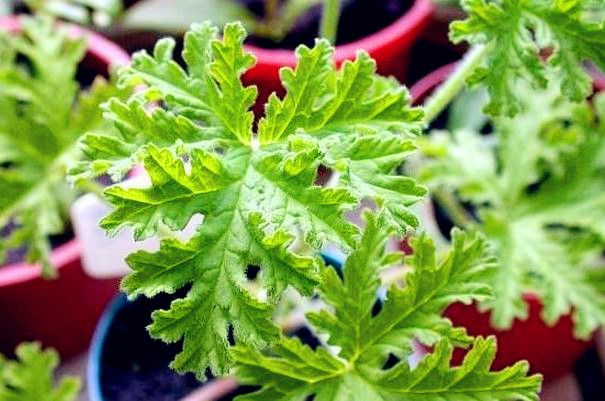
I. What kinds of mosquito repellent plants are there?
1. Orange jessamine (Murraya paniculata)
This is a small evergreen shrub that keeps its leaves all year round, with a corymb-like shape, many branches that are dense, small and glossy leaves, and abundant white flowers; after flowering it also produces red berries. With regular pruning its plant shape is neat and elegant, adding beauty to a humble room. The leaves have a strong pungent, sweet fragrance and a very good mosquito repellent effect.
2. Pitcher plant
A herbaceous plant of the Asteraceae family, it can grow to about one meter tall, with small yellow flowers, and a single plant can bear hundreds of flower heads. The bracts around the outside of each flower head have a sticky fluid, like 5 outstretched little fingers, which is very interesting. As long as a small mosquito lands on it, it will be stuck, and afterwards the insect's body is slowly digested by it as nutrients for its growth. If dust sticks to it, after a few days it is also digested without a trace. Placed indoors as a potted plant, it catches mosquitoes and absorbs dust.
3. Lantana (Lantana camara)
Its branches, leaves and flowers release a scent that mosquitoes and flies are sensitive to, giving it a strong mosquito- and fly-repelling effect, while causing no harm to the human body. Not only does it repel mosquitoes and flies well, but its flower colors are also beautiful, with red, yellow, white and other colors. The flowers are often yellow or pink when they first open, then gradually turn orange-yellow or orange-red, and finally red, which is why it has earned the reputation of "the seven-color mosquito repellent flower". Placed by a window, it is a delight to the eye.
4. Night-blooming jasmine (Cestrum nocturnum)
Mosquitoes are afraid of the strong scent of night-blooming jasmine, so placing fragrant flowers indoors can naturally achieve a mosquito repellent effect. Most of these flowers are elegant and pretty, easy to grow, and not expensive; moreover, when they bloom in summer, the mix of green and white easily gives a feeling of coolness. But according to some experts, the fragrance of flowers like night-blooming jasmine is refreshing at first, but after smelling it for a long time, because it is too strong, it may cause discomfort, so it is suggested that the potted flowers be moved outdoors during the day.
II. How to grow mosquito repellent plants?
The temperature at which mosquito repellent plants can survive is above -3 degrees. This plant is especially vital and can survive both outdoors and indoors. Generally, the higher the temperature, the stronger the fragrance released by the mosquito repellent plant, and thus the better the mosquito repellent effect, so summer is the best time to use mosquito repellent plants.
The seedlings of mosquito repellent plants develop quite quickly and can grow to maturity within half a year. Within 2 years, the main branches can become woody and can be used for bonsai, making them both attractive and able to repel mosquitoes, a very good kind of plant.
Mosquito repellent plants are highly adaptable, and they are especially easier to keep alive when planted in spring and autumn. When we plant mosquito repellent plants, in March at the start of the year we put the seeds into clean fine sandy soil, water them appropriately, do not let the soil dry out, and place them in a warm and bright place in our usual room, and they can grow quite well. Generally, at a temperature of around 20 degrees, after about 1 month, following the method taught above, the mosquito repellent seeds can sprout and take root. Then you can transplant these developed seedlings separately into other flower pots, add some fertilizer to the soil, and you can grow more mosquito repellent plants.
Because mosquito repellent plants grow relatively fast, generally the soil in the flower pot needs to be changed once a year, so that the mosquito repellent plant will not die because the soil has no nutrients. When changing the soil, there are also some practical tips to note. For example, in early spring from February to March, first carry out heavy pruning, leaving 3 side buds on each branch, then take the plant out of the pot and replace it with new base fertilizer. After 1 month, once new branches have grown again, apply fertilizer once every other week, and the mosquito repellent plant with renewed soil can grow very well.