How much is a jin of Sichuan pepper seeds? Detailed explanation of their effects, functions, and planting and germination methods
Sichuan pepper seeds are the seeds of the Sichuan pepper plant. They are edible and have the effects of relieving itching, stopping diarrhea, and treating stomach cold, so many people like to grind them into powder to make seasoning. So how much is a jin of Sichuan pepper seeds? What effects and functions do they have? How should they be planted so they germinate?
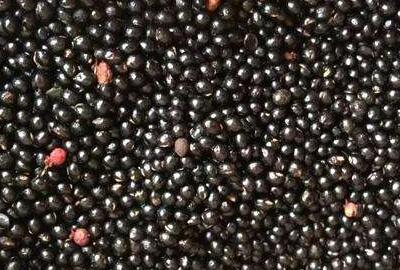
How much is a jin of Sichuan pepper seeds?
The market price of Sichuan pepper seeds varies according to variety and market, generally around 30 to 50 yuan per jin. Sichuan pepper seeds generally mature from August to October. When fully mature, they can be harvested for seed. After harvesting, dry them promptly in a dry indoor place. After the fruit skin cracks, take out the seeds, dry them, and store them to prevent mildew and oil loss.
Effects and functions
Nature, flavor, and meridian entry: pungent, hot. Enters the spleen, stomach, and kidney meridians.
Effects: warms the middle and relieves pain, kills parasites, relieves itching.
1. Treats middle cold abdominal pain, cold-damp vomiting and diarrhea
Sichuan pepper seeds are pungent, dispersing, warm, and drying, and are good at warming the middle, drying dampness, dispersing cold, relieving pain, stopping vomiting, and stopping diarrhea. To treat external cold invading internally with stomach cold abdominal pain and vomiting, they can be used together with ginger, white cardamom, and the like.
2. Treats eczema itching and vulvar itching in women
Sichuan pepper seeds have the effects of killing parasites, drying dampness, and relieving itching. They can be used alone in hot water for external washing. Usage and dosage: decoct and take, 3 to 10 g. Appropriate amount for external use. When used as cooking oil, it is the same as peanut oil and rapeseed oil.
3. Treats spleen and stomach deficiency cold
Sichuan pepper seeds can treat spleen and stomach deficiency cold, cold pain in the epigastrium and abdomen, vomiting, and lack of appetite. They are often used together with dried ginger, ginseng, and the like, as in Dajianzhong Tang. To treat cold-damp abdominal pain with vomiting and diarrhea, they are mostly used together with Atractylodes lancea, Amomum villosum, and Alpinia katsumadai, and the like.
4. Treats parasitic accumulation abdominal pain
Sichuan pepper seeds can treat parasitic accumulation abdominal pain, cold limbs, restlessness, and vomiting of roundworms. They can be used together with dark plum, dried ginger, Phellodendron chinense, and the like, as in Wumei Wan. For milder parasitic accumulation abdominal pain, they can be used together with dark plum, Torreya grandis, and Rangoon creeper fruit, and the like. To treat pinworm disease in children, a decoction of this product can be used as a retention enema.
How should they be planted so they germinate?
1. Treating the seeds
(1) Autumn sowing: The key to seed treatment for autumn sowing is de-oiling. First scald the seeds with boiling water for 4 to 5 minutes, then quickly add cold water until the temperature is 30 to 40°C, then pour the seeds to be treated into 2% alkaline water or 1% laundry detergent water and soak for 2 to 3 days to remove the oily layer on the surface. Finally rinse clean with clear water until the seed moisture is such that they form a ball when squeezed by hand and scatter when touched. The ratio of seeds to plant ash is 1:2 to 3. After fully mixing, sow together with the ash.
(2) Spring sowing: Seeds for spring sowing need sand storage treatment. The sand storage time is preferably about 50 days. Mix the seeds with 3 times their amount of wet sand (do not carry mud). The humidity of the river sand should be such that it forms a ball when held in the hand and scatters when the hand opens. Choose a warm place with good drainage, dig a trench 1 m wide and 40 to 50 cm deep, put the seeds in, pile them 10 to 15 cm thick, then cover with soil 10 to 15 cm, water to soak through, cover the top with wet soil, and sow as early as possible after the soil thaws.
2. Sowing methods
(1) Autumn sowing: In areas with spring drought, sowing in autumn before the soil freezes is best. Seedlings emerge neatly and emerge 10 to 15 days earlier than with spring sowing. For autumn sowing, open a ditch 1 cm deep and 9 cm wide every 24 to 27 cm, sprinkle the seeds evenly into the ditch, and after sowing bank the soil from both sides onto the ditch. After spring begins, check the seed germination in time, and according to the sprouting situation scrape off part of the covering soil in time.
(2) Spring sowing: The time for spring sowing is generally around “Spring Equinox”, with 25 kg sown per mu. For seedling raising in small beds, drilling in furrows can be used, with 4 rows per bed, row spacing 20 cm, furrow depth 5 cm, covering soil 1 cm, and 4 to 6 kg sown per mu. After sowing, cover the bed surface with grass to retain moisture. For seeds that have been sprouted before spring sowing, the seedlings can emerge 4 to 5 days after sowing and emerge completely in about 10 days.