How much does one jin of goji berry seeds cost, and how should they be planted?
Goji berry is the collective name people use for commercial goji berries and for plants such as Lycium barbarum (Ningxia goji) and Lycium chinense (Chinese goji), species under the genus Lycium, and it has both medicinal and edible value. So how much do its seeds cost per jin? And how should they be planted? It is reported that the market price of goji berry seeds has remained very stable in recent years. The price of seeds we buy from growers is about 90 yuan per jin, and seeds from batches of better quality cost about 120-150 yuan per jin on the market.
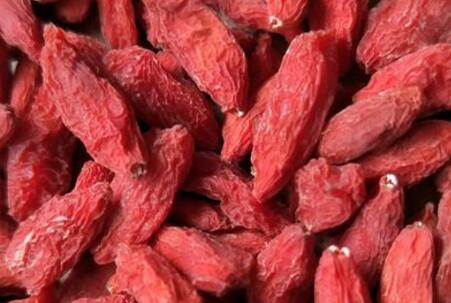
What factors affect the price of goji berry seeds?
1. An increase or decrease in seeds from the production area
2. The time of purchase; prices in the off-season and peak season are certainly different.
3. Our company also adjusts seed prices according to how much customers buy; wholesale and retail seed prices are certainly different.
4. The price of ordinary seeds and superior seeds is also different; superior seeds are a little more expensive.
How are goji berry seeds planted?
1. Seed preparation: There are many goji berry varieties, but Ningqi No. 1, Ningqi No. 2 and Damaye are the three better ones. Therefore, in production, large fruits of the above superior varieties should be selected for seed extraction. Small fruits of mixed quality should not be used for seed production, to prevent reducing seed quality.
2. Extracting the seeds: Extracting seeds from goji berry fruits can be divided into the following steps:
① Soaking the fruit. If dried fruit is used for seed production, the dried fruit should be soaked in water until the skin swells and becomes easy to break down; if fresh fruit is used for seed production, soaking is not necessary.
② Crushing the fruit. Crush the soaked fruit or fresh fruit so that the seeds separate completely from the flesh.
③ Washing. After crushing the fruit, add an appropriate amount of water and wash it; pour off the water and juice, the fruit skin and floating impurities such as empty, shriveled seeds. After several washes, what sinks to the bottom of the basin is the plump seed.
④ Drying the seeds. Spread the plump seeds out to dry in the sun; after drying, store them in a cool, dry place for later use. Generally, every kilogram of dried fruit can yield about 0.1 kilogram of seed.
3. Sowing time: Goji berries can be sown in all three seasons of spring, summer and autumn, but in production more are sown in spring. After spring sowing, under suitable temperature and humidity conditions, the seeds germinate and emerge; after the seedlings emerge they also have a longer growth period, and they can be planted out in the nursery in autumn of the same year or the following spring. Goji berry seeds are small, with a thousand-grain weight of about 1 gram, and only 0.2 kilogram is needed to sow every 667 square meters.
4. Sowing methods: These are divided into the water sowing method and the dry sowing method.
① Water sowing method. When sowing, mix the seeds with 10 times their volume of fine sandy soil, then use a hoe to open sowing furrows 0.3-0.5 cm wide at a row spacing of 40 cm on the prepared nursery bed, and sow in rows along the furrows. After sowing, cover with soil about 0.3-0.5 cm thick, or do not cover with soil and just press it lightly with the foot so that the seeds are in close contact with the soil, then give one shallow flood irrigation. After 2-3 days, when the soil surface is no longer wet, irrigate again. Before the seeds germinate and emerge, irrigate frequently to keep the soil surface moist, which is favorable for seed germination, emergence and seedling growth. Seeds sown by this method emerge quickly, evenly and with a high emergence rate, and the operation is simple and convenient.
② Dry sowing method. The difference from the water sowing method is that after sowing, soil is covered according to the soil properties and soil moisture, with a thickness of 1-2 cm. For sandy soil with poor moisture, cover with more soil; for clay soil with good moisture, cover with less soil. After covering with soil, do not irrigate immediately. If after sowing the weather is dry and the soil moisture is poor, and the seeds do not sprout for a long time, a small amount of shallow irrigation can also be used to promote seed germination and emergence.
5. To make the seeds emerge early after sowing, the seeds can be sprouted before sowing. Mix 1 part seeds with 10 parts fine wet sand, place them indoors at about 20°C after mixing, cover with plastic film on top, spray water once a day, and maintain good temperature and humidity. Generally, sow when half the seeds have shown white (sprouted). When sown in summer under suitable temperature and humidity, they can germinate and emerge after one week.