A Detailed Guide to the Benefits and Effects, Producing Areas and Cultivation Methods of the Turnjujube
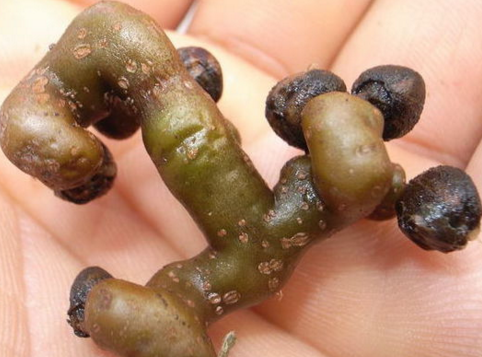
Turnjujube, also known as wanshouguo, jizhuazi, qiujiang zhiju, and so on, has fruit shaped like the swastika symbol, which is why its tree is called the wanshouguo tree. When fully ripe, the fruit can be eaten raw; the flesh is juicy, there is no pit, and the seeds are exposed outside the flesh. It tastes sweet with a slight astringency, and can also be used to make soup, which has a uniquely rich aroma. Having introduced so much, let us now look at its benefits and effects, as well as the producing areas and cultivation methods of the turnjujube tree!
I. Benefits and Effects of Turnjujube
(1) Pharmacological Effects
Turnjujube seed is a traditional Chinese medicine; it is the fruit with a fleshy stalk of the turnjujube, an arborous plant of the Rhamnaceae family. Sweet and sour in taste, it enters the Heart, Spleen and Stomach meridians.
1. Clearing heat and promoting fluid production: used for fever with restlessness, thirst, vomiting, difficult urination and defecation, etc. Take 10—25g of this product, decoct in water and take orally.
2. Relieving alcohol toxicity: used for excessive drinking, with the function of quenching thirst and relieving restlessness. Take 20g of this product, decoct thickly and drink as tea.
3. Sobering up and calming the mind: Zhijuzi contains a large amount of glucose and organic acids, which can both expand the body's blood volume and relieve alcohol toxicity, hence its effect of sobering up and calming the mind.
4. Promoting urination and defecation: Zhijuzi contains a large amount of water, glucose, organic salts and lipids, and has the effects of promoting urine excretion and accelerating intestinal peristalsis, hence it can promote urination and defecation.
5. Dispelling wind, unblocking collaterals and stopping spasms: Zhijuzi contains a large amount of calcium and zhijuzi saponins, which have a central inhibitory effect, can resist convulsions and prevent spasms and cramps of the hands and feet, and can be used to treat rheumatism with pain and numbness.
6. Quenching thirst, relieving restlessness and supplementing nutrition: Zhijuzi contains a large amount of glucose, sucrose, fructose, organic acids, inorganic salts, vitamins, etc., which can promote fluid production and quench thirst, clear heat and relieve restlessness, and can supplement nutrients for the human body and enhance the body's disease resistance.
7. Lowering blood pressure: In recent years, research has found that Zhijuzi contains wheatgrass alkali, B-carboline, zhiju glycosides C, D, G and H, rhamnine, etc., which have effects such as resisting lipid peroxidation and lowering blood pressure.
8. It has an inhibitory effect on Staphylococcus aureus, Neisseria catarrhalis, Pseudomonas aeruginosa, Bacillus enteritidis, etc.
(2) Health Benefits
1. Zhiju Pig Lung Soup
120 grams of fresh Zhijuzi, 1 set each of pig heart and lung, 30 grams of red cane sugar. Wash the Zhijuzi; wash the pig heart and lung and cut into small pieces; put the Zhijuzi, pig heart and lung, and red cane sugar together into an earthenware pot, add 1000 milliliters of clean water, simmer over low heat for 60 minutes, then season with a little refined salt and monosodium glutamate and it is ready to eat. This dish has the effect of quenching thirst and relieving restlessness, and can be used as dietary therapy for patients with alcoholic phthisis and blood vomiting.
2. Zhijuzi Wine
2 dried Zhijuzi, 500 milliliters of low-degree liquor. First wash the Zhijuzi, cut them open with a knife, immerse them in the liquor, seal, and open after 1 week to drink, 2 times a day, 20 milliliters each time. This wine has the effect of dispelling wind and overcoming dampness, and is suitable for patients with rheumatoid arthritis.
3. Zhijuzi Chicken Liver
2 dried Zhijuzi, 1 set of yellow chicken liver. First pound the Zhijuzi into fine powder and set aside; wash the chicken liver, score it with a cross-cut knife, place it on a plate, sprinkle with the Zhijuzi powder and an appropriate amount of refined salt, steam in a steamer for 20 minutes, then take out and eat. This dish has the effect of strengthening the spleen and dispersing malnutrition, and can be used to treat malnutrition in children.
4. Zhijuzi Four-Berry Soup
4 fresh Zhijuzi, 10 grams each of sipiwa and mock strawberry. After washing the above three ingredients with clean water, put them together into an earthenware pot, add an appropriate amount of water, first bring to a boil over high heat, then switch to low heat and stew for 20 minutes, filter out the soup and take it in one dose. This soup has the effect of dispelling wind and unblocking collaterals, and can be used to treat internal stirring of liver wind, spasms of the hands and feet, acute abdominal pain, head wind and other conditions.
II. Producing Areas of Turnjujube
Produced in Gansu, Shaanxi, Henan, Anhui, Jiangsu, Zhejiang, Jiangxi, Fujian, Guangdong, Guangxi, Hunan, Hubei, Sichuan, Yunnan and Guizhou. It is also distributed in India, Nepal, Sikkim, Bhutan and northern Myanmar. Turnjujube is widely distributed. In various places in China's Yellow River basin and Yangtze River basin, its traces can be found. It also grows in Japan, Korea and Russia.
III. Cultivation Methods of the Turnjujube Tree
The turnjujube has a relatively strong ability to adapt to the environment; it is drought-resistant, cold-resistant, and also tolerant of relatively barren soil. It likes sunlight, and mostly grows in valleys, stream sides, roadsides or relatively moist hillside and hilly areas below 1000 meters above sea level. It often grows mixed with other evergreen and deciduous broad-leaved tree species. If the soil is deep, fertile and moist, it can grow rapidly.
(1) How to Choose a Site?
To plant turnjujube trees, you must first choose terrain suitable for its growth. The turnjujube has relatively strong adaptability and prefers to grow in a sunny, moist, fertile soil with good drainage, with a neutral pH value. Before planting, after choosing a suitable forest site, first dig pits 1 meter deep and 1 meter wide; on sloping land, fish-scale pits can be dug to prevent soil erosion. Put more dead branches and fallen leaves into the pits for use in planting trees.
(2) Turnjujube Planting
Turnjujube trees are mainly propagated by seed. Collect seeds when they mature in November; the seed coat is reddish-brown. One fruit contains 3 seeds. The seed coat is leathery, and the embryo is yellow-white and not easy to absorb water. After collection, use the wet sand stratification method to accelerate germination, storing them in a pile with one layer of seeds and one layer of wet sand; after 50 to 60 days, radicle protrusion appears. Prepare the seedbed well and sow in holes or drills at a depth of 2 to 3 cm; seedlings emerge in early April. When the seedlings grow 3 to 5 true leaves, thin them, keeping the strong and removing the weak. During the seedling stage, water and fertilize frequently to promote growth. By winter they can grow to 70 cm to 100 cm. Transplant them into the prepared pits.
(3) Cultivation Management
Turnjujube seedlings grow slowly, so the management of young trees should be strengthened. Generally, they begin to bear fruit only after 5 to 6 years. Every year when weeds grow in spring and summer, loosen the soil and remove weeds, and water promptly in drought. Apply fertilizer three times: in March of spring, June of summer and November of winter, to promote growth. According to modern dwarfing and branch-pulling techniques, fruiting can be advanced. In the second year after planting, when the small tree grows to 1 to 1.5 meters, bend the main trunk; let it produce secondary branches, then use the same method to pull branches, and it can flower and bear fruit on the third- and fourth-level branches, with the branches spreading out in all directions, achieving early fruiting and more fruiting.
Guigang, Guangxi: A wild fruit eaten in childhood has now become a “wealth fruit” for getting rich
This turnjujube is very bitter and astringent when eaten raw, but after it ripens and is dried slightly, it becomes very flavorful to eat. Nowadays many people are cultivating it artificially, selling it for 20 yuan per jin, with income per mu reaching tens of thousands of yuan!
Rural children eat turnjujube as a wild fruit, but in fact more of the turnjujube's functions are reflected in its medicinal aspects; soaking it in wine to treat rheumatic joint pain is especially effective. Eating fresh turnjujube can stop vomiting, relieve alcohol toxicity, lower blood pressure, lower blood lipids and so on, so now the turnjujube, as a health-care food, is very popular in the market.
Hu Hanqiu, a grower in Guigang, Guangxi, has been growing turnjujube for more than 20 years. In his early years, he went up the mountains to pick wild turnjujube and sold it in the market, but as demand grew more and more, wild turnjujube gradually could not meet demand. He began artificial cultivation. When he first started planting, many people laughed at him for planting useless turnjujube, but now he earns hundreds of thousands of yuan a year from turnjujube.
Hu Hanqiu told us that turnjujube is relatively easy to grow, has strong disease resistance and is easy to grow, with an average yield of about 800 jin per mu. In earlier years the purchase price was 5 yuan per jin, and now the purchase price on the market has risen to 20 yuan per jin, with income per mu reaching as high as 16000 yuan, and profit of more than ten thousand yuan, and his annual income reaches as high as hundreds of thousands of yuan!