Kumquat Seed Planting Precautions and Pollution-Free Cultivation Techniques
Kumquat is a plant under the genus Fortunella in the Rutaceae family, also known as jinzao, kumquat, and small orange. It was originally distributed across the coastal provinces of southeast China, especially in the Guangdong region, which has the longest history of cultivating and eating kumquats and is truly a hometown of kumquats. In addition, it is widely cultivated in South China and the middle and lower reaches of the Yangtze River. So what should be noted when planting its seeds? What are the cultivation techniques? Let us learn about them together below.
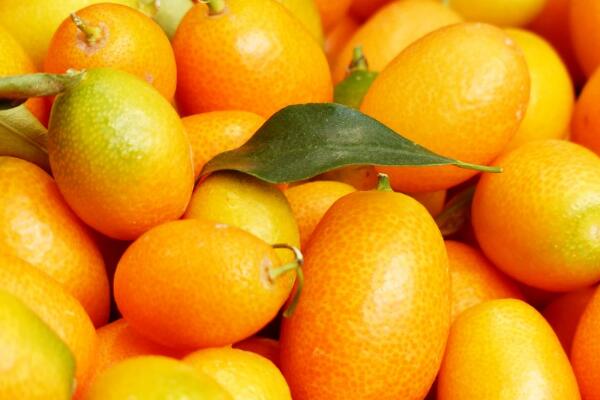
What should be noted when planting kumquat seeds?
Seed selection and seed treatment
1. First, select fruits from superior individual plants, extract the seeds by processing, promptly place them in clean water to wash off the mucus, remove the plumpless seeds, keep the plump seeds, and dry them in the shade before sowing. If not sown at that time, they can be stored with 3 to 4 parts fine sand. Stack them in layers, keep them at a certain temperature in a dry and ventilated place, and also prevent excessive dryness or excessive moisture from causing the seeds to lose their germination ability.
2. Selection of nursery land
Choose a leeward and shady valley land or hilly slope land as the nursery land. It is best to require deep fertile soil, loose soil texture, and sandy soil with a relatively good granular structure. Any land with shallow and poor soil or heavy texture is not suitable as nursery land. Also pay attention to convenient transportation so as to transport seedlings.
For the preparation of the nursery land, it must be winter-plowed once before sowing, and then plowed again in early spring of the following year. The depth should be more than one chi, and the soil surface should be raked flat and broken up. Depending on the water level, make high beds or low beds.
3. Sowing at the right time
Spring sowing in February and March is most suitable, and winter sowing is also possible in November. The sowing rate is 10 to 15 kg per mu. For the sowing method, open furrows on the bed surface for drilling. Apply 15 to 20 loads of human and animal manure water, 30 to 40 loads of barnyard manure, and 15 to 25 kg of superphosphate or calcium magnesium phosphate fertilizer per mu as base fertilizer. The row spacing is 3 cun, and the seed spacing is 1.5 to 2 cun. Then cover with three fen of thick plant ash or fine sandy soil. Lay a layer of rice straw or weeds on the bed surface to retain water and prevent drought. When the seeds have 2 to 4 true leaves after emergence, false planting should be carried out, with a plant and row spacing of 5×3 cun. If false planting is not done, the plant and row spacing should be widened.
2. What are the pollution-free cultivation techniques for kumquat?
1. Seedling management: Before the seedlings emerge, water must be applied frequently to keep the soil moist. If the surface soil is compacted, use a bamboo stick to loosen it so as to facilitate seed germination and emergence. When the seedlings reach two true leaves, apply 5 loads of decomposed manure water mixed with 8 to 5 loads of water per mu. Apply dilute manure water to the roots once every half month. Be careful not to let the manure water stick to the leaves. Before fertilizing, loosen the soil and remove weeds. If the weather is dry, also water. Keep the soil loose and free of weeds, and pay attention to damage from livestock and pests and diseases. When the seedlings grow to 1.5 chi, pinch off the growing tips once to encourage more branching. All branches on the main trunk above 8 cun should be pruned off so that a good tree shape can be developed.
2. Transplanting: It is best to transplant in spring during southerly windy weather. First transplant seedlings with thick stems, strong growth, straightness, well-developed root systems, no pests or diseases, plant height of 1.5 chi, and dark green leaves; eliminate those that are the opposite. Two days before lifting the seedlings, water once to make the soil moist. When lifting, do not injure the main root, and cut off one third of the main root. The planting specification is 5×7 chi. First dig holes 1 chi deep. When planting, first place topsoil to cultivate the roots, then place new soil and press it firmly, keeping the seedlings upright. If the soil is dry, water to settle the roots.
3. Orchard management: After planting, replant dead seedlings promptly. In the first one or two years, interplant short-stalked crops such as Xianggu, green manure, mung bean, and taro between the rows. Never interplant tall-stalked crops such as cassava, so as to prevent affecting the growth of the kumquat seedlings. After stopping interplanting, deep dig once every 2 years in January and February, to a depth of five or six cun. Every year at the beginning of the dog days, cut weeds once. Do not pile dead weeds at the base of the trees, so as to avoid gathering insects. The kumquat tree is upright and has very strong growth vigor, so pruning and topping must be done well to control excessive upright growth, let it branch more, and form a lush crown, creating conditions for increasing fruit yield and making fruit harvesting convenient in the future.
4. Selecting superior rootstock for grafting
Grafted kumquat seedlings have the characteristics of bearing fruit quickly, being short with many branches, having no thorns or few thorns, and being high-yield and high-quality. When grafting, select scions from superior individual plants and graft them onto trifoliate orange rootstock or kumquat own-rootstock.
5. Weeding and fertilizing
For the care of kumquat groves, weeds have traditionally been removed once each year. With social progress and technological advancement, the practice is to first remove weeds and reclaim the land, then apply 55 kg of urea, 86 kg of calcium magnesium phosphate fertilizer, 25 kg of potassium chloride, 173 kg of tung bran, and 49 kg of lime per mu, continuously fertilizing for 4 years. The yield increase benefit is extremely significant. The average fruit yield per mu in the first year was 524 kg, an increase of 303 kg over no fertilization, up 137.7%; in the second year it increased to 628 kg, up 518.2%; in the third year it increased to 579 kg, up 227.8%; in the fourth year it increased to 1279 kg, up 352.5%.
6. Renewal of old trees
When kumquat trees reach thirty or forty years old, they have already aged, with extremely low yield and poor quality. Some have been eaten by longhorn beetles, with hollow main trunks and damaged conducting tissues, causing branches to turn yellow, dry up, and die. For these, old tree renewal should be carried out. Respectively in March, April, and May, at a height of 4 cun above the ground, saw off the main trunk of the old kumquat tree, loosen the base, and apply 5 gongjin of compound fertilizer. Sprouting began 38 days after sawing. By September 30, about 4 months later, the average sprout height was 96.3 cm.
Appendix: Methods for potted kumquat
Generally, planted orange seeds in pots germinate in about 3 weeks. They need slightly warmer temperatures. When planted in relatively cold weather, germination will be later.
Step 1: Obtain orange seeds. Orange seeds are obtained from fresh oranges bought on the market; just deliberately keep them when eating oranges.
Step 2: Keep them clean. The collected orange seeds need to be kept clean, removing the pulp stuck to the surface.
Step 3: Soak the collected orange seeds in clean water and change the water once a day so that the seeds have enough moisture. Soaking in water takes about one week. Be sure to insist on changing the water every day to keep the seeds clean.
Step 4: After the orange seeds have been soaked for one week, take out the seeds and use tweezers to remove the thin skin on the surface of the orange seeds. When removing, absolutely do not damage the inside of the orange seeds. Carefully remove the skin, as this helps the seeds germinate and grow quickly.
Step 5: After removing the skin, prepare a pot of nutrient soil, bury the orange seeds about two centimeters below the soil, then water every day and patiently wait for the seeds to germinate. Generally, planted orange seeds in pots germinate in about 3 weeks.
Note: The seeds left after eating oranges and planted in the soil produce seedlings that are seedling-grown plants. They are not easy to bear fruit, take a long time to bear fruit, and the fruit produced is also of poor quality. Orange trees are generally grafted. Grafted orange trees bear fruit early, and excellent varieties can be selected, so the oranges produced are of good quality.