Perilla Cultivation Methods, Perilla Leaf Harvesting Time and Processing Techniques Explained in Detail
Perilla has a long history of cultivation in China. Perilla not only has certain edible value, but also has great medicinal value. So how is perilla grown? When are perilla leaves harvested? How are they processed?
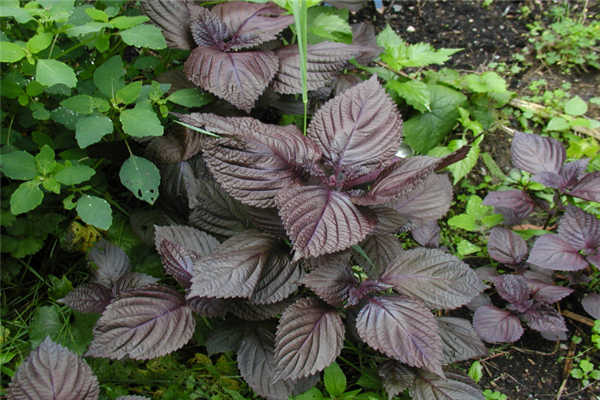
When are perilla leaves harvested?
The harvesting period varies depending on the purpose.
1. Perilla leaves for eating: When picking fresh perilla leaves for cooking, choose a sunny day, as the aroma is stronger. Perilla leaves should be picked from late May to early August, before perilla blooms. Each perilla plant can have 36-44 leaves picked throughout the year, and each mu can produce 1700—2000kg of fresh leaves.
2. Perilla stems for medicinal use: Harvest in early September before flowering, when the inflorescence has just emerged. Cut the plant from the base with a sickle, and hang the plant upside down in a ventilated, shaded place to dry.
3. Perilla seeds for medicinal use: Harvest from late September to mid-October when the seeds and fruits are ripe. Cut off the fruit spikes or the whole plant, tie them into small bundles, dry them in the sun for several days, then thresh out the perilla seeds and dry them. Each mu yields about 150-180 kg.
How are they processed?
Processing: After harvesting the whole plant, dry it directly in the sun to make whole perilla; pick off the leaves, remove impurities, and dry them in the sun to make perilla leaves; thresh out the seeds, remove impurities, and dry them in the sun to make perilla seeds; for the stems and branches without leaves, slice them fresh and dry them in the sun to make perilla stems.
Perilla leaves are pungent and warm in nature and flavor, enter the lung and spleen meridians, and have the functions of releasing the exterior and dispersing cold, and moving qi and relieving middle fullness. Perilla is pungent, aromatic, warm, and dispersing; it enters the lung and goes to the exterior to disperse wind-cold, and can also enter the spleen to move blood and relieve middle fullness. It is especially suitable for externally contracted wind-cold with internal dampness stagnation. In addition, dried perilla can also be used to process pickles. Currently, when making sauce among the people, a little perilla is still added to remove fishiness and preserve freshness. When making pickles in a pickle jar, adding a little perilla leaf can also give the pickles a distinctive fragrance.
Perilla stems are pungent and sweet in flavor and slightly warm in nature, and have the effects of regulating qi, relieving middle fullness, and preventing miscarriage. For abdominal distension and oppression with no desire to eat, perilla stems can be prepared with tangerine peel, poria, and chicken gizzard lining in medicinal dishes. For restless fetal movement or pregnancy vomiting, under a doctor's guidance, perilla stems can be prepared with perilla leaves, tangerine peel, and other medicinal materials in medicinal dishes.
The α-linolenic acid in perilla seeds can significantly reduce high triglyceride levels in the blood, inhibit the synthesis of endogenous cholesterol, and inhibit free radicals of platelets and serotonin, thereby inhibiting the occurrence of thrombotic diseases and having an antithrombotic effect. Regular consumption of perilla seeds has a good effect on improving memory and vision.
How is perilla grown?
Perilla is generally grown by direct seeding, which saves labor, grows quickly, allows early harvest, and gives high yield.
The planting time differs by one month between the south and the north: March in the south and mid-to-late April in the north. Direct seeding is done in rows in the bed, opening furrows 2-3 cm deep at a row spacing of 60 cm, evenly scattering the seeds into the furrows, and covering with a thin layer of soil after sowing.
Hill seeding: sow in hills with a row spacing of 45 cm and a plant spacing of 25-30 cm, covering with shallow soil. Water immediately after sowing to keep moist. The sowing rate is 15-18.75 kg per hectare.
In places where seeds are insufficient or water conservancy conditions are poor, seedling raising and transplanting can be used; this method is adopted in arid areas. The seedbed should be chosen in a place with sufficient light and warmth, apply farmyard manure, and add an appropriate amount of superphosphate or plant ash. In early April, water the bed thoroughly, wait for the water to seep down, then sow, cover with 2-3 cm of shallow soil, and keep the bed surface moist. Seedlings emerge in about a week.
After the seedlings are uniform, thin out the overly dense seedlings, water and weed frequently. When the seedlings are 3-4 cm tall and have grown 4 pairs of leaves, they can be transplanted. When planting, water the seedling bed thoroughly and transplant as they are pulled. With a plant spacing of 30 cm, open furrows 15 cm deep, arrange the seedlings, cover with soil, and water or apply dilute human and livestock manure and urine. After 1-2 days, loosen the soil to preserve moisture. Plant about 150,000 seedlings per hectare. In dry weather, water once every 2-3 days, then reduce watering and carry out seedling hardening to promote root growth.