How long does Amomum tsaoko take to bloom and bear fruit? Price per jin and a detailed explanation of its effects and functions
Amomum tsaoko is one of the major bulk varieties of medicinal and edible Chinese herbal medicines. Amomum tsaoko is used as a flavoring spice, and aromatic oil can be extracted from the whole plant, giving it relatively high economic value. So, how long does Amomum tsaoko take to bloom and bear fruit? What is the price per jin? What effects and functions does it have?
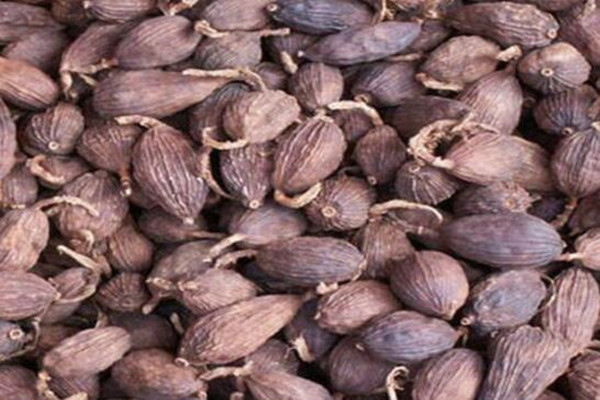
How long does Amomum tsaoko take to bloom and bear fruit?
Amomum tsaoko blooms and bears fruit 2 years after planting, and yields are relatively high after 6 to 7 years. The flowering period is from April to June, and the fruiting period is from August to September in Guangdong and from November to December in Yunnan. Harvest when the fruit turns reddish-brown and has not yet split open, then sun-dry or dry over a low fire, or blanch the fruit in boiling water for 2 to 3 minutes and then store it in a dry, ventilated place.
What is the price of Amomum tsaoko per jin?
What effects and functions does Amomum tsaoko have?
1. When Amomum tsaoko is used to cook dishes, it can remove fishy and gamey odors, enhance the flavor of the dish, and when cooking fish and meat, the taste is even better with Amomum tsaoko.
2. Amomum tsaoko is pungent in taste and warm in nature. It has the functions of warming the middle and strengthening the stomach, promoting digestion and smoothing qi. It mainly treats heart and abdominal pain, distending pain in the epigastrium and abdomen, nausea and vomiting, cough with profuse phlegm, and so on. It can also relieve alcohol toxicity and remove bad breath. However, it should be noted that patients with qi deficiency or blood deficiency should avoid eating Amomum tsaoko.
3. Amomum tsaoko is used as a flavoring spice; aromatic oil can be extracted from the whole plant. The fruit is used as medicine and has the functions of drying dampness and strengthening the spleen, and eliminating phlegm and treating malaria.
Cultivation methods for Amomum tsaoko
1. Site selection
Choose fertile valleys or streamside areas, cut away excessive trees, control the shade density at 50%, clear weeds, and turn and break up the soil.
2. Propagation
Use seed propagation and division propagation. For seed propagation, select robust, high-yielding mother plants and harvest when the fruit skin is purplish-red and the fruit is fully mature. Peel off the fruit skin of the harvested fruit, soak the seeds for about 10 hours, rub them with coarse sand to wipe off the gelatinous layer on the surface, and then sow. The nursery should be chosen on mountainous land with sparse trees, fertile soil and good drainage. Turn the soil and make beds, apply dry pig manure, cattle manure and turf mud as base fertilizer, break up clods and level the soil, and make a seedbed. Drill sowing, with a row spacing of 15 cm and a sowing depth of 1.5 to 2 cm. After sowing, cover with soil and grass, and water.
Generally sow in September to October or in February to March of the following year. Seedlings emerge about 30 days after sowing, and the emergence rate reaches 80% in 0 to 50 days. From December to February of the following year, when the temperature drops below 15°C, the seeds stop germinating, and when the temperature rises above 18°C in March to April, they gradually germinate and emerge again. If the harvested seeds cannot be sown immediately, they need to be mixed with wet sand and stored. After the seedlings emerge, in places without shade, shade sheds need to be built for shading, weeds should be pulled out, and plant ash should be applied as a topdressing to promote robust seedlings. Each 667 sq m (1 mu) of nursery can provide seedlings for 8 hectares of planting. Division propagation can also be carried out by taking 1-year-old bud-bearing rhizomes from the mother plant.
3. Field planting
Choose moist, fertile land with shade at forest edges and beside ditches for the field planting site. Deeply plow 20 to 27 cm, and after weathering for a period, dig holes about 13 cm wide and 7 to 10 cm deep at a plant spacing of 1.3 to 1.7 m, hold the seedlings upright in the holes, cover with soil and press firm. Transplanting is mostly carried out around the Spring Equinox.
4. Field management
Weeding: Carry out weeding from April to June and from October to December after harvesting the fruit. When weeding, prevent trampling on the rhizomes and aboveground stems.
Hilling: Carry out hilling before flowering to make the young buds grow robustly. If the roots are found to be exposed, fertile soil should be hilled up to facilitate nutrient absorption by the roots.
Drainage and irrigation: During the flowering season, if there is too much rain, it will cause flower rot; conversely, if it is too dry, the flowers are likely to wither, causing reduced yield. Therefore, if drought occurs, irrigation should be carried out by introducing water where conditions permit. If there is too much rain, drainage work should be done well, weeds should be completely removed, and humidity should be lowered to reduce flower bud rot. During the flowering season, if there is one rainfall from May to July, it is beneficial to fruiting and fruit retention, and the yield is also higher.
Pruning: The leaves of Amomum tsaoko must be renewed every year, and dead old plants should be cut away in time to facilitate the growth of new plants. When pruning, some overly dense branches and leaves can be properly harvested for use in essential oil production. The time for pruning and leaf harvesting is after the fruit harvest in October to November.
5. Pest and disease control
Damping-off: When it occurs severely, it can cause patches of seedlings to collapse and die. The diseased plants can be pulled out, and lime powder can be scattered around for disinfection and sterilization; after the seedlings emerge, use 1:1:120 Bordeaux mixture for prevention, or irrigate with 50% carbendazim 1000-fold solution, or spray with 65% zineb 600-fold solution for control. Spray once every 7 to 10 days, for 2 to 3 consecutive applications.
Leaf spot disease: The lesions occur on the leaves and are initially oval, nearly round or irregular in shape. The lesion edges have a yellowish-brown halo, the center is white, and the diameter is 1 to 11 mm. In the later stage, the lesions join into patches. Spraying kasugamycin 400-fold solution prevents the pathogen hyphae from growing; spraying with Jinge 1500-fold solution, carbendazim 800-fold solution, and Yibao 1000-fold solution has an inhibition rate of more than 61% on the mycelial growth of the pathogenic bacteria.
Phytophthora blight: The disease occurs from the adult plant stage to the fruiting stage of Amomum tsaoko. The rhizome area of diseased plants shows water-soaked rot, causing plant death. Spraying Yibao 1000-fold solution can prevent the pathogen hyphae from growing; spraying with chlorothalonil 600-fold solution, Yibao 500-fold solution, and kasugamycin 400-fold solution can achieve an inhibition rate of more than 60% on the mycelial growth of the pathogenic bacteria; different strains of Trichoderma harzianum have a very good inhibitory effect on the pathogen of Amomum tsaoko phytophthora blight.
Pests: The main pest is the stem borer, whose larvae bore into the stems to cause damage, and in severe cases cause dead seedlings. When bored seedlings are found, they should be cut away in time, and 50% fenitrothion emulsifiable concentrate 800 to 1000-fold solution should be sprayed for control.