Paris polyphylla 2018 price per jin, planting prospects and cultivation techniques
Paris polyphylla, also known by the aliases Zaoxiu, Chixiu, Chongtai root, Zhengxiu, Caoheche, Chongtai grass, Baigansui, Jinxian Chonglou, Chonglou, Jiudaogu, Yuanyangchong, Zhihuatou, Luosiqi, Hailuoqi, Dengtaiqi, Baiheche, Luotuo Sanqi, Tu Sanqi, and also known as Qiyelian. So what was its 2018 price per jin? What are its planting prospects? What are the techniques? Let's take a look below.
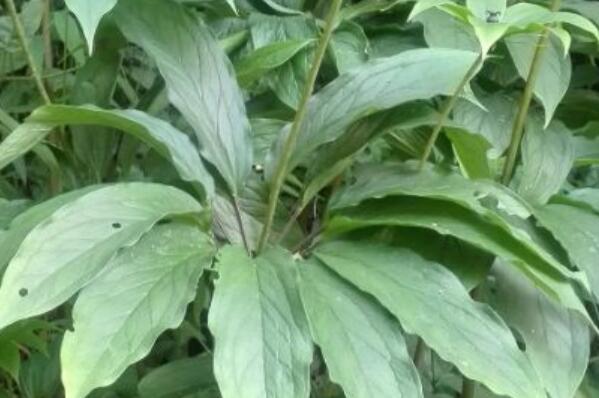
What was the 2018 price of Paris polyphylla per jin?
Over the past few years, wild resources of Paris polyphylla have gradually decreased, while market consumption has gradually increased, driving prices ever higher. In the mid-1980s, the market price of Paris polyphylla was only 2.7 yuan. Since the 1990s, the market supply of Chonglou has gradually decreased, while demand has continued to increase, making the contradiction between production and sales increasingly prominent year by year; the market trend has continued to accelerate, and prices have climbed steadily. In 1992 it was about 4.5 yuan; in 1993, 6-7 yuan; in 1994, 7-8 yuan; after 1995, the market trend of Paris polyphylla accelerated, shortages appeared, and prices rose sharply, reaching 24-27 yuan in 1995; in 2009-2010 it reached 380 yuan; at present it has reached about 800-1000 yuan. Looking at the historical price trend of Paris polyphylla, it truly rises higher and higher like a sesame stalk blooming upward. Therefore, based on this, there may also be room for an increase in its 2018 price.
What are the planting prospects for Paris polyphylla?
Paris polyphylla, also known as Chonglou, Qiyelian, and Dujiaolian, is the rhizome of the lily family plant Paris polyphylla. It has the effects of clearing heat and detoxifying, reducing swelling and relieving pain, and cooling the liver and calming fright. Guangxi is one of the main producing areas, and Yunnan, Guizhou, and Sichuan also produce it. In Guangxi it is mainly distributed on hillsides and in moist places under forest in valleys in the mountainous areas of western Guangxi and northwestern Guangxi. It is a variety that has sold very well on the market in recent years, with prices rising year by year: 28-30 yuan per kilogram in 2003, 43-45 yuan in 2004, 95-98 yuan in 2005, and rising to 105-110 yuan in March-April 2006. Over more than 2 years, the price increase was 266.7%-275%, with an average annual increase of 95.3%-98.2%. The reasons are: first, the medicinal use of Paris polyphylla still mainly comes from wild sources, resources are on the verge of exhaustion, and market supply has decreased year by year. Second, the yield of cultivated plants converted from wild ones is still not ideal, and only a few producing areas have small-area cultivation. Third, medicinal demand is growing rapidly; merchants report that although demand has been growing upward at a rate of 15% in the past two or three years, the supply-demand gap continues to widen. Therefore, the sales trend of Paris polyphylla continues to look promising, and the price is climbing high. Thus, its market prospects are still quite good.
What are the techniques for Paris polyphylla?
Paris polyphylla is mainly propagated by seed, and can also be propagated by rhizome.
Paris polyphylla does not have strict requirements for macroclimate and soil type, but it strives for a special microclimate for growth and development, and site selection is most important. It is most ideal to choose shaded gentle slope land or flat land with relatively short sunlight, and soil that is loose in texture and relatively strong in both water retention and permeability, such as night-tide soil, gray bubble soil, and humus soil. The root system of Chonglou is not deep. After plowing, form beds 120-150 cm wide, apply 3,000-5,000 kg of farmyard manure or forest humus per mu, then scoop trenches and cover with fertilizer, and turn and hoe once so that the fertile soil in the plow layer is uniform, then level and refine it for planting. It prefers a cool, shady, and moist environment. It is suitable for planting in fertile sandy loam or humus loam. It is propagated by seeds and rhizomes. For seed propagation, when the seeds mature in September and October, sow them immediately after harvesting, in drills or broadcast, covering with 4-5 fen of soil. Cultivate for 2-3 springs or transplant in late autumn. For rhizome propagation, at harvest time cut off 3-5 nodes of the bud tip, open furrows and plant, with row spacing and plant spacing of 8 by 4 cun. During the growing period, weed and loosen the soil in time and water. Topdressing can be carried out after seedlings emerge in the second spring, mainly with nitrogen fertilizer and phosphorus fertilizer.
Seed planting
Direct sowing is best, but in order to save seeds and achieve high yield through close planting, seed raising and transplanting can be used.
(1) Direct sowing: in mid-to-late May, after thorough rain, on the prepared bed surface make small shallow ponds 3-5 cm deep with a row spacing of 30-35 cm and a plant spacing of 20-25 cm; make 4 rows on a narrow bed of 130 cm, and 5 rows on a wide bed of 150 cm. Before sowing, soak the seeds in cold water for 24 hours, mix with plant ash and sow, placing 2-3 seeds per pond, then cover with 2-3 cm of fertile soil made of half fine manure and half fine soil after sowing. If the soil is dry, water in time, and seedlings will sprout and emerge in 7-10 days.
(2) Seedling raising and transplanting: this is an important measure to save seeds and seize the season. In early April, select a seedbed in dry land or vegetable garden land with a water source. Before digging the soil, it is best to use 40% quintozene, 5-10 g per square meter mixed with fine soil and spread to disinfect the soil, then repeatedly dig and turn the topsoil, level and refine the bed surface, then open sowing furrows about 5 cm deep on the bed surface at a row spacing of 15 cm, sow in the furrows at a plant spacing of 5 cm, then cover with 3 cm of soil, cover with 2 cm of fine manure, water thoroughly and cover with plastic film, and seedlings can emerge in 5-7 days. One month after raising seedlings, transplant the small seedlings into the field according to the direct sowing specifications.
Seed germination characteristics: Paris polyphylla is a valuable Chinese medicinal material, wild resources are extremely scarce, the seed dormancy period is long, and the natural germination rate is low. Artificial methods are used to break dormancy, increase the germination rate, and shorten the growth cycle. Method: use variable-temperature stratification combined with plant hormone treatment to break dormancy, and explore the effects of temperature, substrate, and light on its germination. Results: it was found that the seed embryo of Paris polyphylla has a secondary dormancy phenomenon. After variable-temperature cold storage stratification treatment with fine sand, then treatment with 50-100 mg/L GA for 24 hours, using fine sand as the substrate, and germinating at 20 degrees C for 60 days, the germination rate can reach more than 90%.
Rhizome planting
In autumn and winter, dig up robust rhizomes free of pests and diseases and store them in sand in a cool, dry place. In early-to-mid April of the following year, take them out and cut them into small sections according to the characteristics of residual bud stems and bud scars with germination ability, ensuring each section has 1 bud scar. After cutting, dry them appropriately and mix with plant ash, then plant them in rows in the seedbed as in sowing, and cover with film. After 15-20 days, when roots and buds have grown, transplant them into the field in mid-to-late May according to the direct sowing specifications.
Field management
(1) Thinning and filling gaps: in mid-to-late May, thin the direct-sown land, and at the same time check the ponds and fill gaps. Before thinning, water first, use a wooden stick to pry out the seedlings, and when filling gaps, water with settling water, making full use of small seedlings to ensure a full stand and sufficient density.
(2) Cultivation and weeding: Chonglou requires loose soil. The aboveground part grows weakly, so special attention should be paid to loosening the soil and weeding. From late May to early June, there is a lot of heavy rain, and the soil is prone to hardening, so drainage should be timely, waterlogging should be prevented, cultivation should be frequent, and the soil should be loosened shallowly, with weeds removed at any time. Weeding: after the seedlings are uniform or after transplanting, weed and loosen the soil in time, and do frequent and shallow hoeing to avoid damaging the roots and affecting growth. Usually cover the bed surface with grass to retain moisture.
(3) Fertilization: in artificial cultivation of Paris polyphylla, the base fertilizer used accounts for 70-80% of the total fertilizer amount and must be applied into the soil before transplanting, while the amount of topdressing later can only account for about 20% of the total fertilizer amount. After the seedlings emerge each year, apply human manure water once as topdressing, do not use or use little chemical fertilizer, and prohibit chemical nitrogen fertilizer.
(4) Water management: Paris polyphylla prefers a shady and moist environment, and the bed surface and soil layer should be kept moist. In dry seasons, water in time, and spray water at intervals at ordinary times. In the rainy season, dredge ditches and drain water in time to prevent water accumulation in the field and induce diseases.