Can Growing Peanuts Make Money in 2018? Market Forecast and Cost-Profit Outlook
Peanut (a dicot plant) generally refers to the groundnut (a legume plant), which is grown throughout China. So, can growing peanuts make money in 2018? How much per jin? What are the growing prospects and the cost-profit picture? According to the Wuhan wholesale market, locally grown fresh peanuts from Xiangzhou District, Hubei, are now on the market. Local varieties include Xiaobaisha and Luohanguo, with current loading quotes at 1.8; in Zaoyang, good-quality air-selected Baisha kernels load at about 2.7 yuan/jin; in Jingmen, Hubei, good-quality new Baisha common kernels load at about 4.0 yuan/jin.
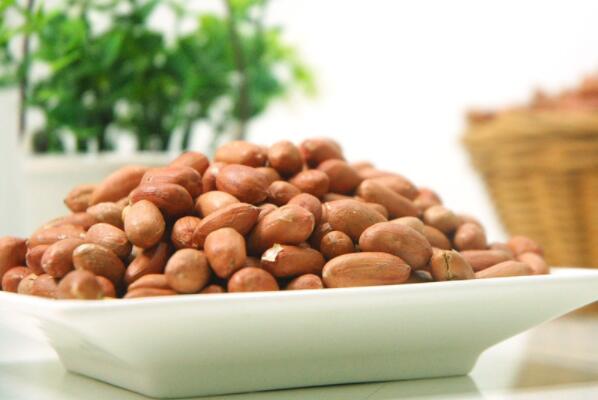
Can Growing Peanuts Make Money in 2018?
Peanuts are divided into spring peanuts and autumn peanuts, and the yield per mu of spring peanuts is generally greater than that of autumn peanuts. Moreover, the vast majority of the fat contained in peanuts is unsaturated fatty acids, and they contain no cholesterol. This kind of fatty acid not only does not clog arteries like saturated fat, but it even has the reputation of an “artery scavenger,” and can significantly lower total cholesterol and harmful cholesterol levels, with a good preventive effect on cardiovascular disease. The feeling of fullness caused by peanuts is 5 times that of other high-carbohydrate foods; after eating peanuts, the need for other foods can be relatively reduced, lowering the total calorie intake of the body and thus achieving a weight-loss effect.
Freshly pressed peanut oil costs about 20 yuan per jin; 3 jin of wet peanuts in the shell can be sun-dried into 1 jin of dry peanuts, and 10 jin of peanuts in the shell generally yields about 3 jin of oil, for a return of roughly 2400 yuan! So, growing peanuts in 2018 can still make money.
What Are the Growing Prospects and Cost-Profit Picture for Peanuts in 2018?
Prospects:
China's peanut output is expected to reach 16.8 million tons in 2017. Even so, China's huge oilseed processing industry keeps supplying eager buyers, causing prices to climb sharply. For example, in Shandong, a major peanut-growing province in China, the price of peanut oil is currently about 14,400 yuan per ton, up 9.5% from a year earlier and the highest since February 2014. Over the past few months, peanut export prices have also continued to rise.
From this, the prospects for the peanut-growing industry are still good, but growers need to take comprehensive account of their own environment and region, make peanut growing more technology-driven, raise yields and achieve maximum profit; irrational blind planting and following-the-crowd planting will inevitably lead to a decline in peanut prices and will also affect farmers' returns.
Cost and profit:
Taking growing one mu of peanuts as an example:
Seed cost: 230 yuan; fertilizer cost: 160-180 yuan; machinery cost: 400 yuan; pesticides: 120 yuan; labor: 200 yuan; the total cost per mu is about 1100 yuan.
If wheat-stubble peanuts yield 800 jin per mu, with peanut pods selling at 2.7-2.8 yuan per jin, the net profit per mu is 800-1000 yuan; spring-sown peanuts bring even higher returns, reaching about 1500 yuan. Moreover, freshly pressed peanut oil costs about 20 yuan per jin; 3 jin of wet peanuts in the shell can be sun-dried into 1 jin of dry peanuts, and 10 jin of peanuts in the shell generally yields about 3 jin of oil, for a return of roughly 2400 yuan!
Appendix: Price Market Forecast
Regarding the growing benefits of this season's peanuts, Shandong grower Lu Guoling did the accounts: per mu, 30 jin of seed is put in, at 6.5 yuan per jin (peanut kernels), for a seed cost of 130 yuan; plastic film cost 30 yuan; peanut-specific fertilizer and urea cost 110 yuan; pesticide cost 20 yuan; land preparation and machine sowing cost 90 yuan. However, due to continued high temperatures this year, labor costs have risen sharply, and growing peanuts requires 360—510 yuan in labor per mu. Adding up all the items, growing peanuts requires an input of about 830 yuan/mu (excluding land cost). If calculated at last year's selling price of 4.2 yuan/jin (peanut kernels) and a yield of 550 jin of peanut kernels per mu, the output value per mu is about 2310 yuan, and after deducting all inputs (excluding land cost), the gross income per mu of peanuts is about 1480 yuan. Compared with growing wheat and corn (soybeans), this increases income by more than 500 yuan per mu.
Liu Xiaowei is also quite satisfied with the current peanut-growing returns; after deducting all expenses including land rent, the net income per mu is about 520 yuan, still higher than the growing benefits of wheat and corn (soybeans).
Some industry insiders analyze that, on the premise of expected higher peanut output, the opening price will be lower than the previous year. As the volume coming to market gradually increases, driven by stocking demand for the two festivals, new peanut prices are expected to gradually rise, with the overall trend showing a pattern of low first and high later.