How much is verbena seed per jin? Planting time, methods and effects
Verbena is a perennial upright herbaceous plant. The whole plant is used medicinally; it is cool in nature and slightly bitter in taste. So how much does its seed cost per jin? How do you plant it? When do you plant it? According to a Suqian nursery company, verbena seed costs about 120-180 yuan per jin, but prices vary widely depending on seed quality, variety, place of origin and market. Verbena is usually propagated by seed. It likes a dry, sunny environment and is not demanding about soil. It likes fertilizer and moisture, fears waterlogging and cannot tolerate drought. It can grow in ordinary soil, but grows most vigorously in deep, fertile loam and sandy loam; low-lying, easily waterlogged land is not suitable for planting.
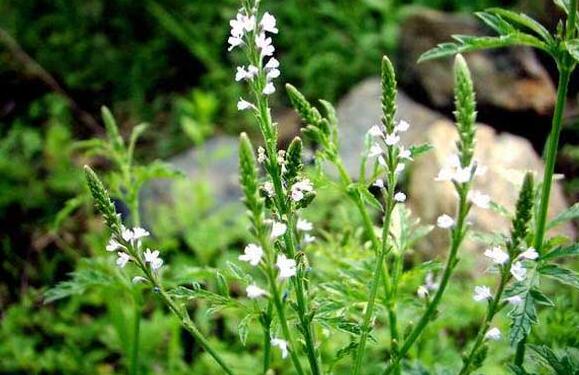
When do you plant verbena?
In the south, verbena is a perennial plant; its root system can survive long term without dying, and it can be harvested for many years after one planting. In the north, the roots cannot overwinter, so it can only be sown in spring and harvested in autumn, and must be replanted every year. Verbena fruit ripens from mid-August to October. Once the seeds are ripe, harvest them promptly, dry them and store them. When spring temperatures rise and the soil temperature reaches 16-20°C, you can sow. In Shandong this is generally from late April to early May.
How do you plant verbena?
1. Thinning and transplanting: verbena seedlings emerge 10-20 days after sowing. Thin when the plants are 5 cm tall. There is no need to deliberately leave a single row, but the spacing between plants in each row should be kept at about 10 cm. The seedlings removed by thinning can be transplanted again.
2. Timely weeding: weeding verbena is a routine field management task. Preventing weed overgrowth is one of the effective measures for increasing yield, so weeds should be removed as soon as they appear, keeping the field free of weeds.
3. Drainage and watering: verbena likes moisture, fears waterlogging and cannot tolerate drought. When the soil is too dry, water promptly to ensure normal plant growth. In rainy seasons, pay attention to field drainage.
4. Timely loosening of the soil: when growing verbena, loosen the soil promptly to prevent the surface soil from hardening and affecting plant growth. Loosening the soil both increases soil permeability and reduces the occurrence of disease.
5. Pest and disease control: when verbena stands in large amounts of water for a long time in the field, root rot can occur. It can be avoided simply by timely drainage and loosening the soil. For chemical control, drench the roots with a 500-600 times dilution of 50% carbendazim.
6. Field management: good-quality verbena seed is the basic condition for obtaining high yields, so a separate seed field should be set up, with plant spacing of 15-20 cm and row spacing of 20-25 cm. Strengthen field management and appropriately apply extra phosphorus and potassium fertilizer before flowering.
7. Seed harvesting: when 75-80% of verbena seeds are ripe, cut the plants, place them in a well-ventilated shady spot for 4-6 days, then thresh. Remove all impurities and shriveled grains, dry in the sun for 3-4 days, then put them in clean cloth bags and store in a ventilated warehouse.
Appendix: Verbena effects and actions
1. Anti-inflammatory and analgesic effect;
2. Antitussive effect: verbena decoction has a certain antitussive effect;
3. Verbenalin excites sympathetic nerve endings in small amounts and inhibits them in large amounts; in mammals it can promote milk secretion.
The effects of verbena
Invigorates blood and disperses stasis, treats malaria, removes toxin, promotes diuresis and reduces swelling. Used for abdominal masses and accumulations, amenorrhea and painful menstruation, malaria, throat obstruction, carbuncles and swellings, edema, and heat strangury.