How much does the flying saucer squash cost per jin? A detailed explanation of its nutritional value and potted planting method
The flying saucer squash, also called dish squash or saucer-shaped squash, is a variety of Cucurbita pepo in the Cucurbitaceae family, genus Cucurbita. Its fruit can be both ornamental and edible, making it a rare dual-purpose horticultural plant for both viewing and eating. So, what nutritional value does the flying saucer squash have? How much does it cost per jin? How do you grow it in pots?
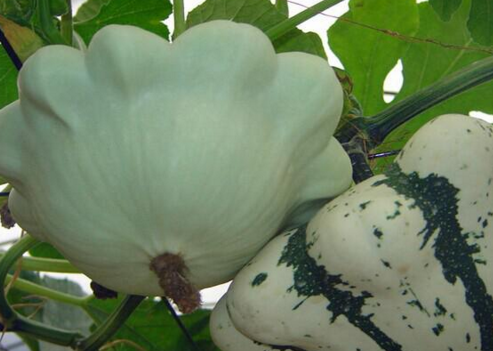
I. What nutritional value does the flying saucer squash have?
The flying saucer squash not only has high ornamental value, but also high edible value and medical and health care value. Its young fruit, young flowers, young shoots, leaf stalks and seeds are all edible. According to measurements, the flying saucer squash is rich in vitamin C, B1 and B2, carotene, nicotinic acid, and various mineral elements such as potassium, calcium, phosphorus and iron. It can be eaten cold dressed or stir-fried.
II. How much does the flying saucer squash cost per jin?
Generally, the flying saucer squash sells for 15 yuan per jin on the market. Prices may vary from region to region, so this price is for reference only.
III. How do you grow the flying saucer squash in pots?
1. Seedling raising: Use pots, and the plant can be transplanted once it has unfolded 1-2 true leaves.
2. Transplanting: The planting pot should be a large pot with a top diameter of 40-50 cm. Fill it with nutrient soil. The nutrient soil formula is: field soil : decomposed livestock and poultry manure : sawdust (or decomposed horse manure) at 7:2:1. Plant 1 flying saucer squash per pot, and set up 1 support stake 1 m tall and 2-3 cm thick. Water thoroughly after transplanting. Keep the soil moist during the growing period. Because the flying saucer squash is a light-loving plant, the pot should be placed in a well-ventilated place with plenty of light.
4. Management: For the bush type, keep 2-3 fruits per plant; for the vining type, keep 3-5 fruits per plant. Keep the soil moist. Every time the plant extends 20 cm, tie the vine once. During the growing period, mainly prevent aphids and powdery mildew. Pick the fruit after it is fully ripe.