2018 Guide to High-Yield Peanut Cultivation Techniques and Variety Selection
In our country, peanut is one of the most common crops and also one of the sources of income for farmers' livelihoods, but because there are many peanut varieties and what is grown in each place differs, to achieve high peanut yields you need to choose good varieties. So what peanut varieties can give high yields when planted in 2018? And how do you grow them?
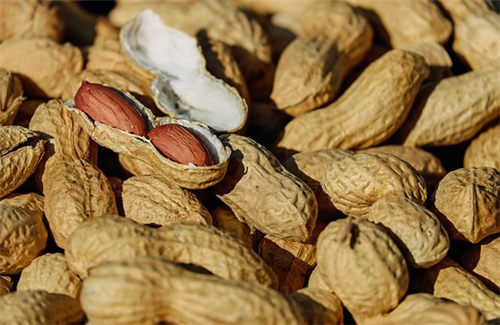
Introduction to high-yield peanut varieties:
According to authoritative recommendations from the Ministry of Agriculture, the following peanut varieties are high-yielding and stable-yielding, with strong drought resistance, wide adaptability and strong disease resistance, mainly including
1. Huayu 33, spring sowing growth period 128 days, average yield 370.5 kg per mu.
2. Yuanza 9847, summer sowing growth period about 110 days, average yield 314.4 kg per mu; the above two varieties are suitable for planting in Henan, Shandong, Hebei, Beijing, and the areas north of the Huai River in Jiangsu and Anhui provinces.
3. Jihua No. 4, spring sowing growth period 120-130 days, average yield 350.6 kg per mu; suitable for spring sowing and plastic film mulching cultivation in Henan, Shandong, Hebei, Shanxi, Beijing, Tianjin, Jiangsu, Anhui and other areas.
4. Zhonghua 16, whole growth period 122 days, average yield 313.9 kg per mu, suitable for planting in Sichuan, Hubei, Chongqing, Jiangxi, Anhui, Hunan, southern Henan, Jiangsu and other places.
5. Yueyou No. 7, whole growth period 128 days, average yield 399.07 kg per mu, suitable for planting in Guangdong, Fujian, Jiangxi and Guangxi and other places.
How to grow them for high yields?
I. Deep ploughing and land preparation
1. Deep ploughing of the soil. Generally, peanut fields should be deep-ploughed 6-10 cun, which is beneficial for good root growth and an increase in the number of lateral roots. It is beneficial for microbial activity and promotes the growth of peanut rhizobia.
2. Fine land preparation. Prepare the land early, form beds; generally make the bed width 3.6-4.5 chi including the furrows, with a bed height of about 4-6 cun. Let the soil have a certain amount of time to settle and be sun-bleached and weathered, achieving "loose on top, firm below", which is beneficial for maintaining soil temperature and promoting seed germination and seedling emergence.
II. Sowing and full stands
1. Sowing at the right time. Sowing times differ between the north and the south. The sowing period for spring peanuts is mainly determined by temperature. Generally, the temperature is required to be stable above 15 degrees C for best results.
2. Ensuring a full stand. (1) Carefully select plump, large-podded pods for seed, (2) in the south, use autumn-planted seed, (3) sun the seed in the shell and shell them at the right time. (4) Discard thin, small seeds or those with damaged seed coats, and carefully select large seeds. (5) Soak and sprout the seeds, and fertilise the seedlings. You can use a 2% plant ash solution and 2% limewater to soak and sprout the seeds. (6) Inoculate the seed with rhizobium agent. Where conditions allow, seed can be treated with rhizobium agent. (7) Treat the seed with chemicals to prevent birds and animals from pecking and eating the seeds.
3. Reasonable close planting. Determining the appropriate density of peanuts should take into account natural conditions, variety characteristics and cultivation conditions. For pearl bean-type spring peanuts, generally 14,000-21,000 seedlings per mu, and yields tend to increase as density increases.
III. Fertiliser and water management
1. Scientific fertilisation: Fertiliser is the material basis for ensuring a bumper peanut harvest. The fertilisation principle for high-yield peanuts is the dialectical fertiliser management method of "using fertiliser to promote seedlings, using seedlings to promote pods, using pods to regulate seedlings". Over the whole growth period, peanuts absorb nitrogen > potassium > phosphorus, and the ratio of the three elements nitrogen, phosphorus and potassium absorbed is 4.3-5.3:1:2.3-3.
(1) Nitrogen fertiliser application techniques. The principle for applying nitrogen fertiliser is heavy at the front and light at the back. Peanut is a legume crop and absorbs a relatively large amount of nitrogen, but with rhizobia fixing nitrogen, its absorption and use of nitrogen has its own particularities. Experiments have shown that rhizobia nitrogen fixation gradually accumulates and increases with plant growth from the beginning of flowering to the pod-setting stage. The peak of nitrogen fixation is generally at the end of flowering and the beginning of pod setting. Four-fifths of the nitrogen nutrition needed by the peanut plant comes from rhizobia, and only one-fifth is absorbed from its seeds and the soil. On the basis of applying a certain amount of organic fertiliser, apply an additional 20-30 jin of ammonium sulphate per mu as base fertiliser or seedling fertiliser, and topdress 10-15 jin of ammonium sulphate or 8-10 jin of urea per mu before the beginning of flowering.
(2) Application of phosphorus fertiliser. According to calculations, for every 100 jin of pods produced, 1-2.5 jin of phosphoric acid needs to be absorbed. Phosphorus fertiliser works well when applied together with nitrogen and potassium fertilisers, and is best applied early as a base fertiliser. If you want a yield of more than 800 jin per mu, generally use 120-150 jin of phosphate rock powder or 20-25 jin of ternary compound fertiliser.
(3) Application of potassium fertiliser. According to tests, for every 100 jin of pods produced, 2-4 jin of potassium oxide needs to be absorbed, and nitrogen and potassium fertilisers work well together. If you want a yield of more than 800 jin per mu, the general application rate is 50-60 jin of potassium sulphate per mu. Potassium fertiliser should be applied in stages: 18-20 jin per mu as base fertiliser, 12-15 jin at the flowering stage, 8-12 jin at the pod-setting stage, and 12-13 jin at the maturity stage.
(4) According to nutrient deficiency conditions, appropriately increase the application of calcium, magnesium, sulphur fertilisers and trace element fertilisers. Because the nutrients absorbed by peanuts are affected by factors such as variety, planting period, growth stage, planting density, soil fertility, soil moisture and climatic conditions, this is for reference in fertilisation.
2. Water requirement management. The water requirement principle is "dry at the seedling stage, moist at flowering, moist at pod filling". In the early growth stage of peanuts, watering should be done in the early morning or evening, avoiding strong sunlight and high soil temperatures that can damage the root system. When watering, do not use flooding irrigation or running-water irrigation; it is best to irrigate and drain quickly, generally filling to two-thirds to four-fifths of the bed height, letting the water slowly seep into the bed, and draining it as soon as the soil surface in the centre of the bed begins to look slightly moist.
IV. Earthing up and intertillage weeding
1. Check the seedlings and fill gaps. 3-4 days after the peanuts emerge, check the seedlings and fill gaps in time.
2. Intertillage and weeding.
(1) Clearing the seedlings. The time for clearing the seedlings and hardening them is when the seedlings are basically all emerged. It should not be too early, otherwise the peanuts are too small and cannot tolerate sun and drought; nor should it be too late, because if it is too late the first pair of branches is buried in the soil for too long and the effect of clearing the seedlings cannot be achieved.
(2) Intertillage and weeding. There are many kinds of weeds in peanut fields, and their seeds are buried at different depths in the soil. After repeated intertillage and turning the soil layers up and down, the germination times also differ, so weeding must be done promptly and repeatedly to achieve the goal of clearing weeds. Before there were herbicides, weeding was generally done by hand, but now herbicides are used to reduce labour and time. The following herbicides can be used: 2.4-D herbicide, nitrofen, diuron, methabenzthiazuron, trifluralin and so on, applied according to the instructions.
(3) Earthing up. Peanut pegs need to enter the soil to set pods. During the period of flowering and peg penetration, earthing up should be done in stages, placing loose soil from between the rows within the pod-setting range of the peanuts, which can relatively shorten the distance between the pegs and the ground and help improve pod setting.
V. Harvesting at the right time and storage
1. Harvesting at the right time. Harvesting at the right time is an important part of achieving high yields and good quality in peanuts. The harvest period should be determined according to the maturity characteristics of the peanuts, their growth conditions and climatic conditions. Using the naked-eye observation method, local farmers have summed up a piece of experience: when the sun sets, if the peanut leaves do not close, it is the maturity stage and they can be harvested. This is because the plant body has already aged, and the effect of cell sap turgor at the pulvinus is no longer obvious.
2. Sunning and drying the seed. Harvesting should be chosen on a sunny day so that sunning the seed can be carried out immediately afterwards. If rainy weather is encountered and it is difficult to sun the pods, drying must be carried out, whether by indoor drying, artificial drying or machine drying.
3. Storage and keeping. Peanut pods must be thoroughly sun-dried. The critical moisture content of pods is 8-9%, and that of kernels is about 6-7%. If the moisture content is within this range, the seeds can be protected from cold damage and are not prone to heating and spoiling during stacked storage. During storage, regular inspections should also be carried out, and if there is a situation of increased moisture content, effective measures should be taken to deal with it early.