The Benefits and Uses, Cultivation Methods and Market Prospects of Lemon-Scented Gum
Lemon-scented gum (Corymbia citriodora) is native to Australia and has been introduced to China for nearly a hundred years. It is cultivated in South China as well as in Fujian, Zhejiang, Yunnan, Sichuan and other places. It is known as the “fairy of the forest.” So, what are the benefits and uses of lemon-scented gum? How is it cultivated? What are its market prospects?
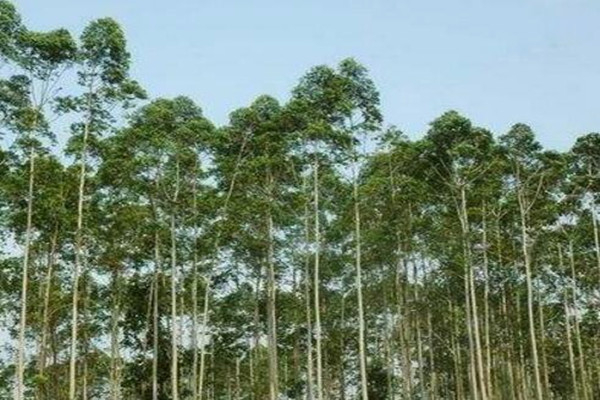
What are the benefits and uses of lemon-scented gum?
1. Lemon-scented gum generally takes only 10-15 years to grow into timber suitable for use as pillars and beams. This eucalyptus has stable genetic traits and is not prone to mutation; through multiple generations of cultivation it can still exhibit excellent characteristics such as fast growth, great height, straight trunks and few branches. Its timber yield rate is as high as over 75%, which ordinary broadleaf tree species cannot match. The wood is hard, heavy, strong and tough, wear-resistant and rot-resistant, and is widely used in industry and mining, construction, transportation, papermaking and other fields, with shipbuilding being its best use.
2. Lemon-scented gum is an important fast-growing timber tree species and an excellent aromatic oil tree species in the south. It contains abundant aromatic substances.
3. Citronellol has anti-tuberculosis effects; at a concentration of 1:1,000,000 it can inhibit the growth of human-type tubercle bacillus (H37Rv), with potency comparable to isoniazid; at 1:600,000 it can inhibit Staphylococcus aureus; at 1:60,000 it can inhibit the growth of Mycobacterium phlei. It also has inhibitory effects on certain fungi, but is ineffective against Escherichia coli.
How is lemon-scented gum cultivated?
1. Seed selection and collection: Superior trees should be selected as mother trees that have full, straight trunks, a small taper, no forking, good flowering and fruiting performance, resistance to pests and diseases, and strong wind resistance, with grayish-blue bark, aged 10-30 years. Seed collected from such trees: lemon-scented gum has strong reproductive capacity, flowering once each year in March-April and November-December, with a very long flowering period. Seeds mature from September to November and in June-July of the following year. After maturity they do not fall off or split open, and seeds can be collected in all four seasons; when ripe, the capsules become bottle-shaped, with their surface turning from tender green to dark green and even grayish-brown.
Lemon-scented gum flowers and fruits relatively early; 4-7 years after planting it can flower and fruit, with a peak fruiting period lasting 10-40 years. When the capsules turn from green to yellowish-brown they can be harvested. The seed maturation period is May-July, and the harvest period is August-October. Mature fertilized seeds are plump and firm, black and glossy, with a relatively high germination rate and good seed quality. After the seeds are collected, they can be threshed and extracted by drying. Generally, the capsules are placed on clean ground or spread on canvas or straw mats; after drying, the capsules split open and the seeds and shriveled grains fall out, and they can then be turned over and sieved. Every evening the fallen seeds must be gathered up to prevent ant damage, rain or excessive sunlight from affecting germination capacity.
The fruit disc of lemon-scented gum is sunken, and the valves need to be exposed to sunlight for more than 20 hours before they fall off completely. After collecting the seeds, remove impurities and sow immediately. If storage is needed, they can be put into cloth bags and placed in a dry, cool, ventilated place; the germination rate can be preserved for 2 years. The seed extraction rate is 3%-4%, the seed germination rate is 70%-85%, the thousand-grain weight is 4.7 grams, and each kilogram contains about 200,000 seeds.
2. Seedling management: Lemon-scented gum grows very fast; a 1-year-old seedling can reach 2-3 m in height, with a deep taproot and few fibrous roots, so afforestation with bare-root seedlings has a low survival rate. Therefore, small seedlings should first be raised in a nursery, then transplanted into seedling bags for raising, and planted on the mountain with the soil ball, giving a high survival rate. The nursery land requires careful preparation and bed making; sowing can be done at any time except winter. After sowing, cover with soil, mulch with grass and water. They germinate in 4-6 days; remove the grass cover, and after 7-10 days the shade frame can be removed. Every 3-5 days a small amount of fertilizer can be applied (150 times diluted urea). When the seedlings have 2-3 true leaves, they can be transplanted into bags. When bagging, open a small hole in the seedling bag filled with nutrient soil, put the small seedling in and press firmly, then water with settling water. After settling, fertilize once every 5-7 days. Pay attention to filling gaps and preventing pests and diseases; after 50-70 days, when the seedlings reach 15-25 cm in height, they can be planted on the mountain for afforestation.
3. Afforestation and maintenance: Density should be determined according to site conditions and management objectives. If the goal is managing a timber forest and site conditions are good, 3×2 m or 2×2 m can be used; if the goal is oil distillation and obtaining small-diameter timber, 1×1 m or 1×1.5 m can be used; for cultivating a mother tree forest, 4×2 m or 5×2.5 m can be used; for strip planting, a spacing of 2×1 m or 2×1.5 m can be used, with better afforestation results. When planting, remove the seedling bag, slightly squeeze the nutrient soil and place it into the hole, cover with soil 1-2 cm deeper than the original seedling root, press lightly, and never trample hard on the seedling roots. Lemon-scented gum forests have high understory light transmittance and can be mixed with broadleaf tree species such as camphor tree and Taiwan acacia, also with good results. Whether it can become large timber depends on tending and thinning as one of the key factors. The thinning repetition period is 3-4 years, with 2-3 thinnings. After thinning, retain a certain number of trees: 70-80 trees for timber forests and 25-30 trees for mother tree forests.
4. Pest and disease control: The main pests and diseases include termites, red-legged chafer beetles, canker disease and seedling stem rot. To control termites, poison bait can be used to trap and kill adults, and soil disinfection should be carried out. For seedling stem rot, the diseased seedlings can be pulled out and burned, and Bordeaux mixture at 1:1:100 can be sprayed on the stem base of healthy seedlings. Red-legged chafer beetles harm seedlings and young trees; for larvae, before sowing, 2-3 kg per mu of trichlorfon powder can be mixed with 20-30 kg of fine dry soil and evenly spread on the surface soil, then after plowing the larvae in the soil are killed. For adults harming young forests, 90% trichlorfon or 80% dichlorvos emulsion can be sprayed.
What are the market prospects of lemon-scented gum?
1. The leaves of lemon-scented gum have a strong lemon scent and can be used to extract essential oil and make soap. Because its lemon scent is very strong, it keeps mosquitoes and flies away.
2. Lemon-scented gum leaves have an oil content of 1.5% and can be used to extract spices and precious medicinal raw materials. In medicine, it has anti-inflammatory and detoxifying effects and the effects of dispelling wind and invigorating blood circulation; it has a clear inhibitory effect on pneumococcus, typhoid bacillus and Pseudomonas aeruginosa; and has special therapeutic effects on stubborn scabies, ringworm and scalds. The sapwood of lemon-scented gum is rich in starch, and its wood and branches can all be used to cultivate white fungus (silver ear); lemon-scented gum flowers once twice a year, with a very long flowering period, and is also an important nectar source tree species.
3. It is planted in Guangdong, Guangxi and southern Fujian, and is especially most common in Guangdong, mostly as a street tree; it likes hot, humid conditions and fertile soil; it can tolerate light frost and grows well in northern Guangdong and Fujian. The wood grain is relatively straight and easy to process, and the texture is slightly brittle; after felling, soaking in water can improve resistance to insect damage; it is used for shipbuilding; it resists seawater immersion and can prevent shipworm attachment and corrosion, making it good timber for shipbuilding; the leaves can be steam-distilled to extract eucalyptus oil for perfumery use, with branches and leaves having an oil content of 0.8%, most of which is citral, along with a small amount of esters and alcohols; the specific gravity of the crude oil is 0.864 at 15°C, and the refractive index is 1.4594 at 20°C. The planting market prospects are broad.