When does the Rieger begonia bloom? How do you pinch it back? What should you do if the leaves wither while growing it?
Rieger begonia, also called rose begonia or Rieger's begonia, has a rich variety of flower colors, including red, orange, yellow and white. Its blooms are large and brilliantly colored, with a distinctive form, color and fragrance, and it also has a long flowering period. So, when does the Rieger begonia bloom? How do you pinch it back? What should you do if the leaves wither while growing it?
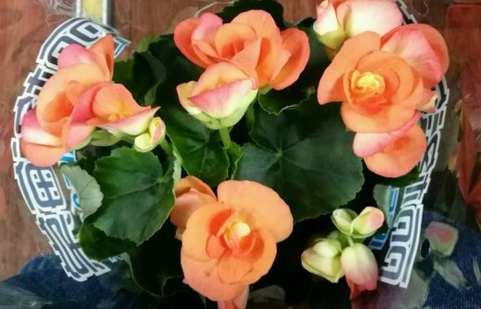
1. When does the Rieger begonia bloom?
According to Cucurbitales data, the Rieger begonia's flowering period can last from December to the following spring in April, with peak blooming periods from April to June and from September to December.
2. How do you pinch back a Rieger begonia?
1. When the seedlings of this plant grow to the height you want, you can simply pinch off the growing tips with your fingers, which benefits the growth of new side branches. Or you can wait until the seedlings are about 10 cm tall, then remove one-third or one-half of the top, or pinch off at a point 0.5 cm above an axillary bud.
2. After the growing tips of the seedlings with relatively many flowers are removed from the top of the main branch, the plant's apical dominance is redirected to the small buds below the pinched point. Three to four branches will grow below the pinch, and they will be used to replace the growth of the central main stem. After the first removal of the extra growing tips, the new side branches will grow well after a period of time, and at this point a second pinching is needed, meaning you pinch off the tips of the new side branches again, so that even more new branches can grow.
3. What should you do if the Rieger begonia's leaves wither?
1. Lack of water
When the leaves appear withered and curled, first check whether there is too little water; this is the most common situation, and its most obvious sign is that the plant begins to wither gradually from the top downward. The measure needed in this case is to replenish water, which can be done by watering promptly and spraying the leaves, preferably both together, so that the Rieger begonia recovers faster. Note that in high-temperature summer conditions, do not use water that is too cold.
2. Overwatering
Besides lack of water, overwatering can also cause curled leaves. The way to judge this is to observe the potting soil; if there is standing water in the pot, it may be overwatering, which is one of the causes of leaf problems. In this case, move the plant indoors, avoid light and wind, cut away some of the leaves, remove some of the soil in the pot as appropriate, and replace it with dry soil. Usually after about one to two weeks, the plant in the pot will return to normal.
3. Overfertilizing
If there is too much fertilizer in the soil, the plant's water will seep outward. This situation is also very serious and can very likely cause the plant to wither, so be on high alert. In this case, first rinse the potting soil with clean water and promptly drain away the excess water. Or remove some of the soil and replace it with normal soil. To help the plant recover promptly, you should also replenish water to the leaves at the same time to protect the plant's main parts.
4. Other factors
If all of the above situations have been ruled out, then consider whether pests or diseases have appeared. If no obvious pest damage is visible on the leaves, pay attention to the plant's roots, apply treatment promptly, and remove the affected parts.
The Rieger begonia prefers a semi-shaded growing environment. If the light is too strong, it can also cause problems with the plant's leaves. At this point, promptly move the plant to another location and replenish water to the leaves by sprinkling water and other methods.