Is it profitable to grow daylily in 2018? Analysis of per-mu returns and market prospects
Daylily is cultivated throughout both northern and southern China, mostly distributed south of the Qinling Mountains, in Hunan, Jiangsu, Zhejiang, Hubei, Jiangxi, Sichuan, Gansu and other places. Quxian County in Sichuan is known as the “Hometown of Chinese Daylily.” So, is it profitable to grow daylily in 2018? How much is the return per mu planted? What are the market prospects? It is understood that daylily, also known as "forget-worry vegetable," is sweet and cool in nature and flavor, and has certain medicinal effects. Daylily cultivation methods are simple, the success rate is high, and the returns are obvious. Daylily has low soil requirements and many propagation methods; it can be divided and planted, with a high survival rate. Growing daylily should indeed be profitable.
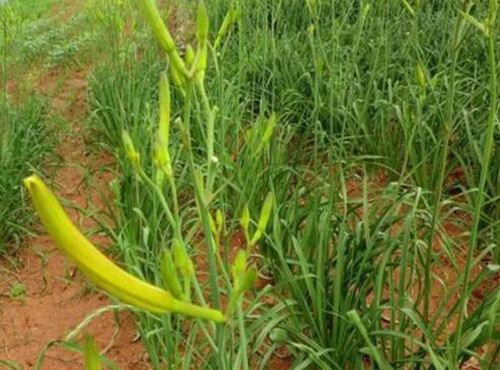
How much is the return per mu of daylily planted?
Planting one mu of daylily can produce about 150 kg of dried daylily. At the current market price of about 40 yuan per jin, the income per mu is about 12,000 yuan.
What are the market prospects for growing daylily?
At present, the vegetable dehydration industry is developing rapidly across the country, gradually forming a nationally standardized management model. Product quality has also greatly improved. Dehydration processing of daylily and deep processing of ancillary foods are attracting more and more attention. The value-added benefits of daylily are very obvious, and the prospects are very optimistic. Although the prospects are broad, the constraining factors are equally evident.
1. Manpower
At present, production areas mainly rely on accumulating small amounts into a large total, with each household producing more than 1 ton, which two middle-aged couples can manage well. Young people in the village have gone out, so if manpower is needed, it must be hired from elsewhere. Daylily work is done in sweltering heat and is more tiring than the work of a mason's porter. It is very difficult to find diligent workers with high efficiency and low wages.
2. Competition
If daylily grown in large contiguous plots is processed the same way as ordinary villagers do, then direct competition is created. Farmers' output is unchanged, and their input is fixed. Large-scale planting, however, requires consideration of many factors, including management, which all require experience.
3. Quality control
For group-based operations, the daylily produced of course needs a quality advantage, which requires investment in production and processing equipment. This is also a very large initial investment.
4. Sales channels
Farmers sell through village and township buyers who come to purchase on site. Group-based operations must identify sales outlets, including processing and transportation channels for daylily, for which there is not yet good experience in rural areas to draw on.
In 2018, growing daylily requires growers to open their minds, strengthen food safety awareness, vigorously introduce domestic and foreign production and processing experience, carry out deep processing of daylily, and expand their thinking to enhance the potential value of daylily. Efforts should be made to make China the main production region of daylily worldwide.
Daylily cultivation techniques
1. Clever selection of plots
Although daylily has low requirements for soil conditions, because it likes warm light, prefers moisture, fears acid and alkali, and is afraid of sticky waterlogging, the planting site should be selected as a plot with neutral or slightly acidic soil, loose rather than sticky texture, good aggregate structure, sheltered from wind and facing the sun, and convenient drainage, such as the relatively fertile flat land around village houses and vegetable garden plots.
2. Clever selection of seedlings
Daylily is a asexually propagated, clumping crop. Yield is closely related to variety. Under the same conditions and management level, compared with early-flowering varieties, late-flowering varieties have larger perennial roots, stronger root buds, more flower scapes per bud plant, more and heavier flower buds, higher yield and better quality. For this reason, seedlings should preferably use 5- to 6-year-old large clumps of perennial roots with robust plants and enough individual plants per clump. When transplanting, choose clear weather, dig up the daylily perennial roots, cut the perennial roots into 6 to 8 single-plant pieces with a small knife (1 piece per bud), then trim off the fleshy roots before planting in the holes, so as to ensure early rooting, more bud growth, high yield and stable yield.
3. Clever choice of planting time
The optimum temperature for daylily growth is 15°C to 30°C. The root bud meristem is active and can grow all year round. Therefore, except from the full seedling stage to the picking stage, when seedlings should not be taken for planting in order to obtain economic yield, seedlings can be taken and planted during the rest of the period. To ensure the digging of strong plants and healthy buds and to promote early flowering and high yield, it is best to take seedlings for planting from after picking to October before the “winter seedlings,” or to dig up perennial roots and divide them for planting in March to April after the “winter seedlings” have sprouted.
4. Clever arrangement of density
Increasing daylily yield depends on group effects, so rational close planting is required; neither too sparse nor too dense is suitable. For interplanting in vegetable gardens, because the soil is relatively fertile and it is planted between rows of other crops, it is suitable to use double-row or triple-row arrangement, with row spacing of 80 cm and hole spacing of 40 to 50 cm, digging 1,600 to 2,000 holes per mu, and planting 3 to 5 single-plant perennial root pieces per hole.
5. Clever application of fertilizer
The daylily growth cycle is 1 year, so fertilizer must be applied sufficiently. For newly planted gardens, whether planted in spring or autumn, large holes should be opened and deep holes dug, and sufficient base fertilizer applied. For every 40 holes, apply 50 kg of decomposed pig and cattle manure and 1 kg of compound fertilizer. The base fertilizer should be mixed evenly with the hole soil, and a thin layer of soil spread in the hole; then place the seedlings on the thin soil in the hole, and cover the roots with 3 to 4 cm of topsoil, so as to help the seedlings survive early, sprout early, and avoid root damage.
6. Clever management of garden water
Daylily likes moisture. Drought or waterlogging is unfavorable to the growth of daylily plants and the formation of flower buds, so the garden should be kept moist. During the new transplanting period, soil water-holding capacity should be maintained at 70% to 80%, and water should be applied promptly during drought. After water accumulates in the furrow ditches, it should be drained promptly.
7. Clever control of pests and diseases
The main pests and diseases harming daylily are leaf spot, leaf blight, rust, daylily aphids, daylily red spiders, and so on. Among them, the most common and most damaging are leaf spot and daylily aphids. Once leaf spot is found, promptly spray with 50% thiophanate-methyl wettable powder at 800 times dilution, making sure to spray both the front and back of leaves, and spray again after one week. For gardens where this disease occurs, regardless of whether the condition is mild or severe, after the flower buds are completely harvested, the leaves should be cut promptly and soil cultivated, and the cut leaves should be gathered and burned to eliminate the pathogen.