What Kind of Plant Is Water Hyacinth? A Detailed Guide to Its Cultivation, Edibility and Uses
Water hyacinth is native to Brazil. It is now widely distributed across the Yangtze River and Yellow River basins in China and the provinces of South China. It likes warm, humid environments with plenty of sunlight, is highly adaptable, and has a certain degree of cold tolerance. So, what kind of plant is water hyacinth? How is it grown? Can it be eaten? What is it good for? It is understood that water hyacinth is a floating herbaceous plant with well-developed fibrous roots and an extremely short stem; its flowers are light blue, shaped like a multi-faceted trumpet, with the upper petals larger; at the center of the petals there is a distinct bright yellow spot, shaped like a phoenix eye and also like the flower spot at the tip of a peacock feather, very eye-catching and beautiful. It is often used as a landscaping material in garden waterscapes. Planted in a corner of a small pond and framed with bamboo, it has a quiet, wild charm.
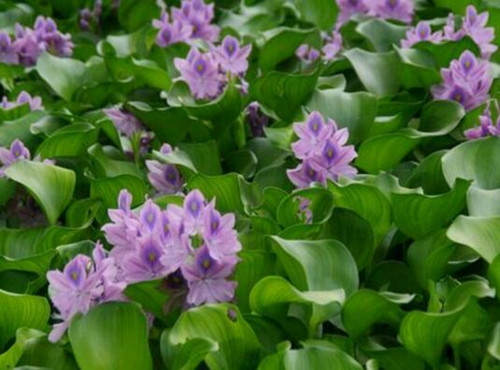
How is water hyacinth grown?
1. Selection of seedlings. Choose new, strong plants, remove diseased and rotten leaves, and keep them as seedlings; the stocking rate is 5 kg per m.
2. Keep the temperature low to inhibit seedling growth. During the seed-preservation stage, the suitable water temperature is 13°C-15°C, and the day-night temperature difference must not exceed 2°C; growth stops below 10°C, survival can be maintained at 4-5°C, and the plant dies below 0°C. Therefore, during the seed-preservation stage, indoor temperatures should be prevented from getting too high; low-temperature storage is best, keeping the seedlings in a dormant state.
3. Ventilation and air exchange. Ventilate every day to keep the indoor air fresh. By late April, all doors and windows can be opened during the day and closed again at 4-5 pm; 10 days before planting out, all should be opened day and night for hardening off, so that the seedlings gradually adapt to the natural environment and are prepared for cultivation.
4. Maintain light exposure. Water hyacinth has high light requirements; the longer the light period, the more vigorous the photosynthesis. Regardless of whether the weather is cold or warm, it must receive 4-5 hours of light every day, especially in spring; if it cannot see or receive light for 2-3 days because the cover is too tight, water hyacinth will rot at the roots or even die. Therefore, the seed-preservation room should have its covers opened every day to increase indoor light and raise the room temperature.
5. Change the water and fertilize. The relative humidity in the water hyacinth preservation room should preferably be 70%-80%. In spring, as the temperature rises, the wind is strong and water evaporates quickly, so the pond water should be sprayed frequently and the water changed regularly, generally once every two months, and the temperature difference of the water should not be too large. If low-temperature seedling preservation is used, the water does not need to be changed. In addition to applying sufficient base fertilizer before preserving the seedlings, topdressing should also be done regularly during the preservation period, preferably with decomposed human waste, diluted to a concentration of 1:20. When topdressing, do not sprinkle it directly on the seedlings.
Can water hyacinth be eaten?
The flowers and tender leaves of water hyacinth can be eaten directly; they taste fresh and refreshing and have the effect of lubricating the intestines and relieving constipation. Indigenous peoples in places such as Malaysia often use the tender leaves and flowers of water hyacinth as a vegetable.
What are the uses of water hyacinth?
1. Water hyacinth has a strong ability to accumulate various inorganic elements such as nitrogen, phosphorus, potassium and calcium, with its accumulation of the major element potassium being especially prominent. Among the existing ways of utilizing water hyacinth as a resource, the simpler and more common methods are composting it into organic fertilizer and producing biogas; its dry powder or the ash after burning can also be used directly as fertilizer or a soil conditioner.
2. Water hyacinth is soft and juicy, fresh and tasty, and rich in nutrients; its dry matter is mainly crude protein, crude fat, crude fiber, etc., and it can serve as an excellent feed for chickens, ducks, geese, fish and pigs. Chopping, crushing or pulping it and mixing it with bran to make a mixed feed or silage can both improve feed utilization and kill parasites.
3. Water hyacinth is an excellent plant for monitoring environmental pollution. It can monitor whether arsenic is present in water and can also purify harmful substances such as mercury, cadmium and lead in water. During growth, it can absorb large amounts of nitrogen, phosphorus and certain heavy metal elements and other nutrients from water bodies; water hyacinth is even more ideal for purifying water bodies containing relatively large amounts of organic matter, such as industrial wastewater or domestic sewage.