How much is a jin of Pittosporum tobira seeds, how many years until it blooms, and can the fruit be eaten?
Pittosporum tobira is mainly distributed in southern Jiangsu, Zhejiang, Fujian, Taiwan, China, Guangdong and other places in China; also in Korea and Japan. It is commonly cultivated for ornamental viewing in gardens throughout the Yangtze River basin and areas to its south. So, how much is a jin of Pittosporum tobira seeds? How many years of growing until it blooms? Can its fruit be eaten? It is understood that Pittosporum tobira seeds cost around ten-plus yuan per jin, and prices vary depending on region and variety.
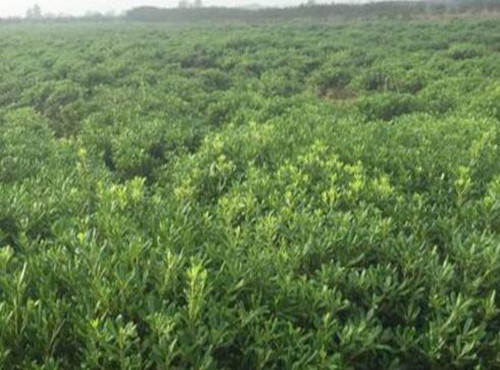
How many years of growing until Pittosporum tobira blooms?
Pittosporum tobira needs 2 years of growing before it blooms. Pittosporum tobira is a biennial plant; usually in the year the seed germinates it only grows roots and leaves, and it does not bloom and set seed until the second year of growing. Pittosporum tobira has strong adaptability to climate, can tolerate cold and also tolerates heat well, is relatively easy to plant, and requires no special management. Pittosporum tobira blooms roughly from March to May each year, and a single flowering period generally lasts about 10-20 days. The flowers of Pittosporum tobira are umbels or corymbose umbels, terminal or nearly terminal, white in color, clear and fragrant when in bloom, and of high ornamental value.
Can the fruit of Pittosporum tobira be eaten?
The fruit of Pittosporum tobira is not a fruit for eating and cannot be eaten.
What effects and uses does Pittosporum tobira have?
1. Pittosporum tobira has luxuriant branches and leaves, a spherical crown, and lower branches covering the ground; the leaves are deep green and glossy, remaining throughout winter without falling, the flowers in early summer are clear and fragrant, and in autumn the fruit splits open to reveal red seeds, which is also quite attractive. It can usually be planted as a hedge, or planted alone, or in groups at the edge of grass, at the forest edge, or beside gates, or planted in rows along roadsides. Because it has the ability to resist sea tides and toxic gases, it is also an important tree species for coastal tide-proof forests, windbreak forests, and greening of mining areas, and is suitable as undergrowth for urban noise-blocking and fireproof forest belts.
2. In warm climates, this species is an ideal tree for flowerbed landscaping or a tree species for garden greening. It is mostly used for foundation planting around houses and for hedges. In the north it is often grown in pots for ornamental viewing and overwintered in a greenhouse.
3. The plant has a rounded shape, stays evergreen through all four seasons, has fragrant flowers, and bright red seeds, making it a famous foliage and fruit ornamental plant. It has a strong ability to resist harmful gases such as sulfur dioxide, and is also an environmentally friendly tree species.