How much does a jin of ageratum seeds cost? Detailed explanation of planting methods and medicinal effects
Ageratum is native to Central and South America. As a weed it has spread widely throughout the whole of Africa, India, Indonesia, Laos, Cambodia, Vietnam and China, and other places, where it is both cultivated and naturalized in the wild. So, how much does a jin of ageratum seeds cost? How do you plant it? What effects and functions does it have? It is understood that ageratum seeds cost around ten-odd yuan per jin, though prices vary with region and quality.
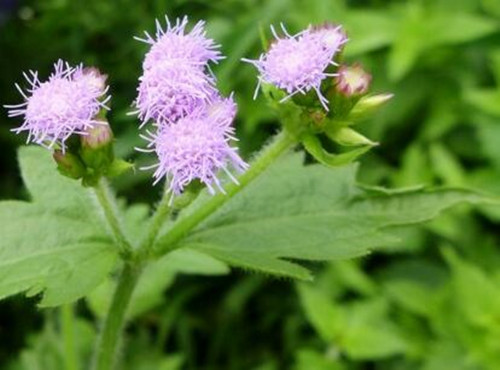
How do you plant ageratum?
1. Pot and soil selection: Growing ageratum requires choosing a suitable pot and soil. Generally, when grown in a pot, one ageratum seedling can be planted in a 4-inch flower pot. For the soil, choose a mix of garden soil and fine sand, with some fertilizer added. After potting the ageratum seedling, water the pot thoroughly and place it in a shaded spot to recover.
2. Light and temperature: Ageratum likes a warm growing environment with plenty of sunlight, is not cold-tolerant and not very heat-tolerant either, and its suitable growing temperature is between 12°C——25°C. It needs sufficient light, otherwise the plant will grow leggy. Ageratum is not cold-tolerant, so in winter it needs to be kept indoors in a spot with plenty of light, with the overwintering temperature kept above 5°C.
3. Water and fertilizer management: Ageratum needs good water and fertilizer management. Basically, water whenever the potting soil starts to dry out; during vigorous growth, water more frequently, while in winter reduce watering. For fertilizer, generally apply a dilute fertilizer solution once every 10——15 days. To encourage better blooming, frequently spray on some phosphorus and potassium fertilizer.
4. Pruning: Ageratum has a long flowering period. To keep the plant short and compact with abundant, beautiful flowers, it must be pinched back several times, generally 3-4 times. To form a rounded plant shape, with flower buds forming at the tip of every branch and blooming at the same time, making the foliage lush and the flowers abundant and brightly colored. After the first batch of flowers finishes blooming, prune and trim promptly; generally keep the old branches 5-6 cm tall and cut off the upper part, while also thinning out overly dense branches. Then ensure sufficient water and fertilizer to encourage new branches to sprout, so that the leaves stay green and the flowers fresh.
What effects and functions does ageratum have?
1. Ageratum has dense clumps and elegant flowers, offering fairly good ornamental value. It is often used as material for flower beds and ground cover, and is also frequently planted in small courtyards, along roadsides, and beside rocks for accent, adding a distinctive charm. The dwarf varieties of ageratum can be used for potted display, while the tall varieties can be used as cut flowers for vases or made into flower baskets. In short, ageratum is an excellent material for flower beds, pots, ground cover, flower borders, flower-studded lawns and the like, as well as for covering the ground.
2. Ageratum can be used to treat symptoms such as colds, fever and headaches, and also has certain therapeutic effects on snake bites, insect bites and bruises. Among the residents of Africa and the Americas, the whole plant of ageratum is commonly used for its effects of clearing heat and detoxifying, and reducing inflammation and stopping bleeding. Among local residents in South America, ageratum is mostly used to treat non-uterine vaginal bleeding in women, and it is said to have excellent results. In Chinese folk medicine, the whole plant is mostly used to treat colds and fever, bleeding from external injuries, boils and eczema, burns and scalds, and so on.
3. Aromatic oil can be extracted from ageratum flowers, which has antibacterial effects and helps boost human immunity. According to relevant research, the fragrance of ageratum contains a kind of “pheromone” that has a similar function to human “sex hormones”. In addition, ageratum flowers can purify the air, with effects of absorbing and killing toxins and preventing air pollution.