How much does a jin of lavender seeds cost? Flowering period, planting and benefits
Lavender is an important aromatic economic plant; the plant stays evergreen year-round and carries a fragrant scent. It has high ornamental value and is a plant material for laying out flower beds, flower borders, creating flower seas and other garden landscapes. So, how much does a jin of lavender seeds cost in 2018? In which month does it bloom? How do you plant it? What benefits and effects does it have? According to Boss Luo at the flower market, the price of lavender seeds is about 500-800 yuan per jin, but the price varies with the quality, variety, place of origin and market of the seeds.
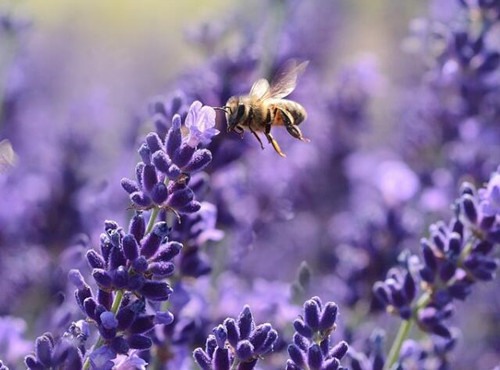
In which month does lavender bloom?
The flowering period of lavender is generally April-May and September-October, with no flowers in summer and winter or a small amount of flowers in summer, and it also depends on which region it grows in; potted or protected cultivation gives a longer flowering period, and the flowering time is not fixed. June to July is when lavender is in full bloom; in France, it opens around June 25.
How do you plant lavender?
1. Soil: Lavender is suited to slightly alkaline or neutral sandy soil. You can use 1/3 perlite, 1/3 vermiculite and 1/3 peat moss mixed together. If cultivating in open ground, pay attention to soil drainage; you can pile the soil up into raised beds before planting.
2. Watering: Lavender does not like water standing around its roots. After one thorough watering, give water again only when the soil is dry. Water in the morning, avoid sunlight, and do not splash water on the leaves and flowers, otherwise they rot easily and pests and diseases breed.
3. Light: Lavender needs plenty of sunlight and a suitably humid environment. In summer, at least 50% of the sunlight should be shaded off and ventilation increased to lower the ambient temperature. In winter, lavender grows well on flat ground and should be cultivated in full sun.
4. Temperature: Lavender is semi-heat-tolerant, likes coolness, and prefers warm winters and cool summers. The suitable growing temperature is 15-25°C; it can grow at 5-30°C. If it stays above 38-40°C for a long time, the top stems and leaves turn yellow and wither; in northern winters, if it stays below 0°C for a long time, it begins to go dormant.
5. Fertilizing: For lavender, bone meal can be placed in the potting soil as a base fertilizer (use once every three months). For seedlings, Hyponex No. 2 can be applied; after the plants mature, apply a fertilizer higher in phosphorus such as Hyponex No. 3.
6. Pests and diseases: Lavender rarely suffers pest damage; the main disease is root rot, which has the highest incidence under high temperature and waterlogged conditions. You can drench the roots with an 800-fold solution of carbendazim or chlorothalonil, once a month. Especially from June to October, take care to prevent waterlogging and keep the air dry.
7. Shaping: After lavender blooms, cut it off at the first node below the flower, and by the way prune the plant into a hemispherical shape. At ordinary times, cut off dead and withered branches at any time. To control plant height or get a better plant shape, prune back appropriately in late summer and early autumn to promote new branches.
What benefits and effects does lavender have?
1. Refreshes the mind and improves memory; very helpful for studying.
2. Relieves nerves, soothes the mood and nature, and has the magical effect of promoting sleep.
3. Promotes blood circulation, can treat acne, and nourishes hair.
4. Suppresses high blood pressure, nasal allergies, asthma, etc.
5. Regulates physiological functions.
6. Enhances immunity.
7. Maintains respiratory function and has a very good effect on rhinitis and laryngitis; it can be used for bathing.
8. Can prevent viral and infectious diseases.
9. Removes odors and purifies the air.
10. Repels ants, cockroaches and mites; can be placed in wardrobes and under pillows.
11. Calms the nerves; can be placed under the pillow as a sleep aid.