Can Pinellia ternata Treat Insomnia, Seed Prices, Economic Benefits, and Cultivation Methods
Pinellia ternata, also known as Diwen, Shoutian, and other names, has the effects of drying dampness and resolving phlegm, descending adverse qi and stopping vomiting, and when used raw, dispersing boils and swelling. So, can Pinellia ternata treat insomnia? How much does a jin of seeds cost? What are the economic benefits? How is it cultivated?
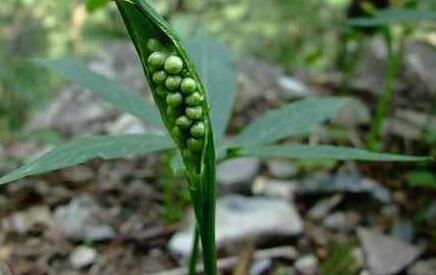
I. Can Pinellia ternata treat insomnia?
Pinellia ternata can treat insomnia. The use of Pinellia ternata for treating insomnia can be traced back to the Pinellia and Sorghum Decoction in the Neijing. The Pinellia and Sorghum Decoction comes from the chapter "Xieke" in the Lingshu, and is one of the thirteen formulas in the Neijing. In this chapter, the master explained the mechanism of insomnia, namely, “defensive qi defends only the exterior and moves in yang, and cannot enter yin. When it moves in yang, yang qi becomes exuberant; when yang qi is exuberant, the yang heel vessel sinks, and it cannot enter yin. When yin is deficient, therefore the eyes cannot close.” That is, defensive yang moves on the exterior and cannot enter nutritive yin, thereby causing insomnia. The therapeutic effect of the Pinellia and Sorghum Decoction in treating insomnia is that “after drinking one dose of Pinellia Decoction, yin and yang have already become free, and sleep arrives immediately. Therefore, for those whose illness is newly arisen, sleep comes as soon as the cup is set down, and once there is sweating, it is resolved. For those with a long-standing condition, three drinks are enough.
II. How much does a jin of Pinellia ternata seeds cost? What are the economic benefits?
The price of Pinellia ternata seeds is about 36 to 55 yuan per jin, but it varies depending on seed variety, quality, place of origin, and purchase quantity. Pinellia ternata is a major commonly used medicinal herb. At present, because wild resources are on the verge of extinction due to rampant digging and reckless harvesting, while artificial cultivation is very limited, its price has risen year after year, with supply falling short of demand. Therefore, cultivation benefits are relatively high. After planting with seed corms, it can be harvested in the same year, with a yield of about 150 kg of dry product per mu, and the benefit per mu can reach more than 20,000 yuan.
III. How is Pinellia ternata cultivated?
1. Land preparation and fertilization: For Pinellia ternata cultivation, choose a sunny sandy loam with deep soil layers, a previous crop of legumes or grasses, and rich organic matter. Deeply plow and make beds. Apply 1500 to 2000 kg of thoroughly decomposed fine farmyard manure or mixed compost and 20 to 25 kg of superphosphate per mu.
2. Timely sowing: Pinellia ternata can be sown in spring, summer, and autumn. Sowing from late February to early March in spring is best. Open furrows 5 to 7 cm deep on the beds at a row spacing of 20 to 25 cm, sow the tubers in the furrows at a plant spacing of 2 to 5 cm, and use about 60 kg of seed per mu.
3. Seedling stage management: After sowing Pinellia ternata, scatter thoroughly decomposed fine farmyard manure or mixed compost to cover the seeds, then pour 1500 to 2000 kg of clear manure water, and afterward cover with soil level with the bed surface. Generally after 20 days, observe once every 2 days. When the emergence rate reaches about 60%, remove the covering after 6 p.m.
4. Intertillage and fertilization: For Pinellia ternata cultivation, about 20 days after the seedlings emerge completely in early April, apply 1000 kg of 1:3 human and livestock manure water per mu. Inspect and manage the field at any time. If weeds are found, pull them out promptly. Use a hoe for shallow hoeing between rows to a depth of about 2.5 cm, avoiding root damage.
5. Timely earthing up: For Pinellia ternata sown before early March, earth up once around June 10, using about 200 kg of fine mud from the plow pan per mu, scattered over the bed surface at a thickness of about 1.5 cm, covering the bulbils and seeds and pressing lightly. Earth up once each around July 15 and September 10.
6. Irrigation and flower bud removal: Pinellia ternata likes moisture and fears drought. If there is a long period of clear weather and drought, irrigate for half an hour after 6 p.m. If there is too much rain, drain promptly. Except for those needed for seed propagation, all flower buds produced during the growth period should be removed so that nutrients are concentrated on the growth of underground tubers.