How to grow orchids? Flowering periods of traditional Chinese famous flowers, with bloom times for different varieties
Orchids among China's traditional famous flowers refer only to several species of terrestrial orchids distributed among plants of the genus Cymbidium in China, such as Cymbidium goeringii, Cymbidium faberi, Cymbidium ensifolium, Cymbidium sinense and Cymbidium kanran, which are what is usually meant by “Chinese orchids.” So how do you grow orchids? When do they bloom? In which months is the flowering period? The details are as follows:
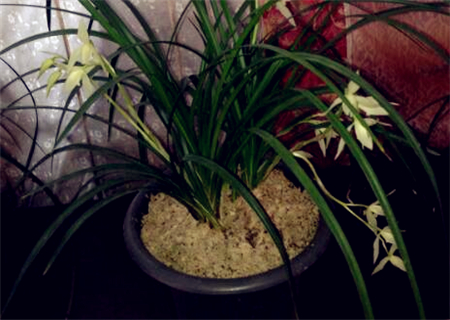
When do orchids bloom
Different orchid varieties bloom at different times. Cymbidium goeringii blooms from January to March, Cymbidium sinense from December to February, Cymbidium ensifolium from May to October, Cymbidium faberi from March to May, and Cymbidium kanran from November to January. Among tropical orchids there are also different varieties, and their blooming times differ as well. For example, spring Dendrobium blooms in spring, autumn Dendrobium blooms in autumn, and Phalaenopsis normally blooms in summer, but through greenhouse temperature control it can also be made to bloom at Spring Festival.
Reasons orchids do not bloom
1. Not old enough to grow: Seedling orchids (seed-grown plants) and tissue-cultured plantlets may not necessarily bloom even after being cultivated for many years. Just like other plants, for example fruit trees must reach a certain age before they can bloom and bear fruit, orchids must also reach a certain age before they can bloom and set seed.
2. Differences between varieties: The species differences among orchid types vary, and different climate conditions in different places often make it difficult for orchids to bloom. Take Cymbidium goeringii for example: in some regions it is relatively difficult to make it bloom, or relatively few plants bloom.
3. Disordered physiological growth: The physiological growth of orchids is disrupted by various causes, and new leaf buds emerge suddenly during the flower bud formation stage. In this situation, the orchid plant no longer has enough nutrients to sustain the normal differentiation of flower buds, which causes the flower buds to stop growing and fail to bloom.
4. Improper cultivation methods: Improper cultivation methods can also cause orchids not to bloom. Here there are mainly the following two situations.
① Soil too rich: The growing medium for orchids contains too much nitrogen fertilizer and relatively little phosphorus and potassium fertilizer, which leads to excessive vegetative growth and inhibited reproductive growth. The solution is to replace it with a growing medium with balanced nitrogen, phosphorus and potassium, or to apply more phosphorus and potassium fertilizer.
② Too much watering: Watering too much during the flower bud differentiation stage, with the growing medium too wet, will likewise lead to vigorous vegetative growth and inhibit reproductive growth. Because the growing medium is too wet, the nutrients it contains are constantly released and absorbed by the roots together with water, then transported to the leaves to take part in the plant's metabolism. Once metabolism is strong, respiration becomes vigorous, thereby offsetting the products of leaf photosynthesis. The accumulation of organic matter in the orchid plant is affected, and flower bud differentiation lacks the necessary driving force.
How to grow orchids
Orchids are a relatively "delicate" flowering plant. If water, fertilizer, soil, temperature, light and several other main aspects are cared for even slightly improperly, they will not grow well.
One: Water, meaning watering. Orchids by nature like cool, shady and moist conditions, but moist means keeping the soil moist; do not water too much. When the climate is dry, it is best to use a watering can with a fine spout to water the leaves and potting soil until just slightly moist; never water too much and let water accumulate at the roots of the plant. In summer when the weather is dry, spray water on the leaves, and spraying 2-3 times a day is even better. In winter, if the potting soil is not too dry, there is no need to water. However, in spring, summer and autumn, it must not be allowed to get too dry.
Two: Fertilizer. Orchids like fertilizer, yet cannot tolerate too much of it. If using inorganic fertilizer (chemical fertilizer), it should be diluted and must not be applied too much. Water from rinsed rice stored for 1 day can be used to water them (pour it on the potting soil, not on the leaves), and the amount of fertilizer will be enough for the plant's needs. Soak peeled apple skins and cores in water, and after 1-2 days use it to water the plants; this is quite suitable, because this water-fertilizer is not concentrated, contains various nutrients, and is somewhat acidic, which suits the taste of orchids.
Three: Soil, meaning the soil for cultivating orchids. It is best to use loose soil containing plenty of leaf mold, or homemade acidic sandy nutrient soil. The pH value is best between 5-6.5, an acidic soil.
Four: Temperature, meaning pay attention to giving orchids a suitable temperature. Orchids love coolness and dislike muggy heat, but because they originate in the south, they cannot tolerate
freezing, so in hot weather pay attention to ventilation and shading, or place them in a cool, airy environment. In winter they should be placed in a wind-sheltered warm spot, and in the cold winter season they should also be moved indoors to avoid frost damage.
Five: Light, meaning sunlight. Orchids like shade and should not be exposed to too much sun. If conditions permit, on sunny days in spring, autumn and winter, move them into the sun from 8 a.m. to 10 a.m. for 2-3 hours; in summer let them get about half an hour of sun around 8 a.m., which is beneficial to orchids.
One point especially worth noting: Orchids fear coal smoke most; once fumigated by coal smoke they will wither and die. When moving orchids indoors to overwinter in winter, special attention must be paid to this.
Flowering period care for orchids
1. Never touch the flower buds: After orchid flower buds emerge from the soil, never touch, stroke or squeeze them with your hands. Beginner growers, seeing new shoots emerge from the soil and unable to tell whether they are leaf buds or flower buds, cannot resist touching and squeezing them with their hands. Little do they know that the newly emerged shoots are very tender; once squeezed and pinched by hand, the outer bracts will become "scorched," and the flower buds may even become "stunted." So you can only observe with your eyes, and must never pinch them with your hands.
2. Thin the buds according to growth vigor: After the flower buds have all emerged, thin them according to the number of orchid plants and their growth vigor, removing the weak and keeping the strong. For example, for a pot of a famous Cymbidium goeringii variety with only 4 or 5 plants, keeping one flower bud is enough; with 8 or 9 strong plants you can keep 2 flower buds; with more than ten plants, keeping 3 is fine. The author has a pot of “Yipin” with 10 plants that produced 8 flower buds; 6 were thinned out and only 2 kept. That was to avoid consuming too many nutrients. The principle of thinning buds is “remove the weak and keep the strong” - if both the front clump (new pseudobulbs from the previous year) and the back clump produce flower buds, it is better to keep the flower buds of the strong front clump and remove those of the back clump. If one strong plant produces two flower buds, keep only one. Flower buds produced by weak plants must be firmly removed and must not be kept. Flower buds that emerge too late are also best removed. Those crowded among the orchid leaves are not as good as those kept around the edges of the plant.
3. Move indoors to overwinter in cold winter: Place pots with flower buds in a sunny indoor spot so they can bathe in warm sunlight. During the day, when the temperature rises a bit, open the windows for ventilation and increase air circulation. When watering routinely, try to avoid water droplets getting into the bracts, so as to prevent rot.
4. Control dryness and humidity: When orchids begin to send up stems, they need a certain amount of moisture. If there is no moist environment in the pot, the flower stem will not grow tall and will shrink down to the pot surface, hidden by the leaves, ruining the appearance. To make the flower scape grow tall, the inside of the pot must be kept moist and not too dry. But when the flowers open and the petals spread, the inside of the pot must be slightly dry. If the humidity in the pot is too high, although the flower scape may continue to grow taller, it often causes the side petals to “drop their shoulders,” affecting the flower's appearance and quality. Therefore, before the petals spread, moisture should be reduced. But this cannot be generalized. For some unusual varieties, such as Cymbidium goeringii Yu Hudie, Liangxi Ruidie, Wudie, etc., as well as Cymbidium faberi Duoyun, Haiou, Fengqiao, Lixing Ruidie, etc., not only should they not be slightly dry, they should instead be kept even more moist, so that when the petals spread they better display their unusual petal form characteristics.
5. Control light: It is more suitable to place them where there is diffused light. If the light is too weak, the flower color will not be pretty later. If they are left in direct sunlight (light too strong), after the petals spread the petal color will turn yellowish, and they may even be easily scorched and become "scorched," damaging the flower's appearance. This is especially true for pure-color orchids: with too strong light the lip appears slightly yellow. Therefore, when orchid petals are spreading, direct sunlight should be avoided and they should be placed in a spot with diffused light.
6. Cut the flowers at the right time: The flowering period of orchids is generally a little over ten days, and some last as long as about a month. Ordinary orchids can be allowed to bloom freely, but for precious orchids, so as not to consume too many nutrients and affect the growth of new shoots, Cymbidium goeringii should be cut at the right time after the petals spread and at most a week of full bloom. For Cymbidium faberi, which has many flowers on one stem, they should be cut promptly 5 or 6 days after they have opened fully from bottom to top.