Differences Between Littleleaf Boxwood and Bigleaf Boxwood, Prices, and How to Grow Them
Boxwood trees mostly grow in mountain valleys, beside streams, and under forest canopies, at an altitude of 1200-2600 m. They are produced in many provinces and regions of China, and some are cultivated. Let's take a look at how much littleleaf boxwood and bigleaf boxwood cost. What are their differences? How do you grow them?
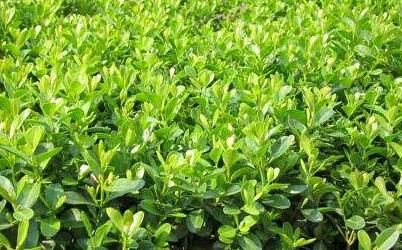
I. How much do littleleaf boxwood and bigleaf boxwood cost?
II. What are their differences?
(I) Morphological differences between littleleaf boxwood and bigleaf boxwood
1. Littleleaf boxwood: Littleleaf boxwood is a shrub, 2 m tall, with four-angled, smooth, dense stems and branches; the internodes of the small branches are 3-5 mm long; the leaves are small, opposite, leathery, elliptical or obovate, 1-2 cm long, with a rounded and blunt apex, sometimes slightly concave, and a wedge-shaped base; the widest part is in the middle or above the middle; they have short petioles, the upper surface is dark green, the underside is yellow-green, the upper surface has soft hairs, the underside is hairless, and both sides are glossy; the flowers are mostly clustered at the tips of the branches, pale yellow-green, without petals, and fragrant.
2. Bigleaf boxwood: Littleleaf boxwood is a shrub, up to 3 m tall, with four-angled small branches bearing fine wrinkles and protrusions; the leaves are leathery, glossy, obovate or elliptical; the cyme has 5-12 flowers, the peduncle is 2-5 cm long, branching 2-3 times; the capsule is nearly spherical, about 8 mm in diameter, pale red; there is 1 seed per locule, apical, elliptical, about 6 mm long and about 4 mm in diameter; the aril is orange-red and completely covers the seed; the flowering period is June-July, and the fruit ripening period is September-October.
(II) Differences in medicinal effects between littleleaf boxwood and bigleaf boxwood
1. Littleleaf boxwood: The medicinal parts of littleleaf boxwood are the roots, branches, and leaves. It tastes bitter and is neutral in nature. It has the effects of dispelling wind-dampness, regulating qi and relieving pain, and clearing heat and detoxifying. It is used for wind-dampness arthralgia, toothache, chest and abdominal qi distension, hernia pain, traumatic injuries, heat boils, and other conditions.
2. Bigleaf boxwood: The medicinal part of bigleaf boxwood is the root. It tastes bitter and pungent and is warm in nature. It has the effect of regulating menstruation and relieving pain. It is used for irregular menstruation, dysmenorrhea, traumatic injuries, fractures, painful urination, and other conditions.
III. How do you grow them?
(I) Littleleaf boxwood
1. Soil: For littleleaf boxwood, it is suitable to choose a plot with open surroundings, abundant sunlight, and good soil and water-fertilizer conditions. Remove weeds and gravel, apply thoroughly decomposed base fertilizer, level the ground, and deep plow to ensure the relative soil moisture content is 75-80%.
2. Planting: Planting littleleaf boxwood seedlings is mainly done in spring, generally in the first two or three days before "Qingming" in early April. For open-field planting, the general row spacing is 0.5 x 1.5 or 0.4 x 1.2 m, with about 1000-1500 plants planted per mu.
3. Watering: For littleleaf boxwood, from April to June, during the period from bud break to flowering, water should be supplemented in time. From June to September, spray the leaves as much as possible and do not let water accumulate. From October to November, water should be properly controlled. At the end of November, water for winter should be applied, and in mid-March of the following year, water for greening up should be applied.
4. Topdressing: For littleleaf boxwood, in combination with watering, apply an additional 45 kg of diammonium phosphate and 30 kg of urea per hectare, applying the fertilizer in split doses. Urea should be stopped after July to prevent excessive seedling growth, which would leave the seedlings without enough time to lignify when winter arrives and make them susceptible to freeze damage.
5. Weeding: For littleleaf boxwood planting, weed 4-5 times throughout the year, with the principle of completely removing weeds from the nursery site. Weeding should not damage the roots of the seedlings. Deeper weeding can raise the ground temperature and help speed up the growth of littleleaf boxwood seedlings.
6. Pruning: Littleleaf boxwood has a very strong apical dominance, strong sprouting ability, and relatively weak branching ability. Through proper shaping and pruning, an ideal trunk and full side branches can be cultivated, making the tree rounded, symmetrical, compact, and sturdy.
7. Overwintering: In some areas, because winters are cold and the temperature difference between day and night is large, for 2-year-old littleleaf boxwood, pre-winter protection measures should be taken, such as building a frame with bamboo poles and covering it with non-woven fabric before winter, and pressing down all around the bottom of the non-woven fabric.
(II) Bigleaf boxwood
1. Soil: Bigleaf boxwood is not strict about soil requirements and can be planted in sandy soil, loam, and brown soil, but loam rich in organic matter is best. When preparing the land, the ground should be level, and combined with deep plowing, organic fertilizer should be added at about 2000 kg per mu.
2. Planting: Planting bigleaf boxwood seedlings is mainly done in spring, generally in the first two or three days before "Qingming" in early April. For open-field planting, the general row spacing is 0.5 x 1.5 or 0.4 x 1.2 m, with about 1000-1500 plants planted per mu.
3. Watering: After planting bigleaf boxwood seedlings, irrigate the first time within 24 hours, irrigate the second time after 3 to 5 days, and irrigate the third time after another 5 to 7 days. After the three irrigations are completed, decide whether to irrigate again according to the weather and the condition of the seedlings.
4. Cultivation: Shortly after bigleaf boxwood seedlings are newly planted, most of the soil surface is exposed to the air. Not only does the soil dry out very easily, but weeds also grow easily. During this period, cultivation and weeding should be carried out in time to help promote root development of the seedlings.
5. Topdressing: Bigleaf boxwood needs relatively more phosphorus at the seedling stage, more nitrogen during the peak growth season, and more potassium when growth stops in autumn. A 0.4% potassium dihydrogen phosphate solution can be sprayed on the leaves, generally three to four foliar sprays per month.
6. Shaping: Bigleaf boxwood itself has very strong apical dominance, strong sprouting ability, and relatively weak branching ability. Through proper shaping and pruning, an ideal trunk and full side branches can be cultivated, making the tree rounded, symmetrical, compact, and sturdy.