How much is mustard tuber (zha cai) per jin? A detailed guide to investment per mu and planting methods
Mustard, also known as chicken-heart greens or shepherd's purse, is a relatively common annual herbaceous plant in China, and it attracts a large number of consumers to buy it because of its high nutritional value. So how much is mustard (zha cai) per jin? How much does it cost to invest per mu? How do you grow it?
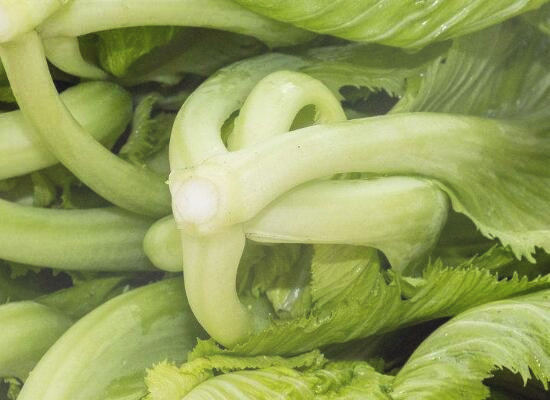
How much is mustard per jin?
The wholesale price of mustard at farmers' markets is about 4 yuan per jin, but prices vary from region to region, so for the exact price you still need to check with your local farmers' market.
How many jin does one mu produce, and how much money can you make?
Mustard is harvested in stages; each time you should pick the large ones and leave the small ones, and the plants left behind should be evenly and appropriately spaced. For shepherd's purse sown in early autumn, harvest when there are 10-13 true leaves, 30-35 days after sowing, then harvest in stages 4-5 times, finishing in late March of the following year, for a total yield of 2500-3000 kg per mu. Autumn shepherd's purse sown in early October needs 45-60 days before harvesting can begin. Shepherd's purse sown in late February is harvested and marketed in early April. Spring-sown crops are generally harvested 1-2 times, with a yield of about 1000 kg per mu. However, due to weather and other factors, yields differ from place to place, and market conditions also vary from place to place, with the expensive ones reaching 6 yuan/kg and the cheap ones 1.1 yuan/kg, so whether you can make money has to be calculated based on local prices.
How do you grow it for high yields?
1. Suitable environmental conditions: stem mustard likes a cool, humid environment; the suitable temperature for seed germination is 18-26°C, the suitable temperature for stem swelling is 10-14°C, and the suitable temperature for flowering and seed setting is 18-24°C. It likes loam with a thick, fertile soil layer and strong water and fertilizer retention; it likes mild conditions and long daylight.
2. Planting method: stem mustard is grown by raising seedlings first and then transplanting. Generally, sowing and seedling raising take place at the end of September and the beginning of October. During the seedling stage, thin the seedlings promptly after the first true leaf unfolds, raising about 250 plants per sq m of seedbed, and apply human and livestock manure after each thinning.
Transplant in early to mid-November, with a row spacing of about 35cm and a plant spacing of about 20cm, and spray water to settle the roots. Before transplanting, apply plenty of base fertilizer (generally about 3000kg of human and livestock manure per mu, 100kg of cake fertilizer, and 25kg of 45% nitrogen-phosphorus-potassium compound fertilizer). After transplanting until the crop turns green in early spring, generally no fertilizer is applied. Pay attention to fertilizer and water management during the stem swelling period; if it is dry, you can water heavily once, but be careful not to let water accumulate, and apply human and livestock manure, urea, potash fertilizer and calcium fertilizer.
Planting precautions:
Sow at the right time: newly turned soil, choose excellent varieties, sow at the right time, apply plenty of base fertilizer and water thoroughly when sowing. After preparing the land and sowing, spray the soil surface with Xin Gao Zhi Mo (new high-fat film), which can preserve soil moisture and prevent water evaporation, protect against sun and drought, keep warm and prevent freezing, prevent soil crusting, smother and isolate sources of pests and diseases, and improve the seedling emergence rate.
Grow strong seedlings and transplant at the right time: growing strong seedlings is the key to high yield and good quality in mustard. When the first true leaf appears on the seedlings, thin them; when thinning, be careful to pull out diseased, weak and off-type seedlings. Spraying Xin Gao Zhi Mo on the plant surface can prevent pathogen infection, improve resistance to natural disasters, increase the intensity of photosynthesis, and protect the seedlings so they grow strong.
Watering, fertilizing and pest and disease control: water at the right time and keep the soil moist at all times. During the growing period, fertilize reasonably. For pest and disease control, spray targeted pesticides plus Xin Gao Zhi Mo, which greatly improves the utilization rate of the active ingredients of pesticides and fertilizers, does not fear evaporation under strong sun, can regulate water absorption, and protects against drought and rain.
Budding stage: the growth process stage is especially important. Budding, bolting, flowering and seed setting take a very long time. While keeping up with water and fertilizer, also spray Zhuang Jing Ling during the budding stage, which can make the plant stems thick and strong, the leaves thick, the leaf color fresh and tender, and the plant luxuriant, with a rich natural taste. At the same time, it can improve disaster resistance, reduce the amount of pesticide and chemical fertilizer used, and lower residual toxicity.