West Lake Longjing tea plant: morphology photos, seedling prices, bonsai feasibility and cultivation key points
West Lake Longjing, a green tea, is one of China's ten famous teas. It is produced in the mountains around Longjing Village in Hangzhou City, Zhejiang Province, and is named after this place. So what does the West Lake Longjing tea plant look like? How much does one seedling cost? Can it be made into a bonsai? According to the Shuyang County nursery stock base, Longjing tea seedlings cost 0.18-3 yuan each.
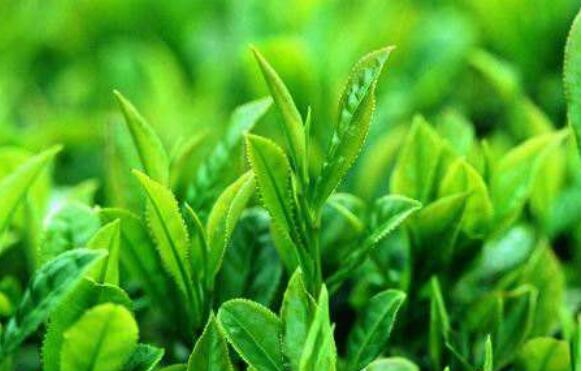
What does the West Lake Longjing tea plant look like?
The highest-grade West Lake Longjing tea is flat, smooth and straight, with a tender green, glossy color, a fresh and delicate high aroma, a refreshing and sweet mellow taste, and a tender leaf base that forms buds.
The highest-grade West Lake Longjing and Zhejiang Longjing in spring tea have a flat and smooth appearance, sharply pointed tips, buds longer than leaves, a tender green color, and no down on the surface; the liquor color is tender green (yellow) and bright; the aroma is delicate or has a tender chestnut note, but some teas carry a high-fire aroma; the taste is refreshing or rich and mellow; the leaf base is tender green and fairly intact. As the grade of other Longjing teas decreases, the appearance and color go from tender green → green → dark green, the tea body goes from small to large, and the tea strips go from smooth to rough; the fragrance shifts from tender and refreshing to heavy and coarse, and grade-four tea begins to have a coarse taste; the leaf base shifts from tender buds to opposite-pair leaves, and the color goes from tender yellow → green → yellow-brown. For summer and autumn Longjing tea, the color is dark green or deep green, the tea body is relatively large, the surface has no down, the liquor color is yellow and bright, the aroma is delicate but rather coarse, the taste is strong and slightly astringent, and the leaf base is yellow and bright; overall quality is worse than spring tea of the same grade.
Can West Lake Longjing tea seedlings be made into bonsai?
West Lake Longjing tea seedlings can be made into bonsai. The cultivation key points are as follows:
1. Planting: north of the Yangtze River, spring planting is better; south of the Yangtze River, autumn planting is better. For ground planting, choose sandy loam with good drainage, strong water retention and rich humus. For pot planting, use a mix of leaf mold, sandy soil and barnyard manure soil at 1/3 each, or a prepared soil mixed from 4 parts leaf mold, 5 parts peat soil and 1 part coarse sand. The pH value is 5-6.5. The planting site should be chosen where water does not accumulate and where the blazing sun does not reach. In winter, potted Longjing tea should be moved indoors to a ventilated and light-transmitting place; in summer, move it out of the room to a shade shed or another place where it can be shaded. Longjing tea dislikes being moved around at will, otherwise it is unfavorable to its growth.
2. Light and temperature: Longjing tea is a long-day plant. The optimum growth temperature is 18-25°C; above 35°C it will scorch the leaves. It is not cold-tolerant, so in winter it should be moved indoors and the temperature kept at 3-5°C; it can also endure a short period of -10°C low temperature, but it cannot be kept above 16°C for a long time, otherwise it will be prompted to sprout and cause leaf drop. During the growing period, it should be placed in a semi-shaded environment and should not receive overly strong direct sunlight. In particular, in summer and autumn, shade it or place it in a sparse shade under trees.
3. Watering and fertilizing: Longjing tea has relatively high requirements for fertilizer and water, and neutral and alkaline loam soils are both unfavorable to its growth. In the north, especially, note that alkaline water must be acidified before watering; the specific method is to store tap water for 2 days so that the chlorine in the water volatilizes, then add an appropriate amount of ferrous sulfate (about 0.5% of the water). The amount of watering must not be too large, otherwise root rot easily occurs. The pot soil must not be dry either, otherwise the roots easily shrink from water loss; it is best to keep the pot soil and the surrounding environment moist. For fertilizing, thin alum fertilizer water is best, and strong fertilizer should be avoided. Generally, after sprouting in spring, apply thin fertilizer water once every 17 days; in summer apply phosphorus and potassium fertilizer; in early autumn fertilizer can be stopped for about 1 month.
4. Shaping and pruning: For ground-planted Longjing tea, mainly cut off dead branches, diseased and weak branches, crossing branches, overly dense branches, and branches that clearly affect the tree shape. For potted Longjing tea, in addition to the above work, shaping and pruning should also be carried out according to personal preference, but heavy pruning is not suitable because its growth vigor is not strong.
Pests and diseases and their control
1. The main diseases of Longjing tea include ring spot disease, anthracnose, dieback, leaf spot disease, sooty mold, and so on. The main control agents are: thiram at 800 times; carbendazim at 500 times; chlorothalonil at 800 times; and prochloraz at 800 times for regular control.
2. The main insect pests of Longjing tea are red spiders, aphids, scale insects, leaf-roller moths and bridge-forming caterpillars. The main control agent is 15 ml cypermethrin + 20 ml isocarbophos or 25 ml monocrotophos mixed with 30 jin of water for spraying.