How much does one jin of white strawberry cost? Introduction to cultivation methods and benefits and effects
“White” strawberry was selected from a mutation of “Red Face”. Its plant fruit color, fruit flavor and other traits differ noticeably from “Red Face”. Because its fruit is sweet, has a fresh fragrance and tastes good, it is deeply loved by people. So how much does white strawberry cost per jin? How is it cultivated? What benefits and effects does it have? It is understood that white strawberry sells for as much as 100 yuan per jin, making it the aristocrat among strawberry varieties.
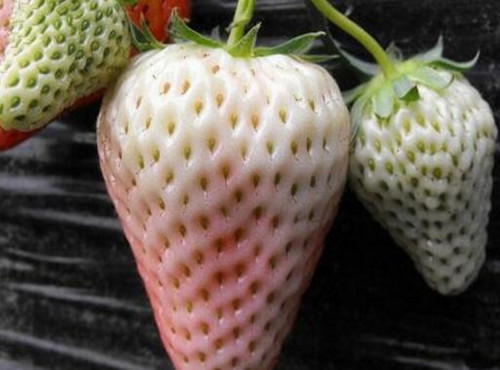
How is white strawberry cultivated?
1. Cultivating strong seedlings
Transplant at the right time. Because this variety has weak resistance to high temperature and high humidity, is difficult to raise as seedlings, and has few flower stems and few flowers after planting, it has relatively high technical requirements for seedling raising. It is best to raise seedlings with shade, rain shelter and cooling protection measures. Under the condition of growing strong seedlings, plant appropriately early to promote early growth, build a good high-yield seedling framework, and prevent self-topping from occurring in the middle and late stages. According to the climate conditions of this region, seedling raising generally starts in mid to late February. The seedling bed is 150 cm to 200 cm wide, the ditch is 35 cm wide and 25 cm deep, and 1 row can be planted in the middle of each bed, or 2 rows can be planted, with a plant spacing of 80 cm to 100 cm. Plant 350 to 450 mother plants per mu. When planting, shallow planting is required, and thoroughly water with settling water. After survival, timely carry out fertilization, irrigation for drought resistance, drainage and earthing up, weeding and pest prevention. Especially during continuous high temperature and drought weather, combine with watering and cover the shade net during the day and uncover it at night to lower the temperature. In early to mid August, remove weak and small seedlings and aged seedlings near the mother plants, and dig out the mother plant seedlings (or remove the leaves of the mother plant seedlings). After mid August, stop fertilization and control water to promote flower bud differentiation. For seedling plots with vigorous growth, root cutting treatment can be carried out.
2. Land preparation and planting
Avoid continuous cropping cultivation, and apply heavy base fertilizer. Apply 2500 kg to 3000 kg of decomposed organic fertilizer, 50 kg of compound fertilizer, 10 kg to 16 kg of urea, and 10 kg to 15 kg of potassium fertilizer per mu, applied before planting in combination with land preparation. The planting time is mid to late September, using the double-row triangular planting method, with a row spacing of 30 cm and a plant spacing of 10 cm to 15 cm. Plant 12,000 to 15,000 plants per mu. Cover with greenhouse film in late October, and cover with black plastic film before flowering.
3. Temperature and humidity regulation
From germination to bud stage, control the daytime temperature at 15 to 20°C and the nighttime temperature at about 8°C. When the nighttime temperature inside the inner greenhouse is above 5°C, the inner greenhouse can be removed. When the greenhouse temperature is above 30°C, promptly uncover the film on one side or both sides to lower the temperature. In late April, the side skirts can be removed to ventilate and cool. Keep the humidity in the greenhouse at 50% to 70% as much as possible. Excessive humidity will affect flowering and fertilization, reduce fruit setting rate and yield, and cause severe disease. Especially during the fruiting period, uncover the film to reduce humidity as much as possible when the temperature is relatively high at noon.
4. Fertilizer and water management
Generally base fertilizer is the main application, and during the fruiting period, apply fertilizer as appropriate according to soil conditions. The application concentration of liquid flush fertilizer is controlled at 0.3% to 0.4%, applying a sufficient liquid volume of 3000 kg per mu at one time, using the plastic hose drip irrigation method.
5. Comprehensive management in the later stage
To inhibit dormancy and facilitate bee pollination, spray 5 mg/kg gibberellin at the early bud stage to elongate the inflorescence. Release bees after covering the greenhouse until March of the following year, placing 1 box of bees per greenhouse to increase the fruit setting rate and reduce deformed fruit. Also promptly do a good job in preventing and controlling viral disease, gray mold, powdery mildew, anthracnose and underground pests, and strive for high and stable yield.
What benefits and effects does white strawberry have?
1. Preventing hair loss
Strawberry contains folic acid, ellagic acid, vitamin B5 and B6, which help prevent your hair from thinning and falling out. In addition, minerals such as magnesium and copper help prevent fungal growth and dandruff. Homemade strawberry hair mask is also very suitable for your hair.
2. Beauty effect
Strawberry is rich in antioxidants and vitamin C, which help delay aging, keep skin healthy and prevent wrinkles for a long time. Strawberry is also a natural source of salicylic acid. It is well known that strawberry is the natural enemy of acne and is a perfect homemade facial mask.
3. Preventing heart disease
Strawberry contains basic nutrients such as antioxidants and flavonoids, which help prevent the production of bad cholesterol that causes artery blockage. In addition, strawberry has anti-inflammatory properties and protects your heart. This is the primary reason you are advised to eat more strawberries.
4. Enhancing resistance
Strawberry is rich in vitamin C, which helps strengthen the immune system and protect you from infection. One cup of strawberry contains 100% of the daily requirement of vitamin C. Enjoy the pleasure of eating strawberries during the strawberry harvest season.
5. Beneficial to bone growth
One of the most important reasons to eat strawberry is that it is beneficial to bone growth. Strawberry is rich in potassium, manganese and some important minerals, which help promote bone growth and maintain health. Therefore, strawberry is very suitable for children to eat.