When do pear trees bloom and bear fruit, what pesticides to use for borers before and after, and why they cannot be grown at home, plus planting
The pear tree is a perennial deciduous fruit tree of the genus Pyrus in the rose family (Rosaceae), a tree, widely distributed around the world. So when does it generally bloom? Before and after fruiting, what pesticide should be used when borers appear? Why can't it be planted at home? What are the planting time and methods? It is reported that pear trees bloom from February to May, and the flowering period differs from place to place. For example, in Huili, Sichuan, pear trees generally bloom in early to mid-February, while in Yanbian, Jilin, they bloom in mid-May; Yali pears bloom in early March in Changsha, Hunan, and in early May in Beizhen, Liaoning, with a difference of nearly two months in flowering periods between regions. For pear trees cultivated in the same area, phenological periods also differ due to different species and varieties. From bud break to flowering, Pyrus ussuriensis varieties are the earliest, Pyrus bretschneideri varieties are slightly later, Pyrus pyrifolia varieties are later than Pyrus bretschneideri, and Pyrus communis varieties are the latest, with a variation range of about 10 days.
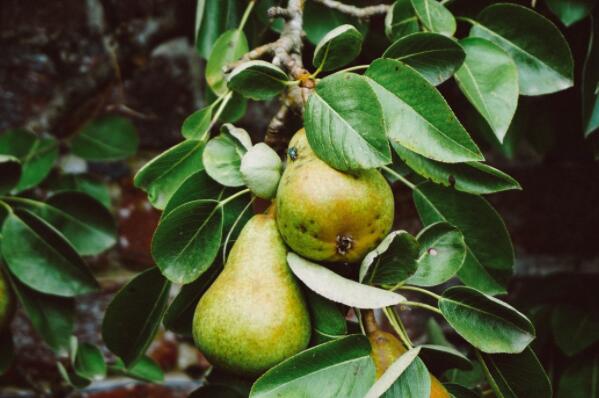
Before and after pear trees bloom and bear fruit, what pesticide should be used when borers appear?
The main diseases and pests that need to be controlled before pear tree flowering are Valsa canker, branch ring rot, Botryosphaeria canker, pear scab, pear rust, and root diseases; as well as pear psylla, yellow aphids, spider mites, green plant bugs, scale insects, gall mites, and others.
1. Scrape off the coarse and cracked bark on branches and trunks, scrape and treat Valsa canker lesions and Botryosphaeria canker lesions, and apply pesticide to protect the wounds, such as thiophanate-methyl oil paste.
2. After scraping off the coarse and cracked bark, spray once with 30% tebuconazole · carbendazim (Fulian) suspension concentrate at 400-600 times dilution, 60% copper calcium · carbendazim (Tongjia) wettable powder at 300-400 times dilution, or 77% copper calcium sulfate (Duoning) wettable powder at 300-400 times dilution, to eliminate residual pathogens on the tree body.
3. In early to mid-March, spray 4.5% beta-cypermethrin (Tianlongbao) emulsifiable concentrate at 1000-1500 times dilution, 48% chlorpyrifos (Dingyong) emulsifiable concentrate at 1000-1500 times dilution, 25% cypermethrin · chlorpyrifos (Haomiedan) emulsifiable concentrate at 800-1000 times dilution, or 35% endosulfan (Shuodan) emulsifiable concentrate at 1000-1500 times dilution 1-2 times, to kill overwintering-generation pear psylla adults. Adding Longdeng organosilicone to the pesticide solution gives better results.
4. At the flower bud swelling stage, spray once with 3-5 degrees Baume lime sulfur mixture or 45% lime sulfur crystal at 40-60 times dilution, to kill residual overwintering pests and pest mites. For orchards with severe scale insect infestation, spray 40% methidathion (Sujieke) emulsifiable concentrate at 800-1000 times dilution.
5. After budding and before flowering, spray once a mixture of 40% myclobutanil wettable powder at 6000 times dilution, 10% difenoconazole water-dispersible granules at 2000 times dilution, or 12.5% diniconazole wettable powder at 2000 times dilution, mixed with pesticides for controlling pear psylla adults, to kill pear scab pathogens overwintering in buds and residual pear psylla adults, while also controlling pear rust, green plant bugs, pear stem sawflies, and others.
6. If root diseases are found, promptly expose the soil and let it dry, then use 77% copper calcium sulfate (Duoning) wettable powder at 500-600 times dilution, 50% captan (Meipaian) wettable powder at 500-600 times dilution, or 60% copper calcium · carbendazim (Tongjia) wettable powder at 500-600 times dilution to irrigate the roots.
Borers:
1. Before pear tree bud break, spray 5 degrees Baume lime sulfur mixture once, which can kill large numbers of overwintering eggs of yellow mealworms. Note that pear trees are extremely sensitive to sulfur, so it is best not to spray after germination; in mid to late May, even 0.2 degrees Baume lime sulfur mixture can cause pesticide damage.
2. From late April to early May, this period is after pear tree petal fall, when yellow mealworms successively emerge from hibernation and move between branches, but this is also when large numbers of natural enemies settle on the trees. Therefore, pesticide application at this time needs to be weighed carefully: if the pest situation is not severe, it can be sprayed again before bagging; if the previous two measures are ineffective and there is a trend of major outbreak, green pesticides such as abamectin can be sprayed to reduce harm to natural enemies and irritation to young fruit.
3. In mid to late May, before bagging Yali pears, carefully spray another round of insecticide plus fungicide. Bagging can be done once the pesticide dries. It is worth noting that bagging must be done carefully, ensuring bagging quality, and the opening must be tied tightly.
4. In early June, that is, before wheat harvest, pesticide should be applied once; this is the key to mid-term control. Early June is exactly when yellow mealworms successively bore into bags, and wheat harvest lasts a long time, leaving fruit growers no time to tend to the fruit trees. If this round of pesticide is not effective, it gives yellow mealworms about 10 days of leisurely time to bore into bags.
12