How much is Clematis chinensis per jin? Detailed explanation of planting methods and medicinal effects
Clematis chinensis is distributed in southern Yunnan, Guizhou, Sichuan, southern Shaanxi, Guangxi, Guangdong, Hunan and other places in China, and has relatively high medicinal value. So, how much is Clematis chinensis per jin? How to plant it? What effects and functions does it have? It is understood that the price of Clematis chinensis is 20 to 30 yuan/kg, and prices vary in different regions.
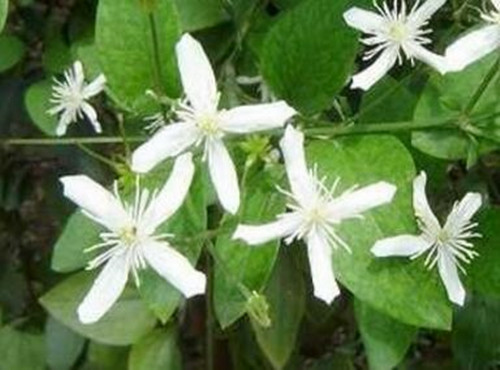
How is Clematis chinensis planted?
1. Site selection and land preparation: For planting Clematis chinensis, it is advisable to choose mountain brown soil or sandy loam with deep soil layers, good drainage, and loose fertility. Apply 2500-3000 kg of decomposed stable manure or compost per mu, plow 20-25 cm deep, level and harrow finely, and make beds or ridges 1.2 m wide.
2. Timely transplanting: In spring, Clematis chinensis is grown by broadcast sowing, and seedlings emerge in about half a month. After emergence, transplant and set out seedlings 50-60 days later. For root bud transplanting, cut root buds with a knife in spring before the root buds sprout, then transplant directly into the field at a plant spacing of 30×40 cm.
3. Cultivation and weeding: After Clematis chinensis seedlings emerge, remove the covering rice straw in time. When the seedlings are 3-5 cm tall, cultivate and weed once, then cultivate and weed 1-2 more times depending on weed growth. After field planting, cultivate and weed 2-3 times each year.
4. Water and fertilizer management: During the seedling stage of Clematis chinensis, apply dilute and small amounts of human feces and urine or other nitrogen fertilizer together with cultivation and weeding. After planting, apply phosphorus-containing fertilizer or compound fertilizer twice. Drain water promptly during rainy weather, and pay attention to watering during dry weather.
5. Trellising and pruning: When Clematis chinensis seedlings are 30-50 cm tall, use branches and other trellis materials to build supports between rows for the plants to climb and grow, avoiding stems and leaves piling up and tangling together, which affects growth due to poor ventilation and light transmission. Properly prune overly dense vines to promote root development.
6. Harvesting and processing: Clematis chinensis uses its roots as medicine. After 2 years of planting, dig up the roots in autumn, remove impurities, remove stems and leaves, wash off soil, soak in water, scoop out, moisten thoroughly, cut into sections, sun-dry, and store in a dry place.
What effects and functions does Clematis chinensis have?
1. Hypoglycemic effect. Clematis chinensis infusion has a significant effect on enhancing glucose assimilation in normal rats (that is, after giving rats a large amount of glucose, the urine sugar test is still negative), so it may have a hypoglycemic effect.
2. The roots and stems of Clematis chinensis used as medicine have the effects of treating rheumatism, dredging meridians, and eliminating bone obstruction. In modern clinical practice, its new uses are constantly being discovered, such as treating gallstones, calcaneal bone spurs, heel pain, esophageal cancer, etc. However, when using the medicine, note that patients with qi and blood deficiency and pregnant women should take it cautiously.