How much does a Begonia maculata (cane begonia) seedling cost, how do you grow it, and when does it bloom?
Begonia maculata, a traditional Chinese medicine name. It is the whole plant of the Begoniaceae plant Begonia maculata. It is cultivated in parks and flower nurseries in China, or grown as a potted flowering plant. It is native to Brazil. So, how much does a Begonia maculata seedling cost, how do you grow it, and when does it bloom? It is understood that the price of a Begonia maculata seedling is about 8 to 10 yuan each, but prices vary considerably depending on the specification, place of origin and other factors.
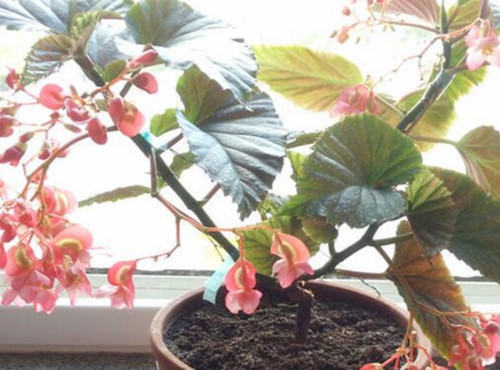
How do you grow Begonia maculata?
1. Soil: For growing Begonia maculata, the soil is usually made up of compost soil, leaf mold and peat soil. Alkaline, heavy or easily compacted soil is not good for new root growth, and can easily lead to short, small stems and leaves, dull colors, and chlorosis.
2. Temperature: Begonia maculata grows rapidly in a warm environment, with lush stems and leaves and bright flowers. The optimum growing temperature is 19-24°C. In winter the temperature should not fall below 10°C, otherwise the leaves are prone to frost damage, but the rhizome is relatively cold-tolerant.
3. Watering: Begonia maculata likes a semi-shaded, mild and humid environment, and is highly drought-tolerant, but it is afraid of waterlogging. Therefore, water when the soil is dry and let it dry out between waterings, keeping the potting soil moist as the ideal. In the hottest part of summer, the leaves and the ground need to be sprayed with water.
4. Fertilizing: Begonia maculata likes fertilizer. Fertilizing should be done by hoeing the surface when the potting soil is dry. Watering after fertilizing helps the plant absorb it. During the vigorous spring growth period, apply a dilute liquid fertilizer once every 10 to 15 days. In the hot summer season, reduce fertilizing, and pause fertilizing during the flowering period and in winter.
5. Light: Begonia maculata likes shade and fears direct sun exposure. It is suitable for year-round growing inside a south-facing balcony. In spring, autumn and winter it should be given plenty of sunlight, while in summer strong light should be avoided, otherwise the plant's leaves will turn yellow and growth will slow.
6. Pruning: Begonia maculata grows vigorously. For plants that have been growing for many years, or when the plant grows too tall or the leaves on the lower part of the stem fall off, ruining the shape of the plant and its ornamental effect, pruning can be done together with repotting in spring, to help the plant sprout new shoots.
When does Begonia maculata bloom?
Begonia maculata, an erect or spreading subshrub, 0.7-1.5 m tall. Smooth and hairless, branched, the stem with distinctly bamboo-like nodes. Leaves simple, alternate; petiole 2-2.5 cm long, cylindrical, purplish red; leaf blade thick, obliquely oblong or oblong-ovate, 10-20 cm long, 4-5 cm wide, apex acute, base cordate, margin slightly wavy, dark green above with many small round white dots, deep red beneath. Flowers pale rose or white, in axillary, pendulous cymes; peduncle short; bracts 2, opposite, lanceolate, early deciduous; male flowers about 2.5 cm in diameter, perianth segments 2, larger than the 2 petals; female flowers with 5 perianth segments and 5 petals, upright, equal, ovary inferior, 2-4 locular, large and winged. Capsule. Flowering period summer to autumn, fruiting period autumn.
The effects and benefits of Begonia maculata
It has the effects of dissipating blood stasis, promoting diuresis and detoxifying. It is used for traumatic injuries, hemiplegia, difficult urination, edema, sore throat, sores and scabies, and venomous snake bites.