How to Grow a Lipstick Plant? Blooming Months and Propagation Methods Explained
The lipstick plant originates from southeastern Tibet and western and southern Yunnan, and is also distributed in northeastern India, often growing on trees in mountain forests at altitudes of 1000-1900 m. It is brilliant and beautiful, an excellent variety for both foliage and flowers. So, in which month does the lipstick plant bloom? How do you grow it? What are the propagation methods?
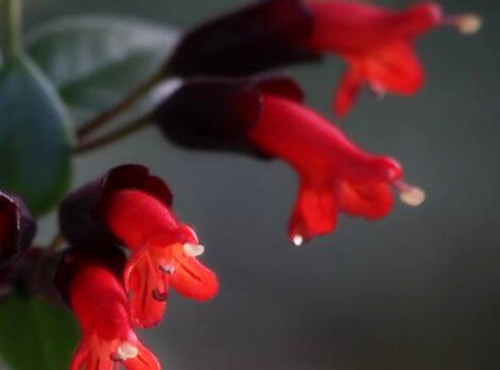
In which month does the lipstick plant bloom?
The lipstick plant is a small shrub or climbing plant, generally with slender stems. The branches hang down and can reach 30-100 cm in length. The leaves are ovate and opposite, slightly fleshy, 4.5 cm long and 3 cm wide, with a deep green upper surface and a light green underside. The inflorescences are mostly axillary or terminal; the calyx is tubular and dark purple, covered with fine hairs; the corolla is tubular and bright red, extending out from the calyx like lipstick twisted out of a tube, with a tubular 2-lipped shape, 4 stamens extending as far as the corolla, and a long 2-celled ovary. The fruit contains many seeds. At suitable room temperature, the lipstick plant can bloom from December to February of the following year.
How do you grow a lipstick plant?
1. Soil: For growing the lipstick plant, a loose, fertile sandy loam is best, and drainage must be good. The potting soil is best slightly acidic; you can use a potting mix made of peat soil, sand and vermiculite, with an appropriate amount of superphosphate added.
2. Light: The lipstick plant likes a semi-shaded environment. Except for the strong light at midday in midsummer, which should be properly shaded, it should be given sufficient light at other times, especially in winter. If the light at the placement site is too strong or insufficient, the leaves will easily turn pale green or yellow-green.
3. Temperature: The lipstick plant should be placed in a cool, ventilated spot, and attention should be paid to maintaining environmental humidity. Avoid continuous high temperature and high humidity; poor drainage and ventilation will cause rot. It is not cold-tolerant, so it needs to be brought indoors to overwinter in winter.
4. Watering: When growing the lipstick plant, the potting soil should be kept moist regularly, and water must never accumulate in the pot, so as to avoid root rot. From March to September, during the peak growth period, the water requirement is relatively large, so it should be watered and misted frequently to increase humidity. As the weather gradually turns cool in autumn, gradually reduce the amount of watering and fertilizing. In winter, the potting soil should be kept slightly dry.
5. Pruning: When the lipstick plant is growing vigorously, you can pinch it back appropriately to promote branching. After the flowering period in winter, promptly cut off the spent stems that have flowered, which can save nutrients, stimulate new shoots, and make it produce more buds and flowers.
What propagation methods are there for the lipstick plant?
The lipstick plant can be propagated by cuttings; spring and autumn are the suitable seasons. Select healthy, plump branches, cut each 7-10 cm into 1 section, and insert the cuttings into loose sandy soil, or a potting mix made of 50% fine osmundat fiber, 20% perlite and 30% coarse sand. Keep appropriate humidity, expose to about 50-60% sunlight, and after about 30-40 days roots can develop into seedlings. Once the root system grows vigorously, transplant them into pots or flower beds for cultivation.