When was the Solanaceae pepper introduced to China? What pesticide to use for mites and little leaf disease during flowering and fruit setting? With cultivation benefits
Pepper, also known as horn pepper, long pepper, sweet pepper, and bell pepper, is an annual or short-lived perennial herbaceous plant of the Solanaceae family, Capsicum genus. So when was it introduced to China? What pesticide to use for mites and little leaf disease during flowering and fruit setting? What are the factors affecting cultivation benefits? According to Solanaceae data, pepper originated in the tropical regions of Central and Latin America, and was already growing on the continent around 7000 BC. Archaeologists estimate that the Maya began eating peppers in 5000 BC. However, for the distant ancient China, pepper did not enter China until the late Ming Dynasty.
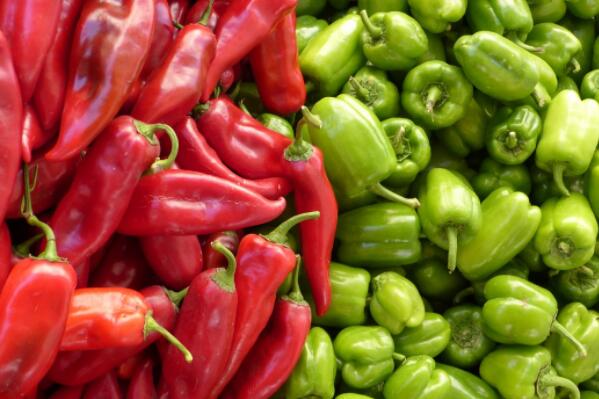
What pesticide to use for mites and little leaf disease during pepper flowering and fruit setting?
1. Flowering and fruit setting:
During the flowering and fruit setting period, diseases such as bacterial wilt and blossom-end rot are prone to occur. Diseases need to be prevented in advance, while controlling soil moisture; at the same time, nutrient consumption during the flowering and fruit setting period is very large. It is necessary to promote flowering, improve the fruit setting rate, and promote pepper expansion. It is necessary to supplement more medium and trace elements such as phosphorus, potassium, calcium, boron, and zinc. Phosphorus and potassium are beneficial to fruit development and expansion, calcium improves pepper hardness, reduces blossom-end rot, and promotes root development, boron and zinc promote more and stronger flowers and improve the fruit setting rate. Weibugu Ligenli Calcium + Weibu Jingli can be applied by drenching, and Weibu Huali + Weibu Guoli can be sprayed on the leaves, reducing the use of high-nitrogen fertilizers to prevent excessive branches and leaves from affecting flowering and fruit setting.
2. Mites:
When damage is found in the field, apply pesticide in time to control it. When the rate of leaf-curling plants in the field reaches 0.5%, spray pesticide for control. The following insecticides can be used for prevention and control: 20% amitraz emulsifiable concentrate 1000—1500 times liquid; 15% pyridaben emulsifiable concentrate 1500—3000 times liquid; 5% fenpyroximate suspension concentrate 2000—3000 times liquid; 1.2% nicotine · matrine emulsifiable concentrate 1000—2000 times liquid; 5% hexythiazox emulsifiable concentrate 2000—3000 times liquid; 30% pyrimidifen suspension concentrate 2000—3000 times liquid; 10% liuyangmycin emulsifiable concentrate 1000—2000 times liquid; 50% bromopropylate emulsifiable concentrate 1000—2000 times liquid; dilute with water and spray. To improve the control effect, synergists or washing powder can be mixed into the liquid, and rinsing-style spraying should be used. When spraying, focus on spraying the young tender parts on the upper part of the plant, such as the back of tender leaves, tender stems, flower organs, young fruits, etc. In protected areas, 10% pyridaben smoke agent 400—6009 per mu can be used for fumigation.
3. Little leaf disease:
① Control virus-transmitting insects. In the early stage of the disease, use any one of 40% dimethoate emulsifiable concentrate 1000 times liquid, 40% fenvalerate emulsifiable concentrate 6000 times liquid, or 2.5% deltamethrin emulsifiable concentrate 3000 times liquid, spraying once every 7-10 days, for 2-3 consecutive sprays.
② Control viral disease. Use 72% virus spirit 100 times liquid or NS-83 resistance inducer 100 times liquid developed by the Department of Plant Protection of Beijing Agricultural University, spraying once every 7 days, for 2 consecutive sprays.
③ Mixed spraying of pesticide and fertilizer. Spray with carbosulfan chlorpyrifos microemulsion 800 times liquid + abamectin pyridaben 800 times liquid + amino-oligosaccharin 800 times liquid. Spraying should preferably be done after 16:00 on sunny days or on cloudy days. Tender branches, tender leaves, and tender stems should be thoroughly sprayed, mainly spraying the back of leaves, once every 5-7 days, for 3 consecutive sprays, which can generally control the occurrence of pepper “little leaf disease”.
12