When does dragon fruit bloom and bear fruit, and what is the annual net profit from planting 100 mu?
Dragon fruit gets its name because its appearance resembles a ball of angry red fire. In China, it is grown in Hainan, Guangxi, Guangdong, Fujian, Yunnan and other provinces and regions. So when does dragon fruit bloom and bear fruit? And what is the annual net profit from planting 100 mu?
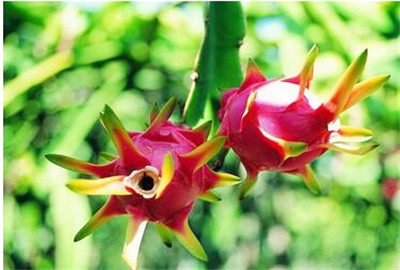
What is the annual net profit from planting 100 mu of dragon fruit?
For pick-your-own orchards, in a typical year the output value is 5000-7000 yuan per mu, but the initial investment is relatively large. On a large scale, the cost of land rent, management, and fully hired labor for cultivation and farming is also high. The net profit is estimated at around 1500 yuan. So what is the annual net profit from 100 mu of dragon fruit?
1500000 yuan = 150,000, but the market for this kind of product sometimes fluctuates greatly,
Dragon fruit begins to bloom and bear fruit 12-14 months after planting. It can bloom 12-15 times per year, with the fruiting period from April to November. The fruit ripens 30-40 days after the flowers fade, and a single fruit weighs 500-1000 g. In the second year after planting, each column produces more than 20 fruits, and by the third year it enters the full fruiting period. With a relatively high level of management, the yield per unit area can reach 2500 kg/667 sq m.
1. Growing environment
Dragon fruit is a tropical and subtropical fruit. It likes light and tolerates shade, tolerates heat and drought, and likes fertilizer but tolerates poor soil. It grows rapidly in a warm, humid environment with sufficient light. When cultivated in the open field in spring and summer, it should be watered more to keep its root system in a vigorous growth state. In continuously rainy weather, drainage should be carried out promptly to avoid infection by pathogens that cause the stem and flesh to rot. Its stems can also grow attached to rocks. The plant has extremely strong wind resistance, and as long as the support is firm, it can withstand typhoons.
2. Pot cultivation
(1) The germination temperature for dragon fruit seeds is about 25°C.
(2) Choose a relatively fine-grained potting soil, or use commercially available sowing soil instead.
(3) Be sure to clean off the pulp and gelatinous material attached to the seeds, otherwise mold is likely to grow during germination.
(4) For a small shaped potted plant, the seeds should be spread somewhat densely, especially at the edges, otherwise the plants will come out sparse and lose their aesthetic appeal.
(5) If the pot has no bottom hole, do not water directly with a watering can to avoid overwatering. Spraying with a spray bottle once every 2-3 days is enough.
3. Its high-yield cultivation key points are as follows:
1. Apply thin fertilizer frequently: Because the fruit harvest period is long, heavy applications of organic fertilizer are needed every year, and nitrogen, phosphorus, and potassium compound fertilizers should be applied in a balanced way over the long term. During the flowering and fruiting period, potassium and magnesium fertilizers should be added to promote sugar accumulation in the fruit and improve quality. During the fruiting period, keep the soil moist, and cover the tree base with grass or mushroom residue. In dry weather, irrigate once every 3-4 days. Like other cactus-family plants, dragon fruit has a smaller growth amount than conventional fruit trees. Therefore, fertilization should follow the principle of sufficient, small amounts, applied multiple times.
2. Pinching: When the branches grow to 1.3-1.4 m long, pinch off the growing tips to promote branching and let the branches droop naturally.
3. Interplanting and artificial pollination: When planting dragon fruit, about 10% white-fleshed dragon fruit should be interplanted. Cross-pollination between varieties can significantly increase the fruit-setting rate. If rainy weather occurs, artificial pollination should be carried out. Pollination can be done in the evening when the flowers open or in the early morning before the flowers close, using a brush to apply pollen directly onto the stigma of the female flower.
12