Nandina (Heavenly Bamboo) seedling prices and planting methods, conditions for turning red, and flowering and fruiting times
Nandina domestica, also known as Nandina, red loquat berry, heavenly candle berry, red goji berry, diamond yellow, heavenly bamboo, orchid bamboo. Because of its graceful plant form, bright fruits, and strong adaptability to the environment, it often appears in landscaping applications. So, how much do Nandina seedlings cost? Under what conditions does it turn red? How do you plant it? In which months does it flower and fruit? According to Uncle Zheng at the seedling market, Nandina seedlings cost 0.6 yuan per plant; prices vary by region, size and variety.
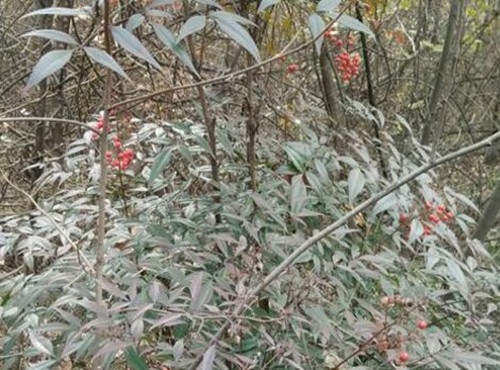
Under what conditions does Nandina turn red?
When the weather is cold. This is caused by different varieties. The leaves of red-leaf Nandina are bright red all year round, while the leaves of green-leaf Nandina are green all year round. Besides variety differences, seasonal changes and differences in light intensity also cause changes in leaf color depth. If red-leaf Nandina is planted in a sunny spot or placed in a well-lit place, the leaf color is relatively bright red; if it is planted in insufficient light or placed in a shadier place, the leaf color is lighter; in winter, Nandina enters dormancy, and the leaves contain a certain amount of nutrients, so the leaf color at this time is dark red. The leaf color of green-leaf Nandina during winter dormancy also takes on a dark red tinge within the green because of nutrients.
How is Nandina planted?
1. Potted plants should be repotted in early spring each year. When repotting, remove part of the old soil and old roots, apply base fertilizer, and fill in new potting soil.
2. In summer, place it in a well-ventilated, shady spot; spray water on the leaves and nearby ground 1-2 times a day to increase air humidity and lower the temperature.
3. Nandina likes moisture but fears waterlogging. During the growing period, watering frequency should be increased or decreased with changes in weather. Generally, water once a day in spring and autumn, and twice a day in summer, keeping the potting soil moist. When flowering, the timing and amount of watering need to remain stable, to prevent too much or too little, or alternating wet and dry. In winter the plant is semi-dormant, so watering should be restrained. Nandina likes fertilizer; from May to September, apply dilute cake fertilizer water once every 15-20 days, and water with 0.2% ferrous sulfate about once every two months.
4. In early to mid-October, move it indoors. After moving indoors, place it in a spot with direct sunlight; room temperature just needs to stay above freezing.
In which months does Nandina flower and fruit?
Nandina does flower. Nandina's flowering period is from March to June; the flowers are small and white, with a distinctive fragrance, about 6-7 mm in diameter. At the same time, the sepals are in multiple whorls, the outer whorl sepals are ovate-triangular, and the petals are oblong, with good ornamental value. The fruit ripening period of Nandina is from May to November each year. The fruit stalk of Nandina fruit is 4-8 mm long; the berry is spherical, 5-8 mm in diameter, bright red when ripe, rarely orange-red, and the seeds are flat-round.