Introduction to the Origin, Cultivation Methods, Dried Product Prices and Effects of Flower Shiitake Mushrooms
Flower shiitake is the star among mushrooms, a premium mushroom produced when the fruiting body of shiitake grows under special environmental conditions. Its flesh is thick, tender and delicious, with a crisp and pleasant texture when eaten. It is a rising star among edible fungi developed in modern times. So where are flower shiitake produced? How are they cultivated? How much does a jin of the dried product cost? What effects and functions do they have?
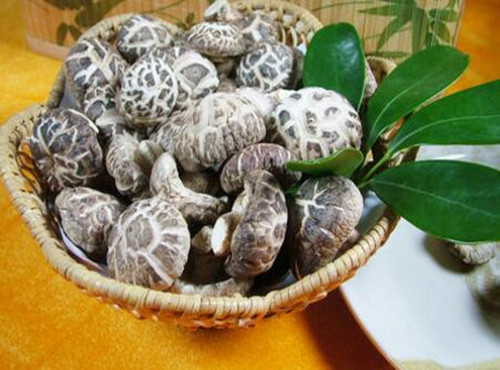
Where are flower shiitake produced?
1. Henan: Henan Province is a major flower shiitake producing province in China, distributed in Xixia County, Nanzhao County and Neixiang County of Nanyang City, Lushi County of Sanmenxia City, and Biyang County of Zhumadian City. Among them, Xixia County is the largest shiitake producing area in the country.
2. Zhejiang: In Zhejiang Province, the Lishui area has the most flower shiitake producing areas. Qingyuan and Longquan mainly use drying, while Lishui, Suichang, Pan'an and other counties and cities mainly sell fresh mushrooms.
3. Fujian: Fujian Province is a major traditional flower shiitake producing province in China. Many counties and cities across the province cultivate them, but in recent years the amount has decreased significantly, and the total volume accounts for a relatively small share domestically.
4. Hubei: Hubei Province is one of the main flower shiitake producing areas in China, among which Suizhou's flower shiitake has relatively better yield and quality.
5. Shaanxi: Shaanxi Province is a major traditional flower shiitake producing province, but the mushroom volume has been declining year by year. In the past two years, bag-cultivated mushrooms developed relatively quickly.
6. Hebei: Hebei Province's flower shiitake has developed greatly in recent years, mainly sold fresh. Because it is mainly sold as fresh mushrooms, it has little impact on dried mushrooms.
How are flower shiitake cultivated?
1. Mushroom shed construction: For a flower shiitake cultivation shed, choose a sunny, well-ventilated, flat-terrain site with dry soil and convenient access for materials, and build an east-west oriented mushroom shed. The shed is 6 m long, 2.6 m wide and 2.4 m high. Build 3 brick walls at both ends and in the middle of the shed, with the upper ends of the walls curved. Leave a door 2 m high and 0.6 m wide in the middle, and leave a square exhaust hole with a side length of 12 cm above each door at both ends. Use bamboo poles as shelves, 8 poles per layer, with a layer spacing of 33 cm, for a total of 6 layers, which can hold 500 mushroom bags. Cover the racks with wide film.
2. Cultivation time arrangement: When the daily average temperature is 26-28°C, it can meet the temperature requirements of shiitake mycelium. After 60-70 days of growth, the mycelium can fill the bag, and after another 10-15 days, color conversion can be completed. Mushrooms generally emerge in November. Before the Spring Festival, 2 flushes of flower shiitake can be produced; after the Spring Festival, 1 flush of flower shiitake, 1 flush of thick mushrooms and 1 flush of thin mushrooms can be produced.
3. Preparation of culture material: Take 1000 kg of sawdust, 175 kg of bran, 2 kg of monopotassium phosphate, 18 kg of gypsum powder and 2 kg of lime to prepare the culture material. The pH value of the culture material is 7-7.5, and the moisture content is 55%-65%. The culture material must be fully mixed evenly and turned 3-4 times.
4. Bagging and sterilization: Use large-bag cultivation. Cut low-pressure polyethylene plastic tube film 25 cm wide into 55 cm long sections, then tie one end tightly with cotton thread, and burn it with candle flame until it melts into a small ball shape. Put the culture material into the bag. The filling should be appropriately tight. After filling, tie the opening with cotton thread and place it on the ground covered with gunny sacks. The prepared culture material should be bagged within 6-8 hours. Put the filled material bags into a normal-pressure sterilization stove. At the same time, put the outer sleeve bags sealed at one end (bag length 58 cm, width 26 cm) and absorbent cotton into the steamer for sterilization. Leave a 20-30 cm high gap in the pot, burn with high heat so that the temperature in the pot reaches 100°C within 4-6 hours, then maintain the temperature for 36 hours. After stopping the fire, open the pot. When the material temperature drops to 70°C, take it out of the pot and transport it to the inoculation room.
5. Inoculation: Select high-quality varieties with good commercial value as spawn, such as 087, CR-02, L867, Biyang No. 1, Biyang No. 3, etc. The inoculation room must be disinfected in advance. When the bag temperature drops to 50°C, put the spawn and inoculation tools into the room. Use 0.5-1 kg of formaldehyde per room for gas disinfection for 8-10 hours. Inoculate when the bag temperature drops below 30°C. After inoculation, put on the outer bags. Inoculation is best done at night or in the morning. During inoculation, inoculate 3 rows per bag, 3 holes per row, and 1 bottle of spawn can inoculate 7-10 bags. 6. Mycelium growth and color conversion: From the 1st to the 6th day after inoculation, stack 6 layers per pile, close the door for mycelium growth, and require the room temperature to be no higher than 28°C and the relative humidity to be no higher than 70%; on the 7th day, turn the pile; from the 7th to the 14th day, stack 5 layers per pile, keep the room temperature at 24-27°C, ventilate 2-3 times a day for 0.5-1 hour each time; on the 15th day, turn the pile and loosen the outer bag ties to increase oxygen; from the 16th to the 19th day, keep the room temperature at 23-25°C, ventilate 2-3 times a day for 1-2 hours each time; on the 20th day, remove the outer bags and use a toothpick to poke 3-4 holes in the bag around the mycelium, with a hole depth of about 1 cm, preferably without touching the raw material; from the 21st to the 29th day, the mycelium between the holes can connect. At this time, keep the room temperature between 22-24°C, the relative humidity below 70%, strengthen ventilation, lower the stack layers, and prevent high temperature from burning the bags; on the 30th day, use a sweater needle to poke 5-6 holes about 2 cm deep in the bag around the inoculation holes, and turn the pile in time to release heat; on the 40th day, use chopsticks to poke several holes; from the 50th to the 60th day, when tumor-like protrusions appear on the bag surface, the accumulated water in the bag must be drained in time so that the bag surface gradually changes color.
6. Primordium induction: Move the bags that have completed color conversion into the mushroom shed. Cover with film during the day to raise temperature, keeping the shed temperature at 18-22°C and the air humidity at 85%-95%; starting at 10 p.m., open the mushroom shed for 40 minutes to lower the shed temperature below 10°C, creating a day-night temperature difference of more than 10°C. Treat continuously this way for 3-4 days to make the mycelium knot and form primordia. At this time, control the shed temperature within the range of 15°C-3°C, and before long the primordia will transform into mushroom buds. When the mushroom buds reach 0.5-1 cm in diameter and slightly lift the mushroom bag, promptly use a blade to cut a cross-shaped hole in the film so that the mushroom buds can grow out freely from the cut. When the mushroom buds grow to 2 cm in diameter, begin cultivating flower shiitake.
7. Skillful cultivation of flower shiitake: While ensuring that the day-night temperature difference in the shed reaches more than 10°C and the air humidity is below 70%, pay attention to strengthening ventilation and avoiding rain and fog. During the growth period of flower shiitake, when encountering breeze weather of level 1-3, uncover the film for ventilation day and night; from when the mushroom buds are 2 cm in diameter to the end of harvesting, uncover the film during the day and at night on sunny days to increase the day-night temperature difference and ventilation, promoting the formation of flower shiitake. In addition, in winter and early spring, uncover the film during the day on sunny days to let sunlight shine directly on the flower shiitake, which can increase the whiteness of flower shiitake and improve the grade of flower shiitake. In low-temperature weather, cover with film at night.
8. Harvesting and processing: The suitable harvest time is when the gills of flower shiitake have not yet fully opened and the edges curl inward to form a copper gong edge. After harvesting, dry promptly, grade and package, and store in a dry place.
9. Mycelium recovery and water supplementation: After each flush of mushrooms is harvested, raise the shed temperature to 24-27°C and the humidity to 75%-85%, and recover the mycelium for 7-10 days. After the mycelium has recovered well, supplement water so that the moisture content of the bags reaches 50%-55%. Starting from the third water supplementation, mushroom nutrients need to be added each time.
How much does a jin of dried flower shiitake cost?
The market price of fresh flower shiitake is about 6-12 yuan per jin, and the market price of dried flower shiitake is about 60-150 yuan per jin.
What effects and functions do flower shiitake have?
1. Improve body immune function: Lentinan can improve the phagocytic function of mouse peritoneal macrophages, and can also promote the production of T lymphocytes and improve the killing activity of T lymphocytes;
2. Delay aging: The water extract of shiitake has a scavenging effect on hydrogen peroxide and has a certain eliminating effect on hydrogen peroxide in the body;
3. Prevent and fight cancer: The cap part of shiitake contains double-stranded ribonucleic acid. After entering the human body, it produces interferon with anticancer effects;
4. Lower blood pressure, lower blood lipids and lower cholesterol: Shiitake contains purines, choline, tyrosine, oxidase and certain nucleic acid substances, which can lower blood pressure, lower cholesterol and lower blood lipids, and can also prevent diseases such as arteriosclerosis and cirrhosis.
5. Shiitake also has therapeutic effects on diabetes, pulmonary tuberculosis, infectious hepatitis, neuritis, etc., and can also be used for indigestion, constipation, etc.